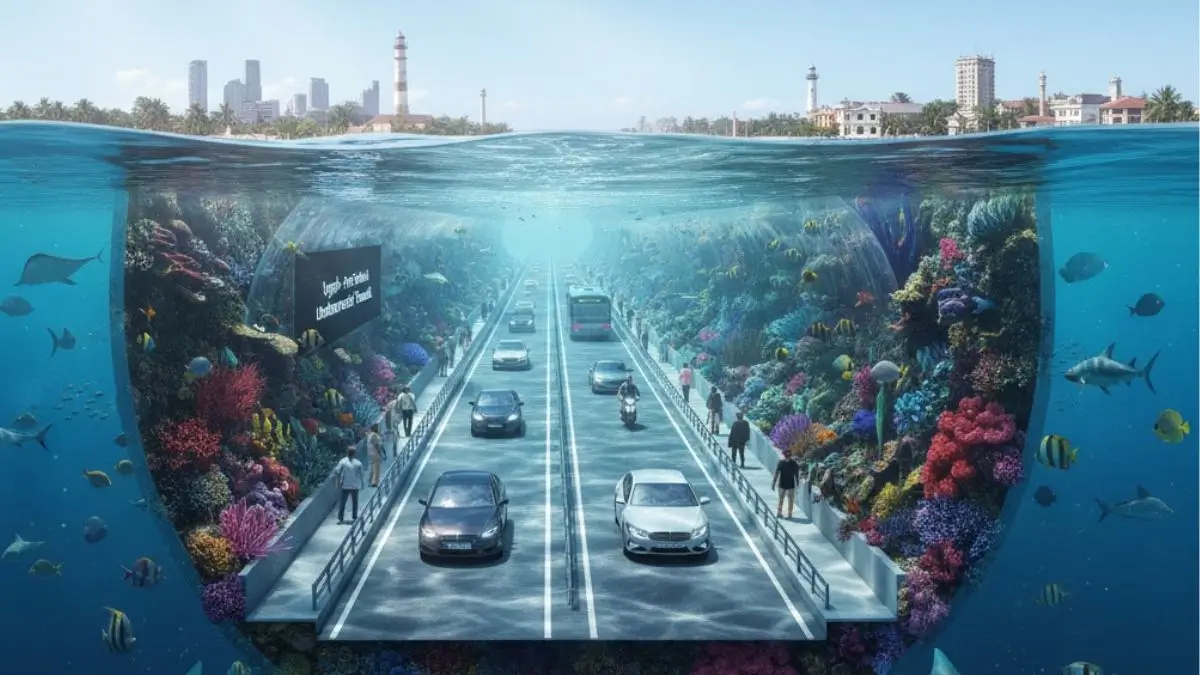
In a historic infrastructure initiative, Kerala is set to build its first underwater tunnel, connecting Vypin and Fort Kochi, as part of the state’s ambitious coastal highway development project. This engineering marvel will significantly reduce the current 16 km road distance to a 3 km sub-sea journey beneath the Arabian Sea, redefining connectivity in Kochi — one of India’s busiest port cities.
Project Overview: A Sub-Sea Engineering Feat
The underwater tunnel will be developed by the Kerala Rail Development Corporation Limited (KRDCL) with an estimated cost of ₹2,672 crore. Key design and construction features include,
- Total Length: 2.75 km (1.75 km bored tunnel + 1 km cut-and-cover)
- Twin-Tube Structure: Separate tunnels for each direction
- Dimensions: 12.5 m outer diameter; 11.25 m inner width
- Depth: 35 metres below sea level
Safety Features
- Emergency stops every 250 m
- Escape passages every 500 m
- Advanced ventilation and fire safety systems
This project marks a first-of-its-kind sub-sea tunnel in Kerala, comparable only to Kolkata’s Hooghly River Metro Tunnel — India’s first underwater rail tunnel.
Travel Benefits and Cost Efficiency
- The tunnel is expected to drastically cut travel time between Vypin and Fort Kochi from over 2 hours to just 30 minutes, transforming daily commutes.
- Current routes rely on congested ferry crossings or a 16 km detour via Goshree Bridge.
- Commuters will now pay just ₹50–₹100 for the tunnel trip, compared to an average of ₹300 currently.
- Officials estimate that this tunnel will help users save nearly ₹1,500 per month, offering both economic and logistical relief to residents and tourists.
Why a Tunnel Over a Bridge?
Earlier plans for a bridge across the Cochin Port channel were abandoned after experts flagged challenges,
- A bridge would require extreme height to allow passage for cargo ships
- It would demand significant land acquisition, increasing both costs and local disruption
In contrast, the underwater tunnel is more efficient,
- Requires only 100 metres of land on either end
- Minimises disturbance to shipping traffic and port operations
- Reduces environmental and urban impact
- KRDCL Managing Director V. Ajith Kumar confirmed that a tunnel offers a technically and financially viable solution.


 Amaravati Set to Become The Andhra Prade...
 How Many Seats Are There in Bihar Legisl...
 Nitish Kumar Resigns as Legislative Coun...