New Delhi, the capital city of India, is a land of great historical importance. It is filled with ancient monuments, forts, and buildings that tell stories of India’s royal past. From the Mughal era to British rule, each monument reflects a different chapter of history. These historical places make New Delhi a major attraction for tourists from all over the world.
Historical Monuments in Delhi
Delhi is home to many historical monuments that reflect India’s rich culture and glorious past. From Mughal forts to British-era buildings, these monuments tell fascinating stories of art, power, and history.
Here are the names of historical monuments in Delhi:
- Red Fort
- Humayun’s Tomb
- Qutub Minar
- India Gate
- Jama Masjid
- Jantar Mantar
- Rashtrapati Bhavan
- Lodhi Gardens
- Agrasen ki Baoli
- Lotus Temple
Red Fort
The Red Fort is one of the most famous historical monuments in New Delhi. Built by Emperor Shah Jahan in 1648, it served as the main residence of the Mughal emperors for nearly 200 years. The fort is made of red sandstone and includes beautiful halls, gardens, and royal chambers. Every Independence Day, the Prime Minister hoists the national flag here, making it a symbol of India’s pride and freedom.
Humayun’s Tomb
Constructed in 1570, Humayun’s Tomb is a masterpiece of Mughal architecture. It was built by Emperor Humayun’s wife, Empress Bega Begum. Surrounded by lovely gardens, fountains, and walkways, it became an inspiration for the Taj Mahal. Inside the complex are other historical structures, such as Isa Khan’s Tomb. It’s a peaceful and must-visit spot for history lovers.
Qutub Minar
Qutub Minar is one of Delhi’s oldest and tallest monuments. Built by Qutb-ud-din Aibak in 1193, it stands as a mark of victory and Islamic architecture. The five-storey tower is covered with detailed carvings and verses from the Quran. The surrounding Qutub complex includes the Iron Pillar and ancient mosques, making it a popular tourist attraction.
India Gate
India Gate is a grand war memorial built by Sir Edwin Lutyens in 1931. It honors more than 80,000 Indian soldiers who died during World War I. The 42-meter-high structure stands on Rajpath and is beautifully lit in the evenings. Beneath the arch burns the Amar Jawan Jyoti, a flame that honors the soldiers’ sacrifice.
Jama Masjid
Built by Emperor Shah Jahan in 1656, Jama Masjid is one of the largest mosques in India. It can hold more than 25,000 worshippers at a time. The mosque features red sandstone and white marble domes with tall minarets. Visitors can climb one of the minarets for a breathtaking view of Old Delhi.
Jantar Mantar
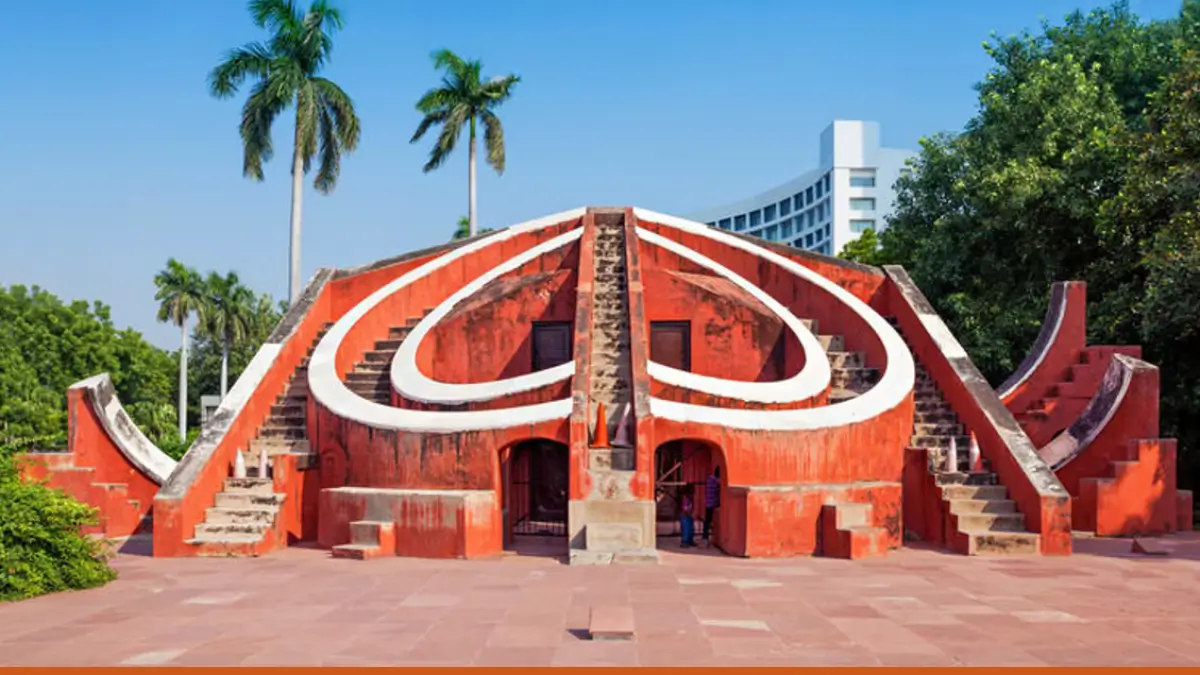
Jantar Mantar was built in the 18th century by Maharaja Jai Singh II. It served as an astronomical observatory to study the movements of the sun, moon, and planets. The large instruments made of stone and marble show India’s early scientific achievements. It is located near Connaught Place and attracts both tourists and science enthusiasts.
Rashtrapati Bhavan
Rashtrapati Bhavan is the official residence of the President of India. Designed by Edwin Lutyens, this grand structure is one of the most beautiful buildings in Delhi. The complex includes the famous Mughal Gardens, which open to the public every year during Udyanotsav. Visitors can explore its grand halls and admire its architectural elegance.
Lodhi Gardens
Lodhi Gardens is a peaceful park that holds the tombs of Lodhi and Sayyid dynasty rulers. Built in the 15th century, it showcases Indo-Islamic architecture. The green lawns, ancient bridges, and serene atmosphere make it a perfect spot for morning walks, picnics, and photography.
Agrasen ki Baoli
Agrasen Ki Baoli is a stepwell located near Connaught Place. It is believed to date back to the Mahabharata period and was rebuilt in the 14th century. The 60-meter-long structure has a series of steps leading down to the water. Its ancient charm and mysterious vibe make it one of Delhi’s most fascinating places.
Lotus Temple
The Lotus Temple, shaped like a blooming lotus flower, is one of Delhi’s most stunning landmarks. Made of white marble, it welcomes people of all religions to pray and meditate in peace. Surrounded by gardens and pools, it is a place of calm and unity.


 Which City of the World is known as the ...
 Which is the Largest LPG Producing City ...
 Which City is known as the Garlic Capita...