
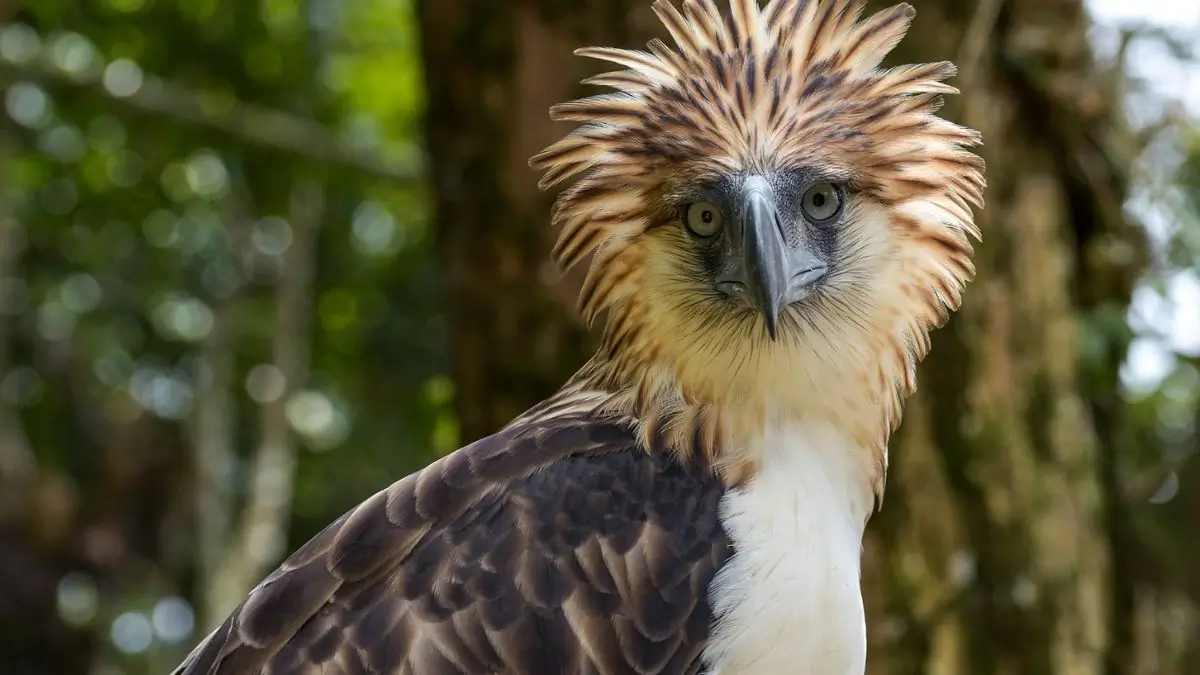
The so-called ‘monkey-eating bird’ is actually the majestic Philippine eagle, one of the largest and rarest eagles in the world. Scientifically known as Pithecophaga jefferyi, this raptor earned its nickname from early reports that it preyed on monkeys in Philippine forests. Today, fewer than 500 mature individuals are believed to survive in the wild. The species is listed as Critically Endangered by the International Union for Conservation of Nature, mainly due to habitat loss, hunting, and forest degradation.
Among the Largest Raptors on Earth
- The Philippine eagle ranks among the world’s largest raptors by length and wingspan.
- Height: Up to 1 metre (76-102 cm)
- Wingspan: Around 1.9 metres (6.5 feet)
- Weight: 4.5-8.1 kg
- Claw length: About 7.6 cm
Females are generally larger than males, a common trait among birds of prey. Its powerful talons and strong beak allow it to dominate the dense forest canopy, where it hunts with precision.
An Apex Predator in Its Ecosystem
The Philippine eagle is a top predator and plays a vital role in maintaining ecological balance. It hunts mainly during the day and feeds on,
- Monkeys
- Flying squirrels
- Civets
- Bats
- Snakes
- Birds and reptiles (depending on island availability)
As an apex predator, it regulates populations of smaller mammals and reptiles, ensuring ecosystem stability. Its presence indicates a healthy forest environment.
Shrinking Habitat: A Major Threat
- Despite the Philippines having over 7,000 islands, the Philippine eagle survives only in limited regions.
- It depends heavily on primary dipterocarp forests tall, dense tropical forests ideal for nesting and hunting.
- However, lowland forests have been extensively cleared for agriculture, logging, mining, and road construction.
- Eagles are increasingly pushed to steep mountain slopes, where human activity is lower but habitat fragmentation continues.
- The destruction of old-growth forests directly threatens the survival of this critically endangered eagle.
Slow Breeding Cycle Limits Recovery
The Philippine eagle has a very slow reproductive rate, making conservation difficult.
- Forms long-term pair bonds
- Lays one egg every two years
- Incubation period: Around 60 days
- Young remain dependent for several months
- Sexual maturity reached around 7 years of age
This slow breeding cycle means that the loss of even a few adults can significantly impact population recovery.
Conservation Efforts and Challenges
Conservation initiatives began in the 1970s, including,
- Legal protection laws
- Habitat conservation measures
- Captive breeding programmes
- Public awareness campaigns
Although these efforts have helped stabilize some populations, numbers remain critically low. Monitoring remote forest habitats remains challenging, and illegal activities persist.
The Philippine eagle is a national symbol of the Philippines, representing strength and resilience. Yet its survival depends entirely on preserving intact forests.
Why Raptors Matter in Ecosystems
- Raptors like the Philippine eagle are vital for ecological balance.
- As apex predators, they prevent overpopulation of prey species, which can otherwise damage vegetation and disrupt food chains.
- The decline of large raptors often signals environmental degradation.
- Globally, many large birds of prey face similar threats due to deforestation and human encroachment. Protecting them safeguards entire ecosystems and biodiversity.
Question
Q. The ‘monkey-eating bird’ refers to which species?
A) Harpy Eagle
B) Philippine Eagle
C) Golden Eagle
D) Bald Eagle


 Shah Rukh Khan Debuts in Hurun Global Ri...
 A Tribe With No Word for "Time"? Inside ...
 NIM–JIM&WS Team Successfully Summits...











