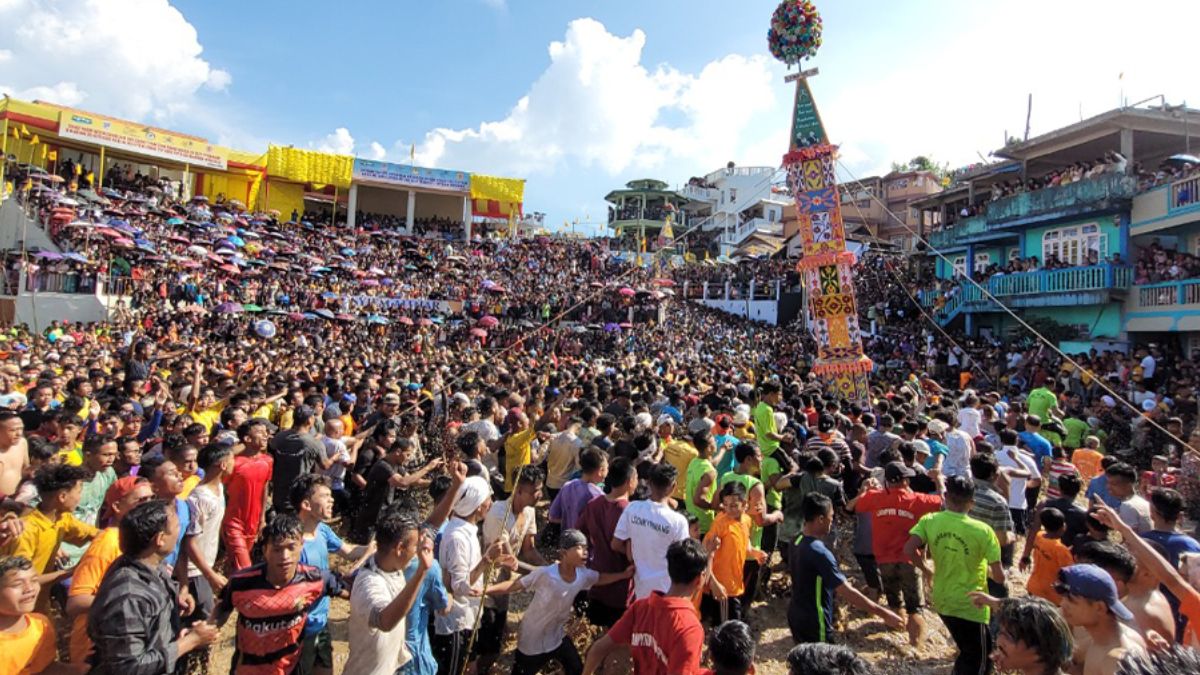
The sacred Behdeinkhlam Festival was recently celebrated with great joy in Jowai, a town in Meghalaya. This yearly event is important for the Pnars, a tribal group from the state. The festival is held in July to pray for a good harvest and to drive away diseases and evil from society. It also helps in keeping their traditional faith alive.
Festival With Deep Meaning
The word Behdeinkhlam means “driving away the plague,” showing that the festival is about protecting people from sickness, especially after the sowing season. For the Pnars, a sub-tribe of the Jaintia community, this festival is not just a tradition—it’s a way to hold on to their old religion called Niamtre.
Rituals and Sacred Events
The festival goes on for three days. During this time, men perform special dances and rituals, while women prepare and offer food to the spirits of their ancestors. A main part of the festival is when a sacred wooden post called Symbud Khnong is carried around the town and then placed in a special spot to keep away evil spirits.
Unique Game and Social Messages
Another interesting part of the festival is a football-like game called Dad-lawakor, played at Mynthong. Over the years, the festival has also become a platform to share messages about avoiding drug use, alcohol abuse, and to raise awareness about climate change. These efforts show how traditional events are also helping to spread modern, helpful messages.


 Gujarat Launches 'Lake and Air Watch' In...
 Indian Orchid Festival 2026 was Conclude...
 Chhattisgarh Cabinet Approves Freedom of...