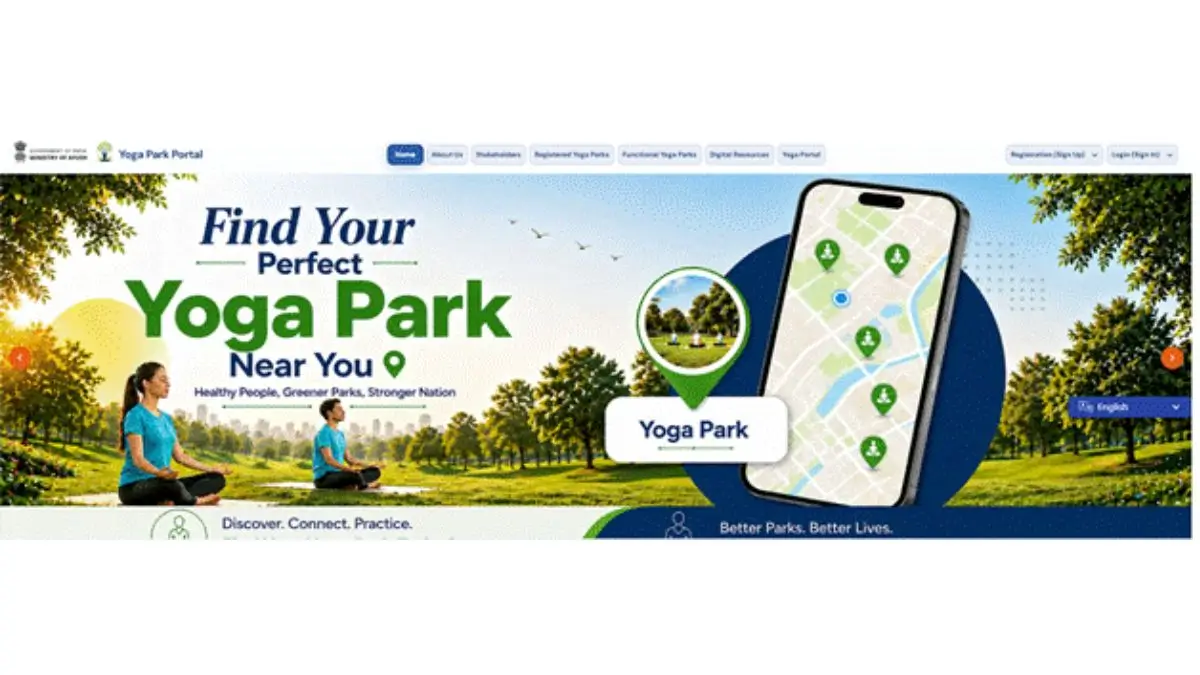
Ayush Ministry has launched the Yoga Park Portal, it is a nationwide initiative which aimed at to transform the existing public parks into the dedicated community wellness hubs. This initiative seeks to make yoga, meditation and preventive healthcare as a regular part of everyday life by utilizing the accessible public spaces across urban and rural India.
What is the Yoga Park Portal?
The Yoga Park Portal is the digital platform developed by the Ministry of Ayush to facilitate the creation and development of the Yoga Parks across the country.
The initiative encourages the local governments, community organizations, resident welfare associations, NGOs and corporate entities to convert the existing parks into wellness-oriented public spaces.
This portal provides the guidelines, registration facilities, concept notes and implementation resources to help the stakeholders to participate in the initiative.
Launch of the Initiative
The portal was launched by the Respectable Union Minister of State (Independent Charge) for Ayush and Minister of State for Health and Family Welfare, Prataprao Jadhav during the International Day of Yoga 2026 countdown event held in the Khajuraho.
The initiative was unveiled alongside the relaunch of the Yoga Sangam Portal and it highlights the government’s broader strategy to expand the yoga’s reach at the grassroots level.
Objective of Yoga Parks
The Yoga Park initiative aims to transform the traditional parks into permanent the wellness spaces that encourage the,
- Regular yoga practice
- Meditation and mindfulness
- Preventive healthcare awareness
- Community participation
- Healthy lifestyle promotion
These parks are envisioned as the year-round wellness centers rather than spaces which are just used only during the special events.
Key Features of Yoga Parks
This initiative proposes the development of the dedicated facilities within existing parks to support holistic wellness activities.
Potential features includes the,
- Dedicated yoga platforms
- Meditation zones
- Green and eco-friendly landscapes
- Community wellness spaces
- Open-air group activity areas
- Health awareness facilities
These features are also intended to create an inclusive environment for the people of all age groups.
Collaborative Implementation Model
One of the most important aspects of the initiative is the its collaborative approach. Multiple stakeholders are expected to contribute to the development and maintenance of Yoga Parks.
These includes the,
- Panchayati Raj Institutions
- Urban Local Bodies
- Resident Welfare Associations (RWAs)
- Non-Governmental Organizations (NGOs)
- Yoga institutions
- Corporate organizations through CSR initiatives
Role of Corporate Social Responsibility (CSR)
The Ministry of Ayush has encouraged the companies to participate via the Corporate Social Responsibility (CSR) initiatives.
Organizations can support the creation and maintenance of the Yoga Parks and contributing directly to the public health and community welfare.
CSR-supported Yoga Parks are expected to create the long-term benefits by providing the accessible spaces for physical activity, wellness education and social interaction.








 India’s Internet Subscribers Cross 1.1...
 PM GatiShakti Completes Five Years: Obje...
 President Droupadi Murmu Appoints Six Go...