
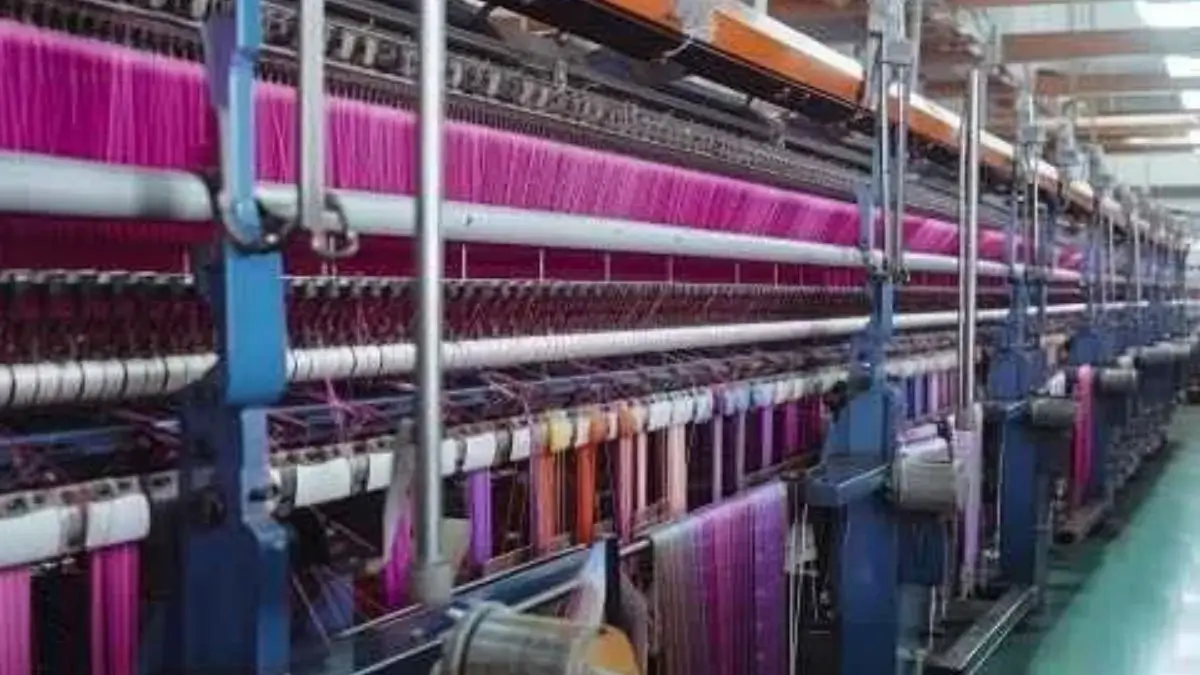
To boost export potential of Indian textile industries Ministry of Textiles has extended the RoSCTL scheme till the September 30 2026. This decision comes at that time when the global demand remains uncertain and to provide the much-needed stability to exporters. As the continuous this scheme the government tries to support labor-intensive sectors also to enhance competitiveness and strengthen India’s position in global textile markets.
RoSCTL Scheme Extended: What It Means
The extension of the Rebate of State and Central Taxes and Levies (RoSCTL) scheme will ensures that exporters of garments and the made-ups can continue to receive financial support.
This move will help exporters to offset hidden taxes and levies of duties. It also provides the continuity amid global economic uncertainty and along with it will strengthen India’s textile export ecosystem
It is reflect that the government commitment to the sustaining export growth along with protecting the employment in the sector.
Understanding RoSCTL: Background and Evolution
In the March 2019 the RoSCTL scheme was introduced and it is the replacement for the earlier RoSL scheme.
Evolution of the scheme
RoSL Scheme: It has covered only state-level taxes and had the limited scope
RoSCTL Scheme: The was expanded to include both state and central taxes and make it more comprehensive
This transition has marked a shift toward the more effective and worldwide compliant export support system.
Objective of the RoSCTL Scheme
The scheme is designed to the,
- Reimburse the embedded taxes & duties which are not refunded elsewhere.
- It will improve the global competitiveness of the Indian textile products.
- Also to provide additional support beyond the duty drawback mechanism.
With reducing the cost burdens it will enables the exporters to compete more effectively in the internatioal markets.
Key Features of the RoSCTL Scheme
Exporters receive the benefits in the form of duty scrips and also compensating for the taxes such as VAT on fuel and electricity duties.
Scrips are issued electronically through the customs system and this will ensuring the faster processing and less manual work.
These scrips can also be used to pay the Basic Customs Duty on the imports.
Also this scrips are freely transferable though these scrips must be transferred as the whole unit.
Each scrip has remains valid for the one year from the date of issue.


 Delhi Government Launches the Lakhpati B...
 What Is Amrit Bharat Station Scheme? Gov...
 PM E-DRIVE Policy Shift: EV Incentives E...











