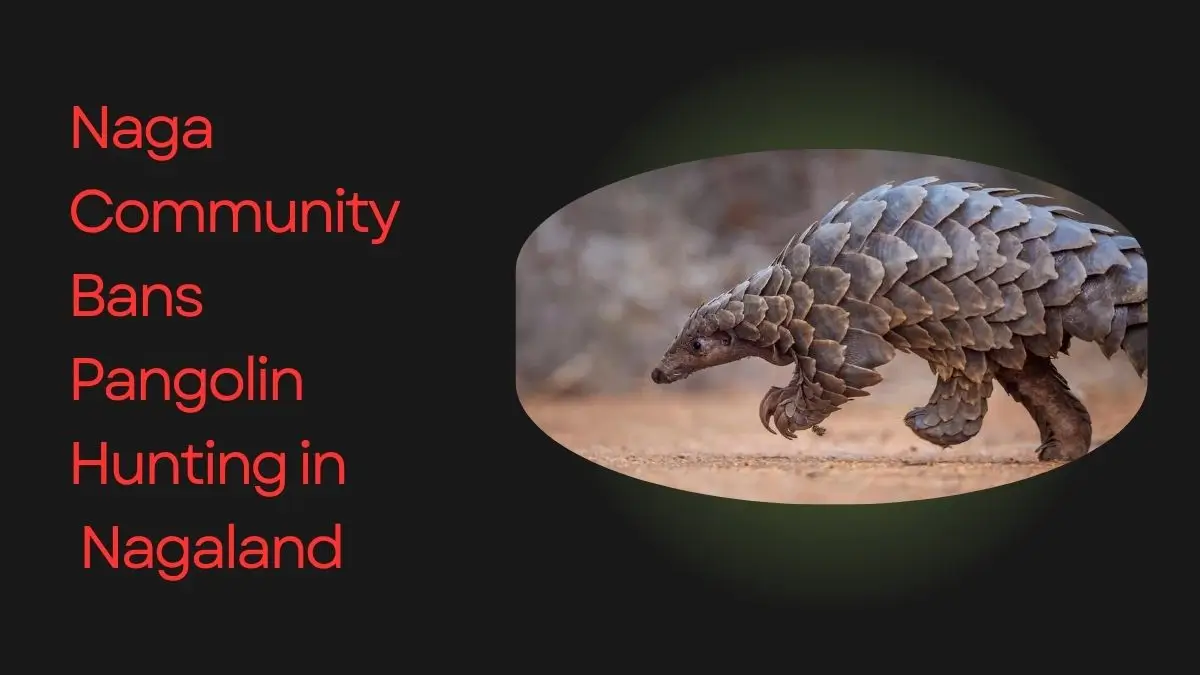
In a major conservation move, the Sangtam Naga tribal body in Nagaland has officially banned pangolin hunting and trade within its jurisdiction. The resolution was passed by the United Sangtam Likhum Pumji (USLP), marking a significant milestone for pangolin conservation in Northeast India. The decision strengthens community accountability and supports ongoing efforts to counter illegal wildlife trafficking in the region.
Who Took Pangolin Hunting in Nagaland Ban Decision?
- The resolution was adopted by the United Sangtam Likhum Pumji, the apex tribal body of the Sangtam Naga community.
- By formally prohibiting hunting and trade of pangolins, the tribal council has demonstrated how indigenous governance systems can play a powerful role in protecting endangered species.
- The resolution reinforces existing legal protections under Indian wildlife laws and strengthens local monitoring mechanisms.
Why Pangolins Need Protection
Pangolins are among the most trafficked mammals in the world. They are hunted mainly for,
- Their scales, used in illegal traditional medicine markets
- Meat consumption
- Black market trade
- In India, pangolins are protected under the Wildlife (Protection) Act, 1972. Despite this, illegal trafficking continues, especially in border states.
The Indian pangolin (Manis crassicaudata) and the Chinese pangolin (Manis pentadactyla) are found in India and are classified as endangered.
Link to Countering Pangolin Trafficking Project
The initiative is part of the Countering Pangolin Trafficking Project, led by the Wildlife Trust of India with support from the Wildlife Conservation Network’s Pangolin Crisis Fund.
The project focuses on,
- Strengthening community awareness
- Supporting law enforcement
- Monitoring illegal trade networks
- Promoting sustainable conservation practices
The Sangtam Naga resolution is considered a major success under this programme.
Why Community-Led Conservation Matters
Nagaland and other Northeastern states have strong community land ownership systems. Many forests are managed by tribal councils rather than the state.
- Community-led conservation ensures,
- Better local enforcement
- Cultural acceptance of wildlife protection
- Reduced poaching
- Stronger long-term sustainability
The Naga community pangolin ban highlights how grassroots initiatives can complement government wildlife protection laws.
Impact on Northeast India
Northeast India is biodiversity-rich but also vulnerable to wildlife trafficking due to its proximity to international borders. The ban by the Sangtam Naga community.
- Sets a model for other tribal bodies
- Strengthens conservation governance
- Enhances awareness about endangered species
- Supports India’s commitments under global biodiversity agreements
It signals growing environmental consciousness among indigenous communities.
Background: Pangolins and Legal Protection
- Pangolins are shy, nocturnal mammals known for their protective keratin scales.
- They play a vital role in controlling insect populations, particularly ants and termites.
- Globally, all eight pangolin species are listed under Appendix I of CITES (Convention on International Trade in Endangered Species), meaning international commercial trade is banned.
- India has increased enforcement efforts in recent years to combat pangolin trafficking, especially in border regions.
Question
Q. The Sangtam Naga community recently banned hunting of which endangered animal?
A. Red Panda
B. Pangolin
C. Clouded Leopard
D. Hornbill


 Rajasthan Launches Industrial Park Polic...
 Gujarat Becomes Second State To Passing ...
 Rekha Gupta Unveils Delhi’s Green Budget...