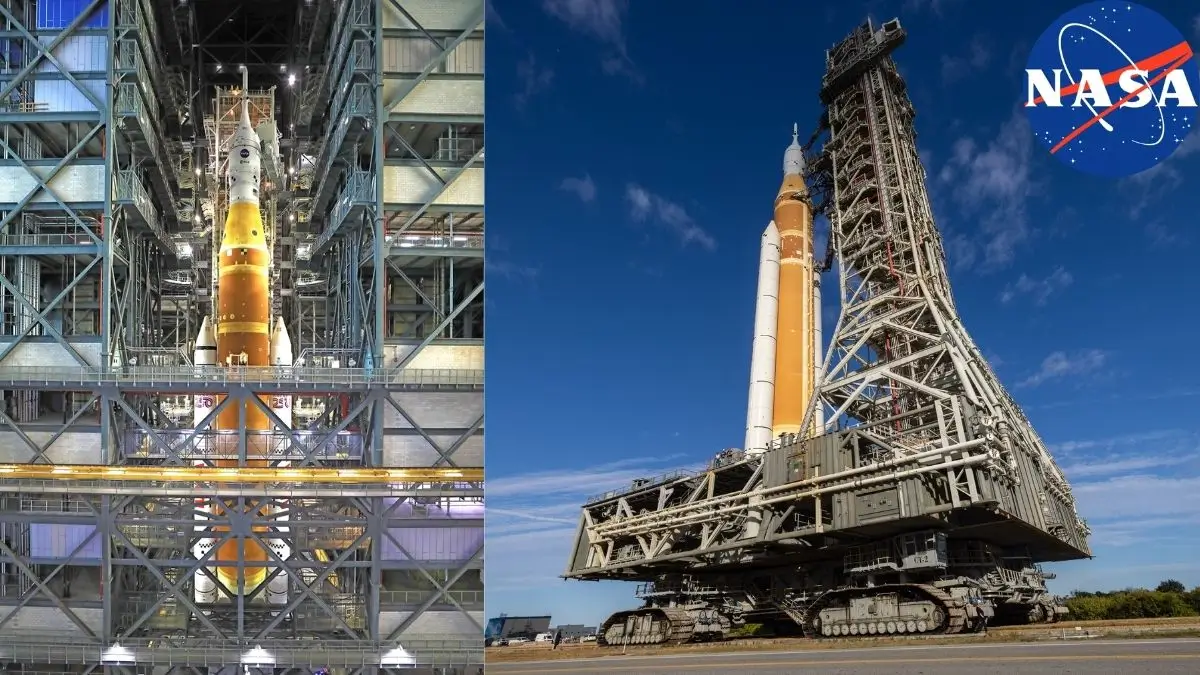
NASA is set to historic launch for human space exploration. The US space agency is preparing to launch Artemis II, a historic mission that will send astronauts around the Moon for the first time in over 50 years. The mission is also special because people from across the world can send their names to the Moon aboard the spacecraft, making the mission globally symbolic and inspiring.
Why in News?
NASA has completed the rollout of the Artemis II rocket to the launch pad at Kennedy Space Center. This marks a crucial step toward launching astronauts on a mission that will take humans farther from Earth than ever before.
About Artemis II Mission?
- Artemis II is a crewed space mission under NASA’s Artemis programme, aimed at returning humans to the Moon.
- This mission will send four astronauts aboard the Orion spacecraft on a 10 day journey around the Moon.
- The spacecraft will not land but will orbit the Moon and return safely to Earth.
- This will be the first human mission beyond low Earth orbit since 1972. Artemis II will test critical systems such as life support, navigation, and communication in deep space.
- Its success is essential for future missions that plan actual Moon landings.
Who Are the Astronauts on Board?
- The Artemis II crew includes experienced astronauts from two countries.
- The team consists of Reid Wiseman, Victor Glover, and Christina Koch from NASA, along with Jeremy Hansen from the Canadian Space Agency.
- This mission marks the first time a Canadian astronaut will travel to the Moon.
- The crew will work together to test spacecraft systems and gather data needed for long-duration space travel.
Public Participation: Sending Your Name to the Moon
- NASA has invited people worldwide to take part through its “Send Your Name with Artemis” initiative.
- Under this programme, names submitted online are stored digitally on an SD card that will fly inside the Orion spacecraft.
- Over 1.5 million names have already been registered.
- Participation is free, and registrants receive a digital boarding pass as a keepsake.
- Though symbolic, this initiative helps connect the public with space science and inspires interest in astronomy and technology, especially among students and young learners.
Artemis Programme Overview
| Aspect | Details |
| Programme Name | Artemis Programme |
| Organization | NASA |
| Purpose | Establish a sustained human presence on the Moon |
| Long-term Goal | Prepare for future human missions to Mars |
| Significance | Key part of global space exploration strategy |
| Artemis I (2022) | Uncrewed test flight of Orion around the Moon |
| Artemis II (2026) | First crewed mission beyond Low Earth Orbit in over 50 years |
| Artemis III | First lunar landing since 1972 |
Artemis II Mission Overview
| Aspect | Details |
| Mission Name | Artemis II |
| Mission Type | Crewed lunar flyby |
| Historical Importance | First human mission to Moon’s vicinity since Apollo 17 (1972) |
| Programme Sequence | Second mission under Artemis |
| Crew Status | First Artemis mission to carry astronauts |
| Launch Vehicle | Space Launch System (SLS) |
| Spacecraft | Orion |
| Planned Year | 2026 |
Artemis II Crew & Mission Profile
| Category | Details |
| Crew Size | 4 astronauts |
| Crew Composition | 3 NASA astronauts, 1 Canadian Space Agency (CSA) astronaut |
| Mission Duration | Approximately 10 days |
| Mission Path | Fly around the Moon and return to Earth |
| Splashdown Location | Pacific Ocean, off the coast of San Diego |
Upcoming Artemis Missions
| Mission | Key Goals | Timeline |
| Artemis III | First crewed Moon landing since 1972; first woman and first person of colour on the Moon; astronauts stay nearly 1 week | By 2028 |
| Artemis IV | Deliver core module of Lunar Gateway; land two astronauts on the Moon | TBD |
| Artemis V | Add another Gateway module; third crewed lunar landing; focus on advanced surface science | TBD |
Question
Q. Artemis II mission is significant because it is the first crewed mission to the Moon since which year?
A. 1969
B. 1972
C. 1981
D. 1998


 IVRI Produces Sahiwal Calves Using Advan...
 What is Terafab Project? Elon Musk Large...
 OpenAI Launches It's Smallest GPT-5.4 Mi...