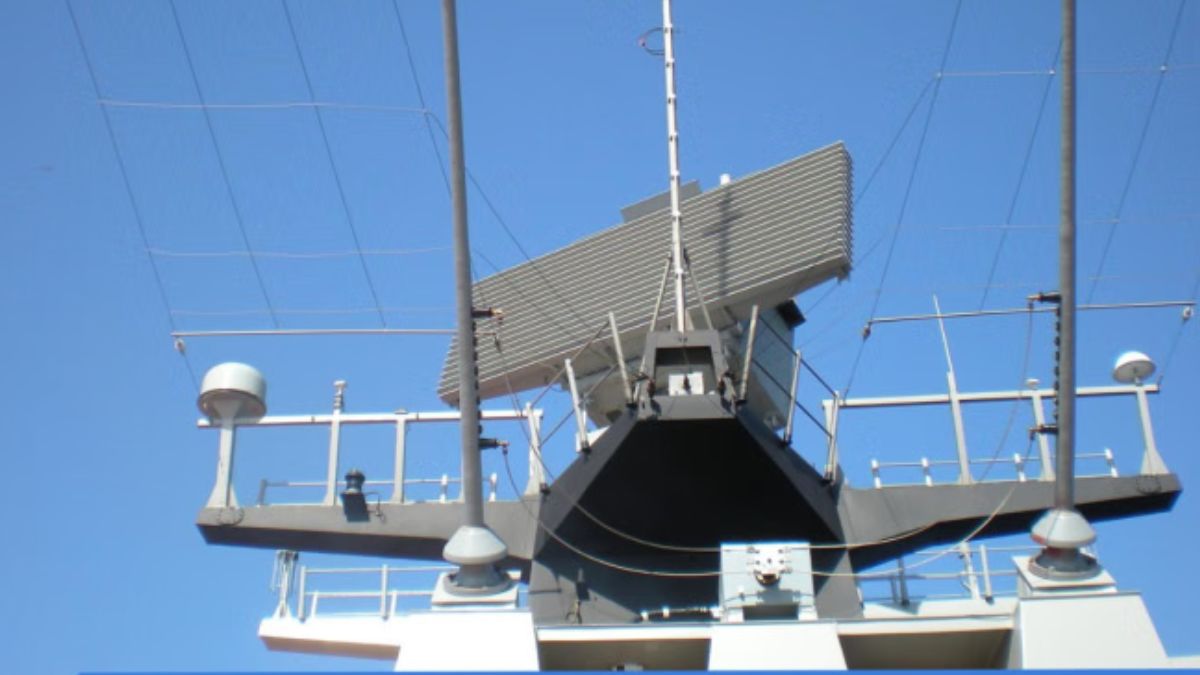
In a major boost to India’s naval air defence capabilities, the Indian Navy has commissioned its first Tata-made Lanza-N 3D Air Surveillance Radar. The radar, a naval variant of Spanish firm Indra’s Lanza 3D system, was built and integrated by Tata Advanced Systems Limited (TASL) under a USD 145-million deal signed in 2020. This marks a significant milestone in India’s defence indigenisation and self-reliance drive.
About the Lanza-N Radar
The Lanza-N radar is among the world’s most advanced long-range air defence and anti-missile radars.
Key Features
- Range: Detects aircraft from 9 km to 474 km
- Altitude coverage: Up to 100,000 feet
- Rotation speed: Completes one full rotation in 10 seconds, ensuring continuous situational awareness
- Adaptation: Specifically modified for high humidity and extreme heat of the Indian Ocean Region
The radar provides early warning against enemy aircraft, drones, and missiles, thereby strengthening India’s maritime security and defence readiness.
The India-Spain Radar Deal
- Year of agreement: 2020
- Value: Approx. USD 145 million
Scope
- 3 radars fully delivered by Indra (Spain)
- 20 additional radars’ core systems provided for local integration by TASL over a decade
- Integration: TASL has set up a dedicated assembly, integration, and testing facility in Karnataka to accelerate production.
- This arrangement ensures technology transfer, localisation, and skill development in India’s defence manufacturing sector.
Indigenous Manufacturing and Sea Trials
- The first radar has been seamlessly integrated with an Indian Navy warship.
- Underwent rigorous sea trials, involving multiple naval and aerial platforms
- Validated performance across different radar cross-sections and threat scenarios
Confirmed compatibility with all ship systems
With this, TASL becomes the first Indian company to build and integrate next-generation naval surveillance radars domestically.
Strategic Significance
The induction of the Lanza-N radar is crucial for,
- Enhanced Maritime Security: Improves detection of aerial threats in the Indian Ocean Region (IOR).
- Defence Self-Reliance: Major step under ‘Make in India’ and Atmanirbhar Bharat initiatives.
- Force Multiplication: Strengthens the Navy’s frigates, destroyers, and aircraft carriers with long-range surveillance.
- Technology Transfer: Helps Indian industry acquire high-end radar integration skills.
Important Takeaways for Exam
- Radar Name: Lanza-N (naval variant of Lanza 3D)
- Manufacturer: Tata Advanced Systems Limited (TASL), India
- Foreign partner: Indra (Spain)
- Deal: USD 145 million (signed in 2020)
- Deliveries: 3 radars from Indra + core systems for 20 more to be assembled in India
- Range: 9–474 km, up to 100,000 ft altitude
- Rotation speed: 1 full rotation every 10 seconds


 INS Taragiri Commissioned - What Makes T...
 India's Defense Exports Hit Record ₹38,4...
 INS Malwan Delivered to Indian Navy: Nex...