
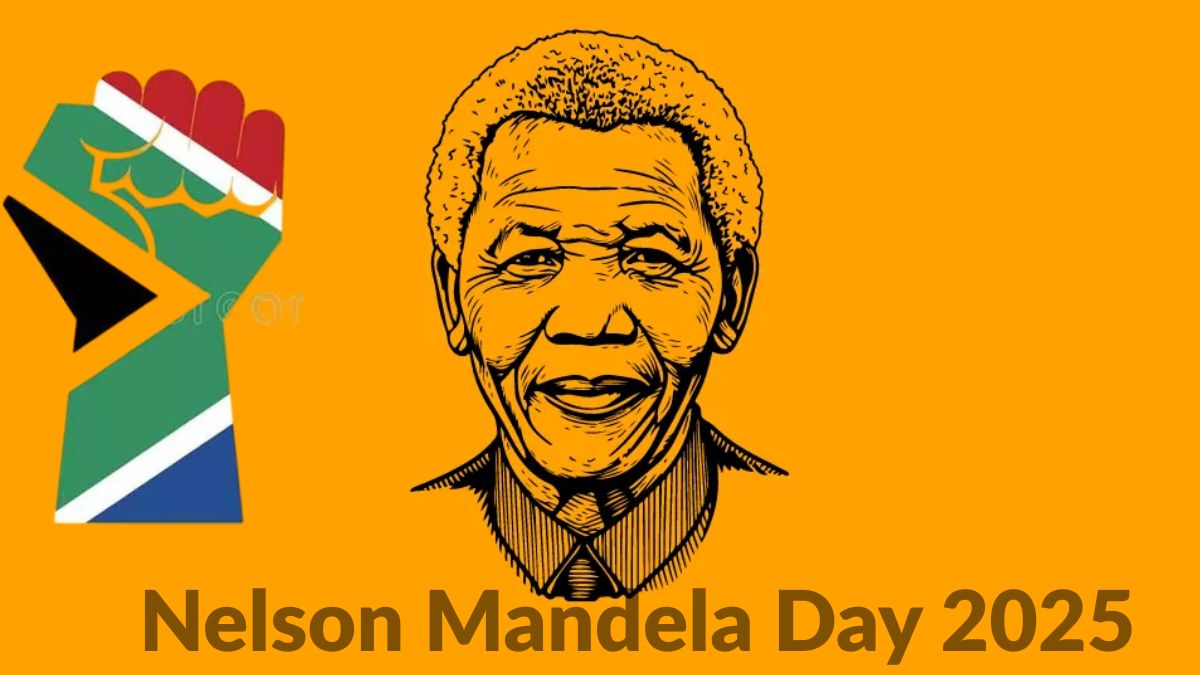
Nelson Mandela International Day, observed annually on 18th July, commemorates the birth of Nelson Mandela, South Africa’s first Black President and a global icon of peace, justice, and reconciliation. Recognized by the United Nations in 2009, the day promotes the values Mandela stood for—freedom, dignity, equality, and human rights—by encouraging individuals to engage in community service for 67 minutes, symbolizing the 67 years Mandela spent serving humanity.
Background
The idea of Nelson Mandela Day was first introduced by the Nelson Mandela Foundation in 2009 and was later officially adopted by the UN General Assembly. Mandela, known for his leadership in the anti-apartheid movement, spent 27 years in prison and emerged as a unifying leader who laid the foundation for a democratic South Africa. His legacy continues to inspire movements for social justice and human development globally.
Theme For 2025
The theme for Nelson Mandela International Day 2025 is “It’s still in our hands to combat poverty and inequity,” which serves as a powerful call to action for individuals and communities worldwide to address the root causes of social and economic disparities. This theme emphasizes that even in a rapidly changing global landscape, the responsibility to create a more just, equal, and compassionate society lies with each of us. Inspired by Mandela’s unwavering commitment to justice and human dignity, the theme encourages grassroots efforts, volunteerism, and collective solidarity to uplift marginalized populations and promote long-term solutions to poverty and inequality.
Significance
Nelson Mandela International Day goes beyond a ceremonial observance. It is a global call to action, encouraging every person to take responsibility for making the world a better place. The day’s core message is that everyone has the ability and the responsibility to make an impact, no matter how small. It transforms the memory of Mandela into positive acts of service, addressing present-day challenges like poverty, inequality, and discrimination.
Objectives
- To honor Nelson Mandela’s legacy of peace, unity, and equality.
- To promote community service and volunteering.
- To raise awareness about social justice, human rights, and inclusive development.
- To motivate individuals and institutions to act locally but think globally in addressing issues affecting vulnerable communities.
Key Features
- 67 Minutes of Service: Reflecting Mandela’s 67 years of public service, individuals are urged to dedicate 67 minutes of their time to help others—through acts like tree planting, feeding the poor, helping the elderly, or tutoring children.
- Annual Theme: The 2025 theme is “It’s still in our hands to combat poverty and inequity,” focusing on grassroots action to address systemic inequalities.
- Global Participation: Celebrated worldwide with participation from governments, civil societies, schools, and individuals. Activities include clean-up drives, awareness campaigns, and educational events.
- Promotion of Core Values: Upholding freedom, reconciliation, dignity, and respect for all, which Mandela championed throughout his life.
Global Observance
From Africa to Asia, and Europe to the Americas, Nelson Mandela Day is marked by various activities like volunteer drives, educational seminars, health camps, and social media campaigns. The United Nations and other global bodies organize events that promote Mandela’s principles, especially among the youth and civil society.


 International Day for Mine Awareness 202...
 Good Friday 2026: Date, History, Meaning...
 World Autism Awareness Day 2026: Underst...











