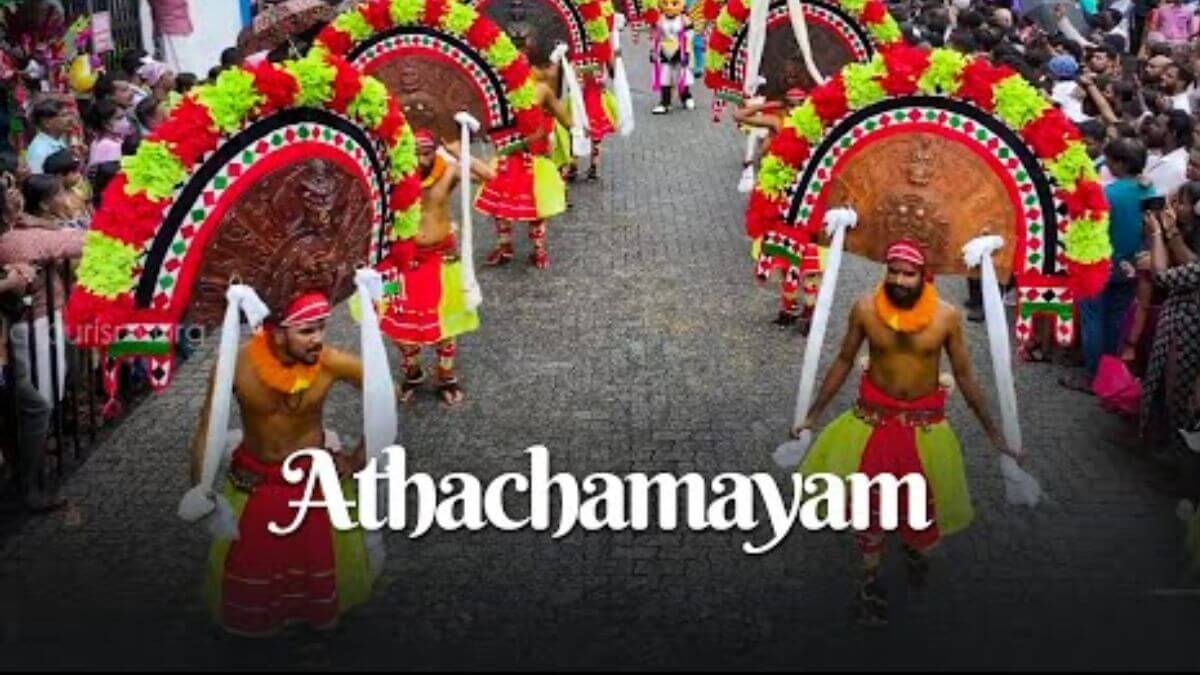
Kerala’s most celebrated festival, Onam, began on a grand and colourful note in Tripunithura with the traditional Athachamayam procession, a ceremonial curtain-raiser to the state’s 10-day harvest festival. With bright sunshine, vibrant performances, and enthusiastic crowds, Onam 2025 promises a celebration that blends deep-rooted tradition with dynamic modern flair.
The Grandeur of Athachamayam 2025
Historic and Cultural Backdrop
Held in Tripunithura, the former royal seat of the Kochi kingdom, Athachamayam has always been a symbol of Kerala’s cultural unity and royal heritage. The 2025 edition was notably enhanced by pleasant weather, in contrast to the rain-soaked inaugurations of previous years.
Thousands gathered on both sides of the road to witness a colourful convergence of folk traditions, classical arts, and social commentary—all packed into one grand parade.
Highlights of the Procession
A 60-Feet Floral Wonder
At Thekkinkad Maidan, near the Vadakkumnathan Temple, a massive 60-feet Athapookkalam (floral carpet) took center stage. Created by 150 members of Sayahna Souhruda Kootayma using 1,500 kg of flowers, it reflected the grandeur and intricacy associated with Onam celebrations.
Parade of Diversity and Colour
Led by costumed figures of Mahabali and Vamana, the procession included,
- 59 traditional art forms like theyyam, kummatti, kathakali, kolkali, margamkali, pulikali, and the martial art kalaripayattu.
- Over 50 cultural troupes, including students and local artists dressed as mythological figures, animals, and political caricatures.
- Nineteen thematic floats on pressing social issues such as drug abuse, adding a layer of contemporary relevance to the celebration.
Blend of Tradition and Modern Popular Culture
The parade wasn’t just confined to classical performances. It included character impersonations from popular Indian cinema such as,
- Empuran, Pushpa, and icons like Rajinikanth, Kamal Haasan, and Kalabhavan Mani.
- These segments entertained younger audiences and tourists, bridging the gap between folk traditions and pop culture.


 PM Narendra Modi Unveils and Lays Founda...
 Gujarat Launches 'Lake and Air Watch' In...
 Indian Orchid Festival 2026 was Conclude...