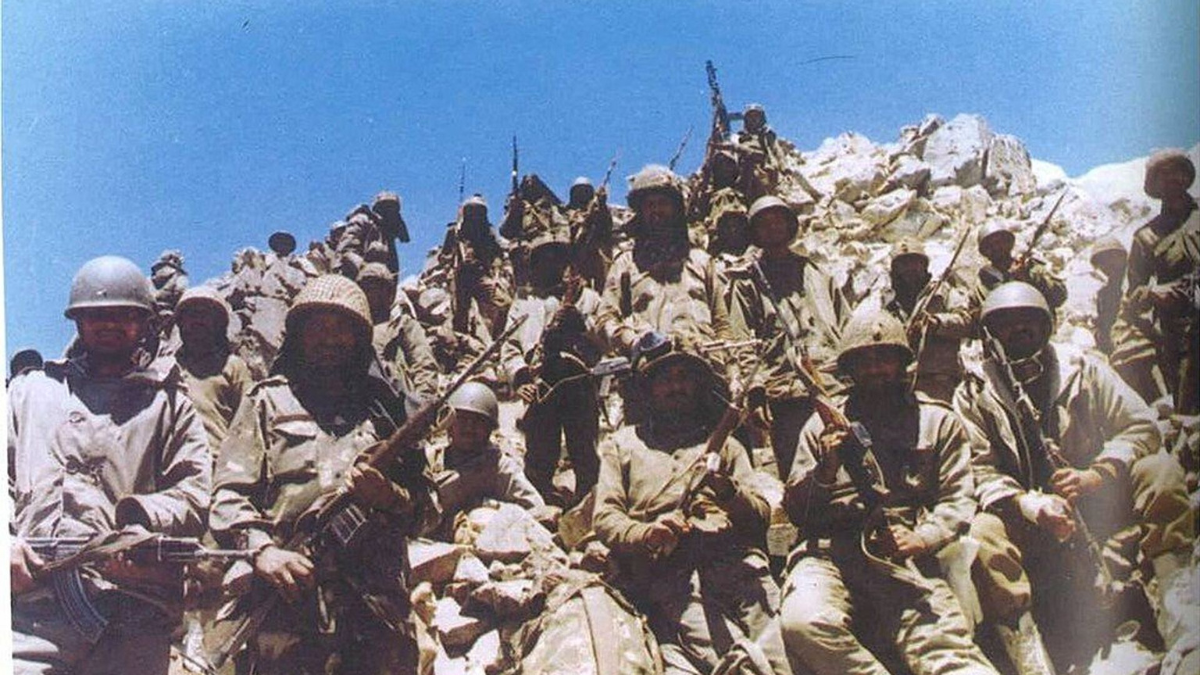
Operation Vijay was the name of India’s military mission during the Kargil War, fought between India and Pakistan from May to July 1999. The war took place in the Kargil district of Ladakh, along the Line of Control (LoC), which separates Indian and Pakistani controlled areas in Kashmir. This war was one of the most challenging in Indian history, fought at extremely high altitudes and freezing temperatures.
How was the War Started?
In early 1999, during winter, Pakistani soldiers and paramilitary forces crossed the LoC and occupied strategic peaks on the Indian side. Disguised as Kashmiri militants, they aimed to cut off India’s supply lines to Ladakh and force India to withdraw from the Siachen Glaciers. This secret operation by Pakistan was called Operation Badr.
India’s Response: Operation Vijay
After the intrusions were discovered by local shepherds and Indian patrols, India launched Operation Vijay. The mission involved mobilising nearly 200,000 Indian soldiers to push back the infiltrators. It was supported by:
- Operation Safed Sagar: Aerial attacks by the Indian Air Force.
- Operation Talwar: A naval blockade strategy by the Indian Navy.
Battles and Key Victories
- Battle of Tololing: The Tololing peak, near Dras, was the first major target. After intense fighting, it was recaptured by Indian forces on 13 June 1999, despite heavy losses.
- Capture of Point 5140: This high-altitude position was recaptured on 20 June. Captain Vikram Batra famously radioed in with the words, ”Yeh Dil Maange More!”
- Battle of Tiger Hill: Tiger Hill was the most significant peak. It was finally captured on 7 July after though battles by 18 Grenadiers and 8 Sikhs battalions.
- Battle of Point 4875: A heroic battle where Captain Vikram Battle and Rifleman Sanjay Kumar played crucial roles. Batra was martyred but ensured India’s victory.
- Batalik and Mushkoh Valley Battles: Intense operations were carried out in these sectors with multiple battalions. The Indian Army eventually recaptured all key peaks.
Role of the Indian Air Force and Navy
- The IAF launched airstrikes under Operations Safed Sagar on 26 May. Mirage 2000 fighter jets were especially effective in bombing enemy bunkers.
- The Indian Navy began Operation Talwar, blockading Pakistan’s ports and threatening to cut its fuel and trade supply.
International Reactions and Diplomacy
- The United States, G8 nations and United Nations supported India and asked Pakistan to withdraw.
- Pakistan was criticized globally for crossing the LoC and initiating the conflict.
- On 4 July, under international pressure, Pakistani Prime Minister Nawaz Sharif agreed to withdraw troops.
Victory and Ceasefire
By 26 July 1999, India had recaptured all occupied territory, and the Kargil War officially ended. This day is now celebrated every year as Kargil Vijay Diwas.
Casualties
- India lost 527 soldiers, with over 1,300 wounded.
- Pakistan reportedly lost over 1,000 soldiers, though official numbers vary.
- Brave Indian soldiers like Capt. Vikram Batra, Lt. Manoj Pandey, Rifleman Sanjay Kumar and Grenadier Yogendra Yadav were awarded the Param Vir Chakra, India’s highest military honour.
Aftermath and Reforms
- The war revealed weaknesses in intelligence and military readiness.
- The Indian government set up the Kargil Review Committee to analyze failures and improve security.
- India upgraded its military equipment and strengthened border surveillance, including fencing the LoC.
- The war boosted India’s global image and its diplomatic ties, especially with the US and Israel.
Impact on Pakistan
- Pakistan faced international isolation and diplomatic failure.
- Internally, there was political turmoil. In October 1999, General Pervez Musharraf led a coup and overthrew Prime Minister Nawaz Sharif.
- Pakistan later admitted that regular soldiers, nut just militants, had participated in the war.
Kargil War Memorial
Located in Dras, Ladakh, the Kargil War Memorial honours the martyrs of the war. It features:
- A large Indian flag
- Names of all fallen soldiers on a memorial wall
- A museum with photos, weapons and documents from the war.


 Which Place is known as the Glass Capita...
 Who is known as the Father of Census of ...
 Which Continent is known as the White Co...