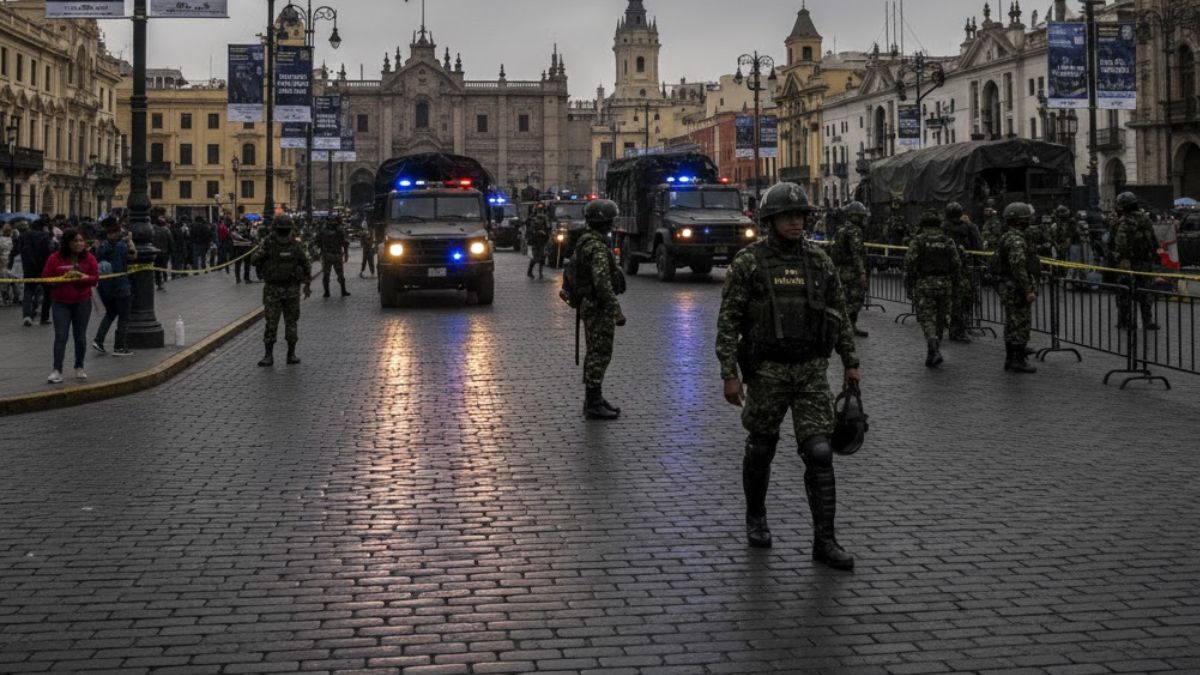
In a decisive response to surging crime and growing public unrest, Peru’s President José Jeri has declared a 30-day state of emergency in the capital city Lima and the adjacent province of Callao. The declaration, which took effect just after midnight, authorizes the Peruvian Armed Forces to assist police in maintaining law and order. This move comes amid nationwide concerns over public safety and follows violent protests that left one dead and over 100 injured.
What Triggered the Emergency Declaration?
- The declaration follows a week of mounting tensions and violent demonstrations against government inaction on crime and insecurity.
- Protesters took to the streets demanding safety and economic stability, highlighting the worsening conditions in Peru’s urban areas.
- Last week’s protests spiraled into violence, with clashes between demonstrators and law enforcement resulting in fatalities and widespread injuries.
- In this context, the government opted for emergency powers to reassert control and restore public confidence.
Government’s Justification: “From Defense to Offense”
- In a televised address to the nation, President Jeri framed the emergency as a proactive step in Peru’s fight against crime.
- “We are moving from defense to offense in the fight against crime, a fight that will allow us to regain peace, tranquility, and the trust of millions of Peruvians,” he said.
- The emergency measure was approved by the Council of Ministers, allowing the military to be deployed in urban zones to work alongside police forces in ensuring security.
Scope and Powers Under the State of Emergency
Under the emergency provisions, the government is authorized to temporarily suspend certain civil liberties, including,
- Freedom of movement and assembly, if deemed necessary for public safety
- Increased search and seizure authority without prior court approval
- Deployment of the military for internal security operations
- While specific operational details have not been disclosed, it is expected that troops will patrol crime-prone districts in Lima and Callao, assist in checkpoints, and support rapid-response units.
Rising Crime and Public Fear
- Over recent months, violent crime in Lima has surged, including armed robberies, gang activity, and homicides.
- The port city of Callao, historically linked to organized drug trafficking, has also seen increased gang violence and extortion.
- Residents have expressed frustration over the perceived ineffectiveness of the police and judicial system.
- Many see the emergency declaration as a necessary but risky move to restore basic safety and public order.


 WTO 14th Ministerial Conference Conclude...
 Former Suriname President Chandrikapersa...
 No Social Media for Kids Under 16: Indon...