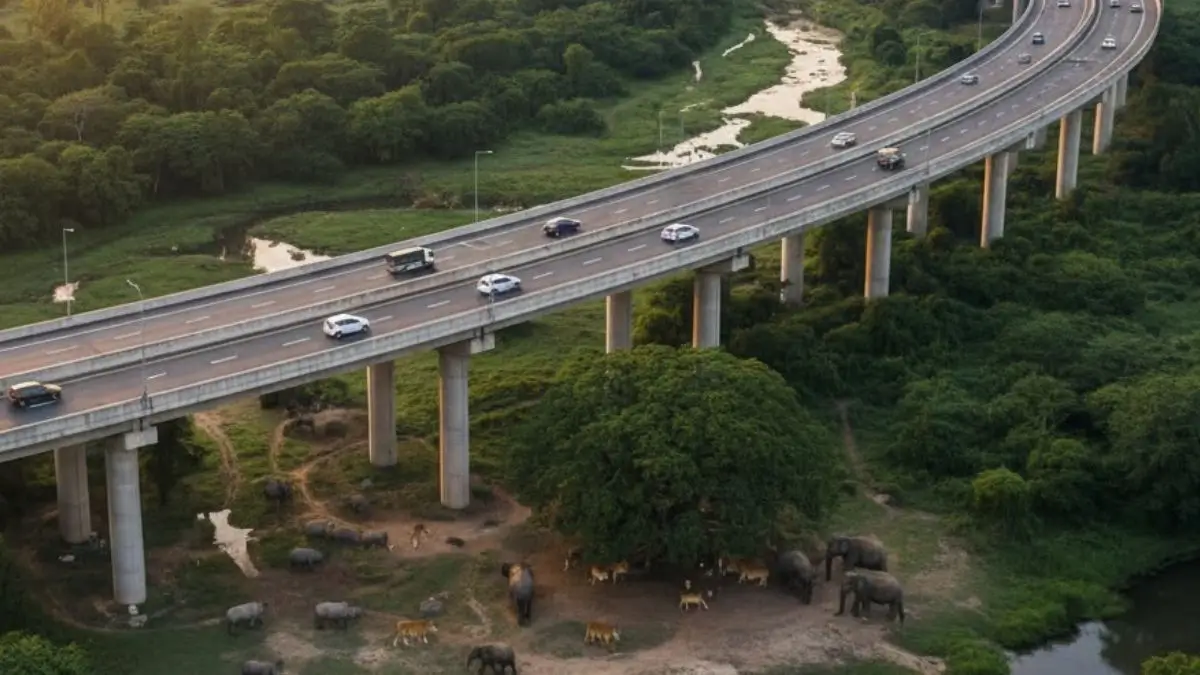
Prime Minister Narendra Modi on January 18, 2026, laid the foundation stone of the ₹6,957 crore Kaziranga Elevated Corridor in Assam and virtually flagged off two Amrit Bharat Express trains. The project is designed to protect wildlife movement, reduce road accidents, and strengthen connectivity while promoting tourism and employment in the region.
Why in News?
Prime Minister Modi inaugurated the Kaziranga Elevated Corridor project worth ₹6,957 crore. He also flagged off two new Amrit Bharat Express trains to improve long-distance rail connectivity.
About Kaziranga Elevated Corridor
- The Kaziranga Elevated Corridor is a 34.5-km-long elevated road forming part of the widening of National Highway-715.
- The highway runs along the southern boundary of Kaziranga National Park, separating it from the Karbi Anglong hills.
- During floods, animals naturally migrate southwards to higher ground, but heavy traffic blocks their movement.
- The elevated corridor will allow vehicles to pass above while animals cross safely underneath.
- The project also includes bypasses around towns like Jakhalabandha and Bokakhat to reduce congestion.
Why the Existing Highway Is Dangerous for Wildlife
- NH-715 is one of the biggest threats to wildlife in Kaziranga.
- Daily traffic has increased steadily, with thousands of vehicles passing through animal corridors.
- Research studies have recorded over 6,000 animal deaths in one year on this stretch, especially during the monsoon season.
- High vehicle speed, night-time movement, and poor visibility make crossings deadly for animals such as deer, leopards, and rhinos.
- Though animal sensors and speed regulations exist, they offer only temporary relief. Experts agree that infrastructure redesign is the only long-term solution.
How the Corridor Helps Conservation and Development
- The elevated corridor represents a model where development and conservation work together.
- By diverting heavy traffic onto elevated sections, the natural landscape below remains accessible to wildlife.
- Forest officials believe this will significantly reduce roadkill and stress on animals. Conservationists have reminded that careful construction is essential to minimise disturbance.
- Once completed, the corridor is expected to provide a permanent solution to wildlife deaths while also improving connectivity between Guwahati, eastern Assam, and Numaligarh, benefiting trade, tourism and local livelihoods.
About Kaziranga National Park
| Aspect | Details |
| State | Assam |
| River | Brahmaputra |
| Biodiversity Zone | Eastern Himalayan Hotspot |
| National Park Status | 1974 |
| Tiger Reserve | 2006 |
| UNESCO Status | World Heritage Site (1985) |
| Famous For | One-Horned Rhinoceros |
| Key Rivers | Diphlu |
| Major Fauna | Rhino, Tiger, Elephant, Buffalo, Swamp Deer |
| Vegetation | Wet alluvial grasslands, elephant grass |
| Major Threats | Poaching, flooding |
Key Summary at a Glance
| Aspect | Details |
| Why in News? | Foundation stone of Kaziranga Corridor laid |
| Project Cost | ₹6,957 crore |
| Corridor Length | Nearly 34.45 km elevated stretch |
| Location | NH-715, Assam |
| Key Objective | Wildlife safety & connectivity |
Question
Q1. The Kaziranga Elevated Corridor is mainly aimed at,
A. Increasing toll revenue
B. Ensuring safe wildlife movement
C. Expanding mining activities
D. Urban housing development


 Rajasthan Launches Industrial Park Polic...
 Gujarat Becomes Second State To Passing ...
 Rekha Gupta Unveils Delhi’s Green Budget...