
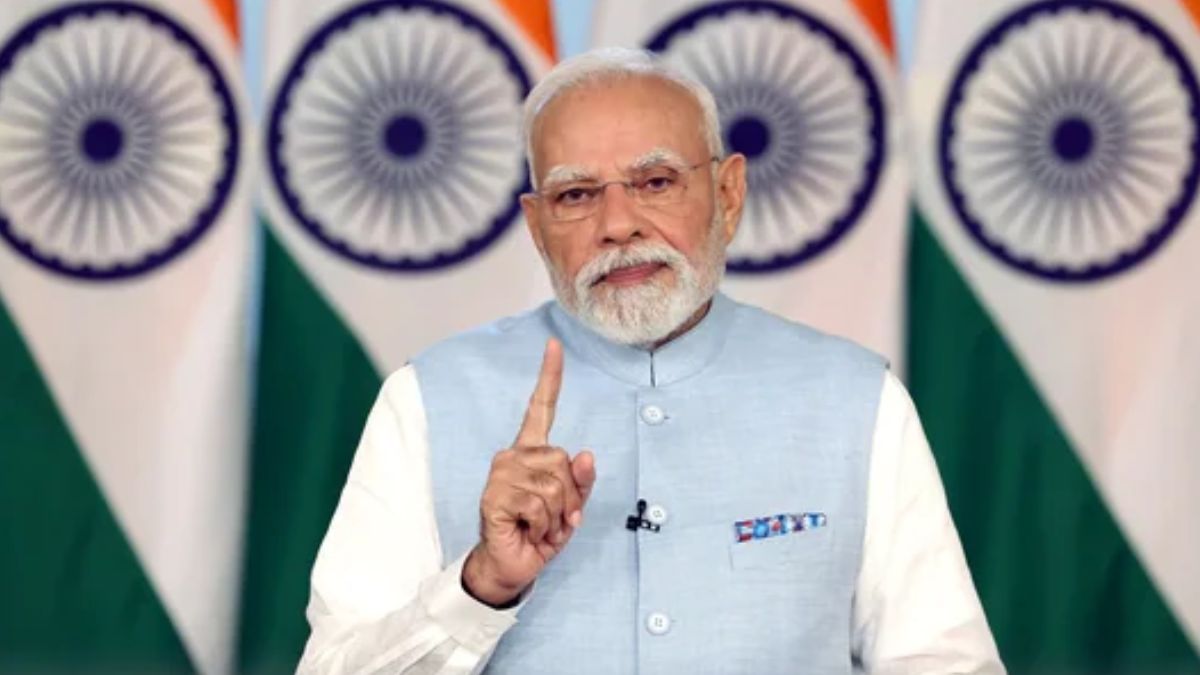
Prime Minister Narendra Modi addressed the nation on 21 September 2025, unveiling Next-Generation GST reforms that come into effect from 22 September. Announcing the beginning of a “GST Bachat Utsav”, the Prime Minister emphasized that the new system will enhance savings for households, reduce costs of essential goods, and strengthen Aatmanirbhar Bharat by boosting MSMEs and local manufacturing.
Key Highlights of the Address
The Prime Minister described the reforms as citizen-centric and a landmark step in India’s economic journey,
- New GST Structure: Only 5% and 18% slabs will remain.
- Lower Costs: Everyday items like food, medicines, soap, toothbrushes, toothpaste, health and life insurance will now attract either 0% or 5% tax.
- Savings Festival: Citizens expected to save over INR 2.5 lakh crore annually due to GST and income tax reforms combined.
- Support to MSMEs: Simplified tax structures to help small businesses, cottage industries, and entrepreneurs.
- Swadeshi Push: Citizens encouraged to buy and sell Made in India products to promote self-reliance.
Background: India’s GST Journey
PM Modi recalled the historic GST reform of 2017, which replaced a complicated network of multiple taxes like Octroi, Entry Tax, VAT, and Service Tax with the idea of “One Nation, One Tax.” He shared how businesses once preferred exporting goods abroad rather than transporting them within India due to tax hurdles.
The new reforms mark the next stage of simplification, aligning taxation with India’s growth ambitions and citizens’ aspirations.
Benefits of Next-Generation GST Reforms
For Citizens
- Affordable essential goods and services
- Reduced travel and hotel costs with lower GST on hospitality
- Ease of fulfilling personal aspirations—buying homes, cars, and consumer goods
For MSMEs and Small Businesses
- Lower tax burdens, encouraging production and sales
- Higher competitiveness of Indian products in global markets
- Simplified compliance and ease of doing business
For India’s Economy
- Stronger consumer spending power
- Boost to domestic manufacturing under Aatmanirbhar Bharat
- Increased investment attractiveness and cooperative federalism
Call for Self-Reliance and Swadeshi
The Prime Minister emphasized that India’s prosperity lies in self-reliance. Just as the Swadeshi movement energized the freedom struggle, promoting Made in India products will now strengthen economic independence.
He urged,
- Every household to adopt Swadeshi.
- Every shop to display indigenous goods proudly.
- Citizens to pledge: “I buy Swadeshi, I sell Swadeshi.”


 India Withdraws Its Plan to Host COP33 S...
 IIM Rohtak Wins BIMTECH's 'Hermes' Dialo...
 Gurgaon Tops the List of India's Most Po...











