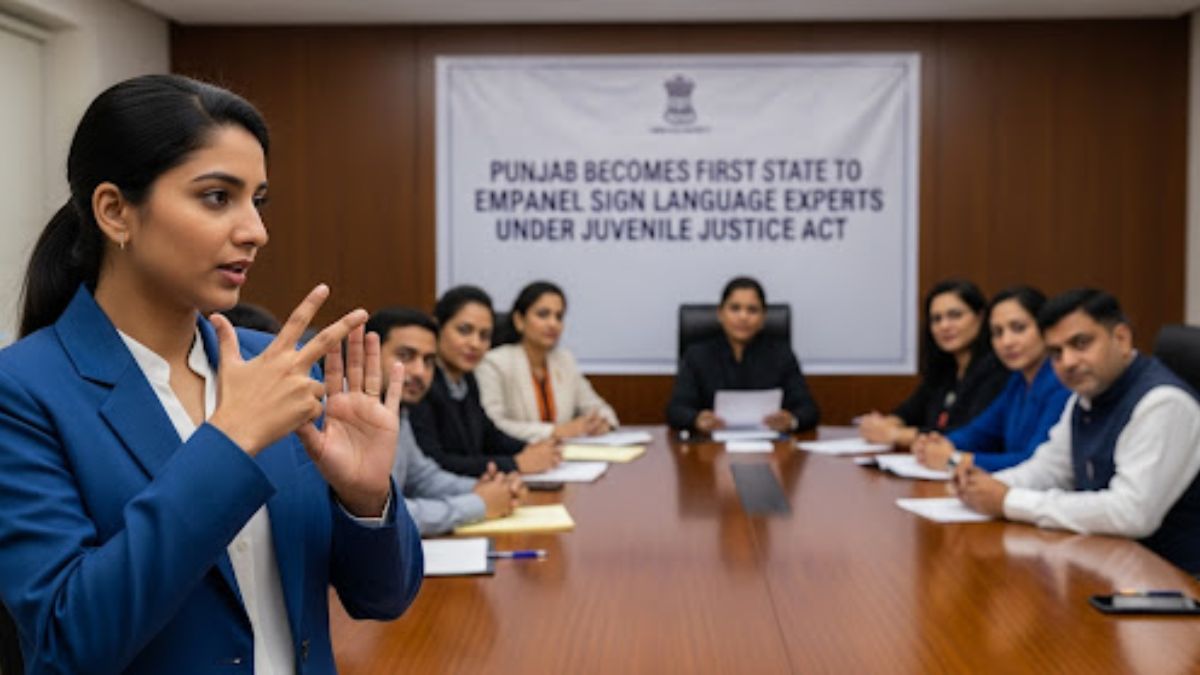
In a pioneering move to make the judicial system more inclusive, the Punjab government will become the first state in India to formally empanel sign language interpreters, translators, and special educators under the Juvenile Justice Act, 2015. The initiative will also extend to cases under the Protection of Children from Sexual Offences (POCSO) Act, 2012.
The announcement was made by Baljit Kaur, Punjab’s Minister for Social Security. The decision aims to bridge communication gaps and strengthen access to justice and rights for children with speech or hearing impairments.
Breaking Barriers in Access to Justice
The empanelled professionals will assist during court proceedings, enabling children with communication disabilities to effectively participate in their cases. This step is expected to ensure fair, transparent, and impartial outcomes in sensitive cases involving juveniles.
This empanelment will bring justice closer to children with special communication needs, ensuring they are not left behind due to language barriers.
District-Wise Deployment
The government plans to deploy these trained professionals across all districts in Punjab. They will be compensated as per the provisions of the Juvenile Justice Act and POCSO Act, ensuring that timely and continuous assistance is available wherever required.
A Continuation of Progressive Measures
Punjab has already taken steps to make governance more accessible for the hearing-impaired community. The state broadcasts important proceedings of the Punjab Vidhan Sabha in sign language, setting an example for inclusive communication in public institutions.
Why This Matters
The move holds significance not just for juvenile justice but also for the broader human rights agenda in India. By embedding sign language experts into the judicial process, Punjab is creating an inclusive legal ecosystem where children with hearing and speech disabilities can engage fully in seeking justice.


 Lok Sabha Passed Resolution For Amravati...
 How Many Seats Are There in Bihar Legisl...
 Nitish Kumar Resigns as Legislative Coun...