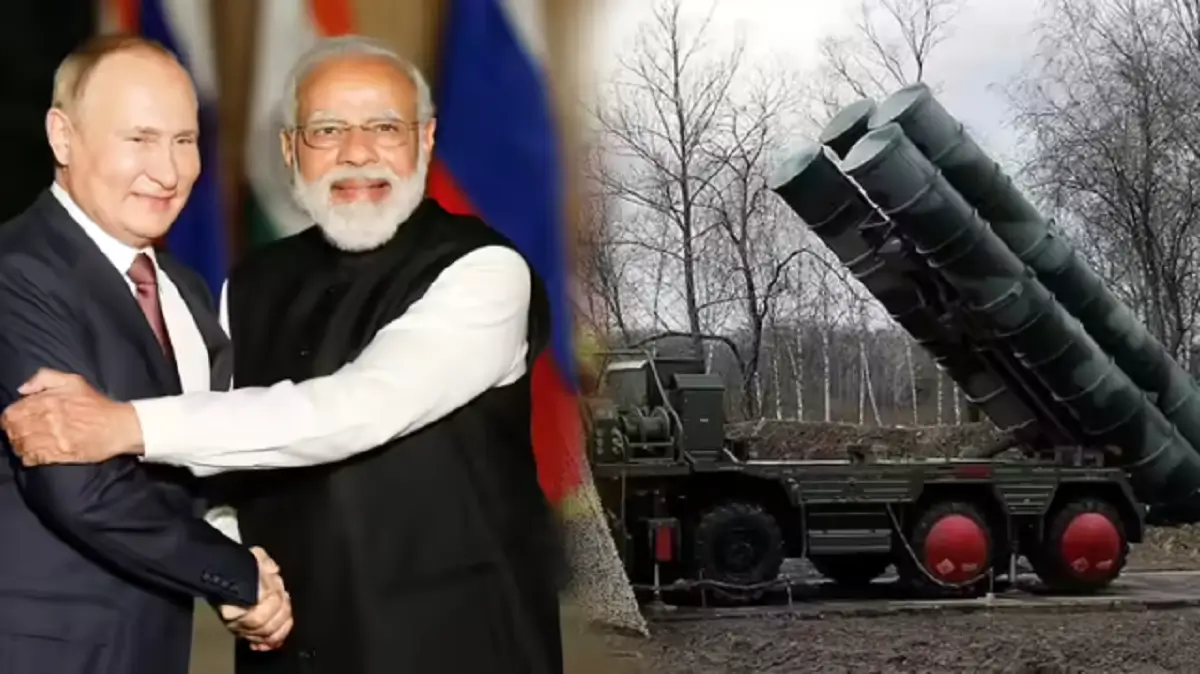
India–Russia relations continue to evolve in a changing global order. Ahead of President Vladimir Putin’s 2025 India visit, Russia has approved the Reciprocal Exchange of Logistics Support (RELOS) agreement, marking a major milestone in bilateral defence cooperation.
The agreement comes at a time when India seeks strategic flexibility from the Indo-Pacific to Eurasia, while Russia aims to deepen Asian partnerships amid shifting geopolitical realities.
What is the RELOS Agreement?
The Reciprocal Exchange of Logistics Support (RELOS) is a bilateral military logistics pact between India and Russia.
It allows both countries’ armed forces to:
- Access each other’s military facilities
- Receive refuelling, repairs, supplies, berthing, and maintenance
- Conduct joint missions more efficiently
- Carry out long-range deployments at lower cost and time
With RELOS, India gains access to over 40 Russian naval and air bases, including key locations in the Arctic and Pacific regions, significantly expanding India’s operational footprint.
Objectives of RELOS Agreement
The agreement aims to:
1. Provide Military Base Access
Enable reciprocal access to ports, airfields, and supply facilities for repairs, refuelling, and maintenance.
2. Strengthen Defence Cooperation
Smoothen logistics during joint exercises and coordinated military operations, enhancing preparedness.
3. Improve Operational Efficiency
Reduce deployment delays and costs, especially for long-range naval missions.
4. Support Disaster Relief Efforts
Enable faster humanitarian assistance and disaster relief (HADR) responses across regions.
Why is RELOS Important for India–Russia Relations?
India and Russia share decades of defence cooperation. RELOS creates a new institutional layer supporting this relationship.
Strategic Access Beyond Oceans
India can now operate from Russian ports such as Vladivostok, Murmansk, and Petropavlovsk-Kamchatsky, strengthening:
- Arctic presence
- Pacific surveillance
- Sea lane monitoring
These regions cover 70% of India’s maritime trade routes, making RELOS vital for supply security.
Boosting Interoperability
The agreement complements training exercises like INDRA (tri-service), enabling:
- Joint deployment of over 20 naval ships
- Friendly force-to-force maintenance support
- Real-time coordination during operations
Strengthening Defence Supply Chains
Platforms like Su-30MKI, T-90 tanks, MiG/Sukhoi fleets, and S-400 systems depend heavily on Russia. RELOS will:
- Reduce logistics delays
- Improve spare part availability
- Ensure quicker repair turnaround
Deepening Strategic Trust
RELOS reinforces long-standing projects like:
- BrahMos missile programme
- Submarine cooperation
- Defence trade worth over USD 13 billion
This demonstrates that the relationship remains strategically relevant and technologically aligned.
How Does RELOS Compare to India’s Other Logistics Agreements?
India has signed similar pacts with the United States and allied partners under the “foundational agreements” framework.
LEMOA (India–US)
- Allows mutual access to bases for fuel and maintenance
- Focuses mainly on the Indo-Pacific and Indian Ocean
- Strengthens naval & air interoperability
COMCASA (India–US)
- Facilitates secured encrypted communication
- Integrates Indian systems into US defence networks
- Enables real-time operational coordination
BECA (India–US)
- Gives India access to satellite, mapping and geospatial data
- Improves targeting accuracy and surveillance capability
- Supports precision-guided weaponry and reconnaissance
Where RELOS is Unique
Unlike US agreements, RELOS:
- Expands India’s reach into Eurasia and Arctic zones
- Supports Russian equipment and supply chains
- Strengthens a defence partnership built over five decades
Thus, RELOS complements but does not replace Western foundational agreements — instead, it diversifies India’s strategic partnerships.


 India Launches AI-Driven Initiative to M...
 What the NPC-MoEFCC Agreement Means for ...
 IIT Bombay & Honeywell Launch Sustai...