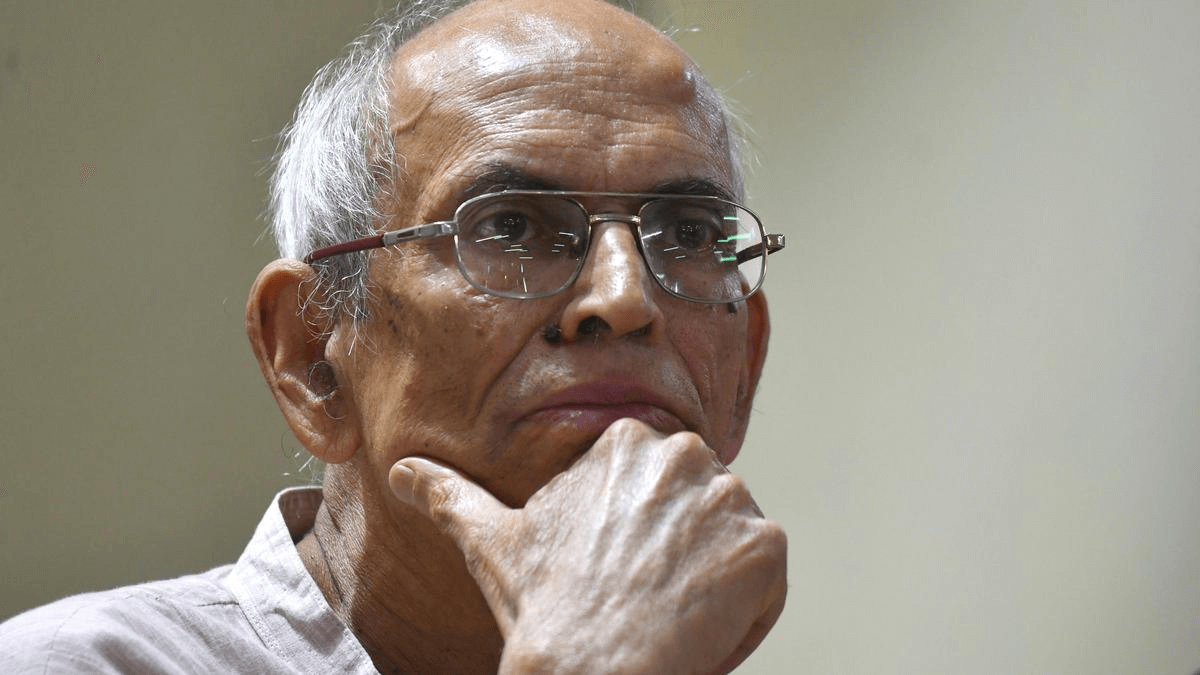
Madhav Gadgil, one of India’s most renowned and influential ecologists, passed away at his residence in Pune on the night of January 7, 2026, after a brief illness. He was 82 years old. Gadgil’s passing marks the loss of a transformative figure in India’s environmental conservation movement—a scientist who dedicated nearly five decades to understanding and protecting India’s most ecologically significant regions, particularly the Western Ghats, and who consistently advocated for the integration of ecological knowledge with sustainable development and social justice.
Key Facts for Competitive Exams and Environmental Knowledge
- Full Name: Madhav Gadgil
- Date of Birth: 1942
- Date of Death: January 7, 2026
- Age at Death: 82 years
- Location of Death: Pune, Maharashtra
- Key Expertise: Ecology, conservation, Western Ghats research
- Major Contribution: Western Ghats ecological zoning classification (2011)
- International Recognition: UN’s highest environmental honour recipient
- Institutional Affiliation: Indian Institute of Science (IISc)
- Major Work: Gadgil Report on Western Ghats (2010)
Madhav Gadgil’s Scientific Legacy and Contributions
Pioneer of Western Ghats Conservation
Madhav Gadgil is most renowned for his pioneering work on the ecological significance of the Western Ghats, one of the world’s most biodiverse regions. His systematic scientific research and conservation advocacy transformed public and governmental understanding of the Western Ghats’ irreplaceable ecological value. He headed the Western Ghats panel, which produced the influential report that classified and prioritized conservation efforts for this critical biodiversity hotspot.
The 2011 Western Ghats Classification
In his landmark 2011 report, Gadgil’s work classified the Western Ghats into zones of high, medium, and low ecological sensitivity, providing a scientific framework for environmental impact assessment and land-use planning. This zoning system became instrumental in identifying vulnerable areas and guiding conservation priorities. Gadgil himself emphasized the critical importance of this classification, noting that areas falling within the highly sensitive category required stringent protection from developmental pressures and human-induced degradation.
International Environmental Recognition
Gadgil’s contributions to environmental science and conservation earned him the United Nations’ highest environmental honour, recognizing his exceptional dedication to environmental protection and his role in advancing ecological science at the global level. This prestigious international award acknowledged his status as not merely a regional figure but a global leader in environmental thought and conservation practice.
Academic and Institutional Contributions
Role at Indian Institute of Science (IISc)
Beyond his field research and conservation advocacy, Gadgil was instrumental in helping establish world-class research centres at the Indian Institute of Science (IISc) in Bangalore. His institutional work created platforms for training new generations of ecologists and environmental scientists, ensuring that rigorous ecological research would continue to inform India’s environmental policies and practices.
Advocacy Beyond Science: Standing Up for Environmental Justice
Critic of Flawed Environmental Policies
Gadgil was not merely an academic researcher; he was a vocal and principled advocate who consistently stood up for what was right, even when confronting powerful interests and established policies. He critiqued the Wildlife Protection Act, arguing that certain provisions were problematic because they insufficiently considered the rights and livelihoods of indigenous communities dependent on forest resources.
Champion of Ecological-Social Integration
His advocacy reflected a sophisticated understanding that environmental conservation must be pursued in conjunction with social justice. Gadgil emphasized that the poorest communities would disproportionately bear the heaviest burden as climate change-related disasters increased, articulating a powerful argument for integrating ecological protection with equitable development.
Author and Public Educator
Beyond academic publications, Gadgil authored “A Walk Up the Hill — Living with People and Nature,” an autobiography that combined personal narrative with environmental philosophy. The book’s translation into Tamil demonstrated his commitment to making ecological knowledge accessible across linguistic and cultural boundaries, reaching diverse audiences across India.


 Bengali Actor Rahul Arunoday Banerjee Di...
 Who Was Vijaypat Singhania? Raymond’s Fo...
 E A Rajendran Passed Away at 71: Remembe...