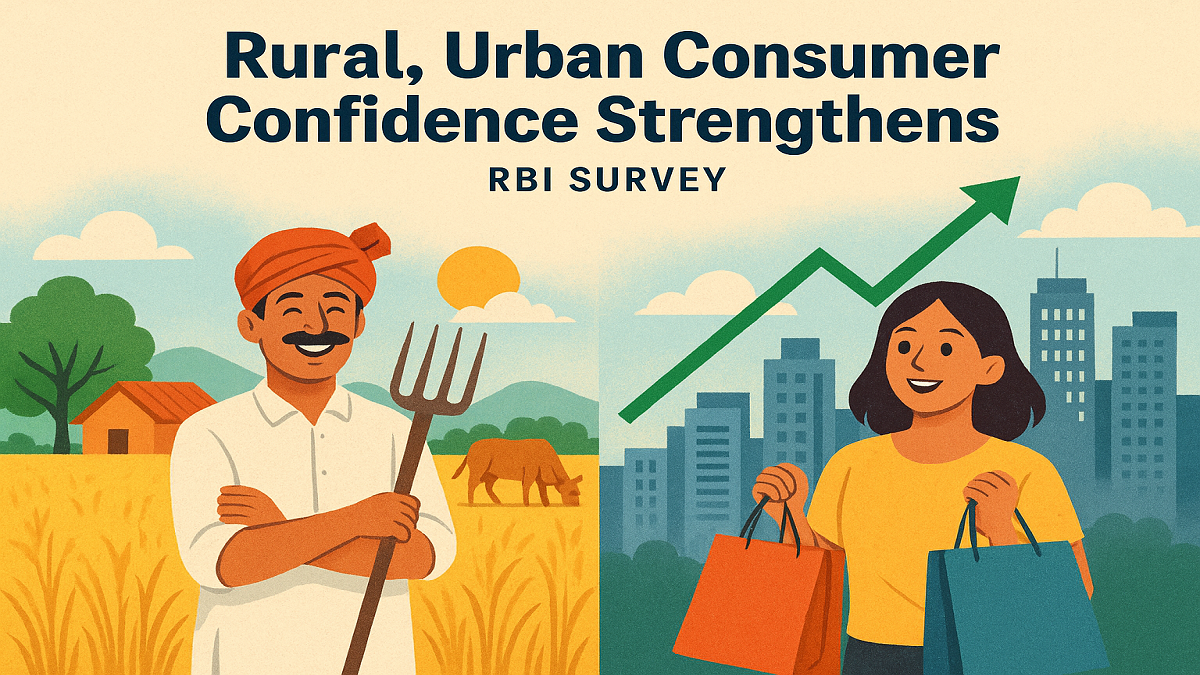
Consumer Sentiment Sees an Uptick
Consumer confidence across India’s rural and urban populations witnessed a notable improvement in July, reflecting growing optimism in the economy. This positive shift has largely been driven by declining retail inflation and more favourable interest rates, which have boosted household sentiment.
In rural areas, the Current Situation Index (CSI)—which captures the sentiment about present economic conditions—registered a modest rise. Households reported better conditions in employment, income, and overall price levels. At the same time, the Future Expectations Index (FEI), which measures outlook for the year ahead, continued its upward climb for the sixth consecutive round, pointing to a broader sense of economic hopefulness.
Urban consumers mirrored this trend. Both current and future outlook indices improved, reflecting increasing confidence in economic recovery. While current income sentiments have strengthened, expectations around future income remain cautious, suggesting a degree of realism amidst optimism.
Why Confidence Is Growing
Household views on inflation are becoming more positive. Many now believe that price pressures will ease further over the coming year. This sentiment is underpinned by a visible drop in both the perceived and expected inflation levels, especially in rural households.
This changing perception is crucial because it often influences spending behaviour. When people expect stable prices, they are more likely to increase their consumption and investment, which can help boost broader economic growth.
Loan Demand Expected to Rise
The credit outlook also remains robust. Banks are reporting a consistent demand for loans, particularly in sectors like agriculture, mining, manufacturing, and personal finance. Lending conditions are expected to become even more accommodative, especially as the festive season approaches and borrowing needs rise.
Despite a seasonal dip in loan demand during the first quarter, trends suggest a strong rebound through the second and fourth quarters of 2025–26. Lending terms, particularly for businesses in manufacturing and services, are also expected to ease, creating favourable conditions for economic expansion.
But Inflation Isn’t Done Yet
While the current retail inflation rate is relatively subdued, projections for the next financial year (2026–27) indicate a potential rise. According to the Reserve Bank’s survey, headline retail inflation could climb from an expected 3.1% in FY 2025–26 to around 4.4% in FY 2026–27.
This expected increase is based on both domestic and global factors and aligns with broader forecasts from the Monetary Policy Committee. Core inflation—excluding volatile items like food and fuel—is also projected to remain stable but elevated, pointing to ongoing price pressures in key sectors.
What It Means Going Forward
The dual narrative of rising consumer confidence and a looming uptick in inflation presents a mixed picture for policymakers. On one hand, improving sentiment can fuel growth, especially in consumption-led sectors. On the other, inflationary risks could limit the scope for further rate cuts by the central bank.
For now, households seem cautiously optimistic. But as inflation expectations for FY27 rise, both consumers and businesses will need to stay alert to changing economic conditions. Timely policy interventions will be crucial to ensure that rising prices do not undercut the momentum in consumer confidence and credit demand.


 India Extends Inflation Targeting Framew...
 RBI's This Domain Wins Global Recognitio...
 Why HDFC Bank Chairman Atanu Chakraborty...