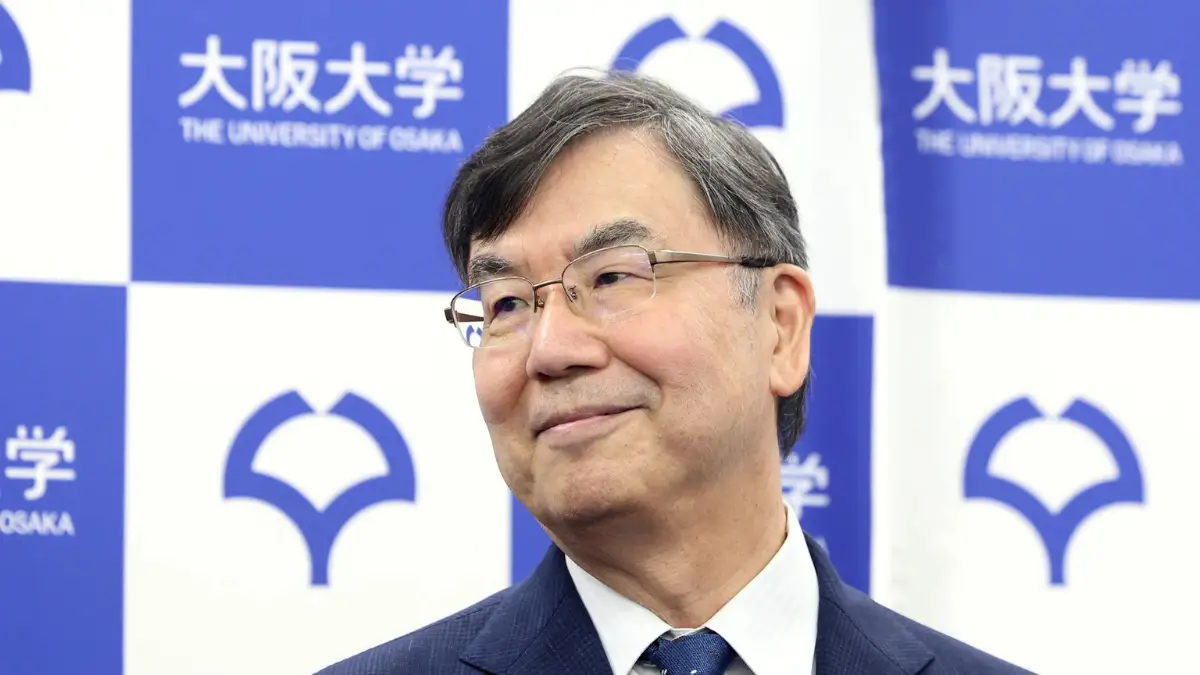
Shimon Sakaguchi is a world-famous Japanese immunologist known for his groundbreaking discovery of regulatory T cells (Tregs) — a special type of white blood cell that prevents the body from attacking itself. His research has helped doctors understand and treat autoimmune diseases. In 2025, he received the Nobel Prize in Physiology or Medicine for his remarkable work.
Early Life and Education of Shimon Sakaguchi
Shimon Sakaguchi was born on January 19, 1951, in Nagahama, Shiga, Japan. He studied medicine at Kyoto University, where he earned both his medical degree (1976) and PhD (1982). From a young age, Sakaguchi was deeply interested in understanding how the human immune system functions and protects the body.
Career Journey of Shimon Sakaguchi
After completing his education, Sakaguchi moved to the United States for advanced research. Between 1983 and 1987, he worked at Johns Hopkins University and Stanford University as a Lucille P. Markey Scholar. Later, he became an assistant professor at the Scripps Research Institute, where he continued studying immune responses.
He returned to Japan in 1991 and joined Riken and the Tokyo Metropolitan Institute of Gerontology as a leading researcher. From 1998 to 2011, he served as Professor and Chairman of the Department of Experimental Pathology at Kyoto University. Later, he moved his research laboratory to Osaka University, where he continues his scientific work as a Distinguished Professor.
Discovery of Regulatory T Cells
In 1995, Sakaguchi and his team made a historic discovery — a special group of immune cells called regulatory T cells (CD4+CD25+ T cells). These cells play a crucial role in controlling immune responses and preventing autoimmune diseases like arthritis, diabetes, and thyroid disorders.
His experiments showed that when these regulatory T cells were removed from mice, the animals developed autoimmune conditions. When the cells were restored, the diseases disappeared — proving their importance in maintaining immune tolerance.
Role of FOXP3 in Immune Regulation
In 2003, Sakaguchi’s research group identified that a gene called FOXP3 is vital for the development and function of regulatory T cells.
This discovery became a cornerstone for modern immunology, helping scientists develop new treatments for autoimmune disorders and immunotherapies for cancer.
Major Awards and Honours
Over his long and inspiring career, Shimon Sakaguchi has received numerous international awards, including:
- 2004: William B. Coley Award (with Ethan Shevach)
- 2008: Keio Medical Science Prize
- 2009: Japan’s Medal of Honor with Purple Ribbon
- 2011: Asahi Prize
- 2012: Elected as a Foreign Associate of the U.S. National Academy of Sciences
- 2015: Canada Gairdner International Award
- 2017: Crafoord Prize (with Fred Ramsdell and Alexander Rudensky)
- 2019: Order of Culture, Japan
- 2020: Paul Ehrlich and Ludwig Darmstaedter Prize
- 2025: Nobel Prize in Physiology or Medicine (shared with Mary E. Brunkow and Fred Ramsdell)
Impact on Science and Medicine
Sakaguchi’s work transformed the field of immunology. His discovery of regulatory T cells opened the door to new ways of treating autoimmune diseases, organ transplant rejection, and even cancer.
Today, his findings continue to guide global medical research on how to balance the immune system effectively.


 How many Nuclear Power Plants in India? ...
 List of Important Days in April 2026, Na...
 Do you Know Which is the Most Spoken Lan...