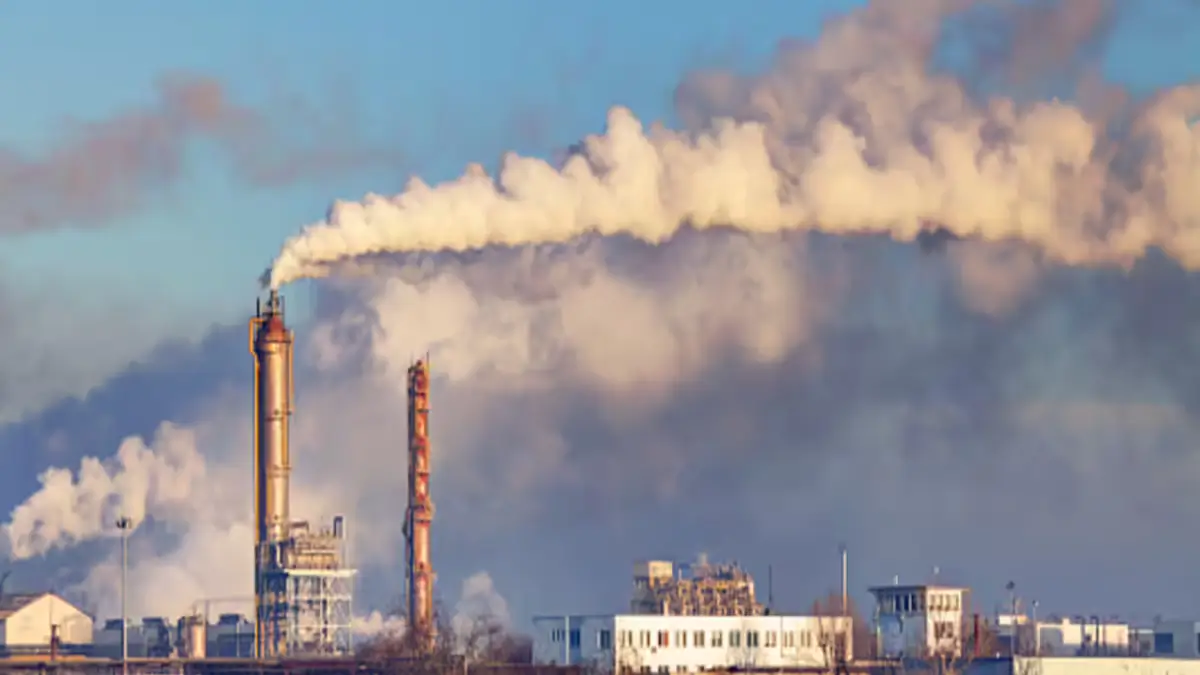
Carbon emissions are one of the biggest environmental challenges facing the world today. They mainly come from burning fuels, industries, vehicles, and power generation. In India, some states produce more carbon emissions than others due to their size, industries, and population. Understanding which states have the highest emissions helps us know how development, energy use, and environment are connected.
Why Carbon Emissions Matter?
Carbon emissions are the main cause of global warming and climate change. They are produced from power generation, factories, transportation, and industrial activities. Reducing these emissions is essential to protect the environment, improve air quality, and move toward a sustainable future.
Top-10 Indian States with the Highest Carbon Emissions in 2025
According to environmental studies, India’s carbon emissions mainly come from manufacturing, coal-based power plants, and transport. A few states are responsible for a major portion of the country’s total emissions.
Here is the list of top-10 states with the highest carbon emissions in 2025:
| Rank | State | Share of Emissions (Approx.) | Main Sources | Highlights |
| 1. | Gujarat | 14% | Manufacturing, natural gas | Biggest emitter; solar energy leader |
| 2. | Odisha | 13% | Coal industries, mining | Heavy coal use for industries |
| 3. | Chhattisgarh | 10% | Coal, metal production | Steel and mining hub |
| 4. | Jharkhand | 9% | Coal, steel industry | Major coal producer |
| 5. | Karnataka | 8% | Manufacturing, fuel use | Large industrial output |
| 6. | Maharashtra | 8% | Chemical and transport | Industrial and vehicle emissions |
| 7. | Andhra Pradesh | 7% | Cement and power plants | Cement production hub |
| 8. | Rajasthan | 5% | Mineral and cement industry | Rapidly growing renewables |
| 9. | West Bengal | 5% | Manufacturing, coal use | Expanding industrial belt |
| 10. | Tamil Nadu | 4% | Manufacturing, gas use | Industrialized with clean energy push |
Trends and Observations
- These 10 states account for around 80% of India’s industrial emissions.
- Coal-based power generation remains the largest source of CO₂ in India.
- However, India is steadily expanding renewable energy capacity to reduce its dependence on fossil fuels.
- Gujarat, Rajasthan, and Andhra Pradesh are leading examples of states focusing on solar and wind power development.
India’s Steps Towards Cleaner Growth
India’s government is making strong efforts to cut emissions through renewable energy, electric vehicles, and energy-efficient industries.
- By mid-2025, India reached 252 GW of non-fossil fuel energy capacity.
- The goal is to achieve 500 GW by 2030.
- Many high-emission states are now investing in solar parks, wind farms, and cleaner technologies to balance growth and sustainability.


 Which is the Most Consumed Beverage in t...
 Which is the Only Continent with No Tree...
 Which River is known as the National Riv...