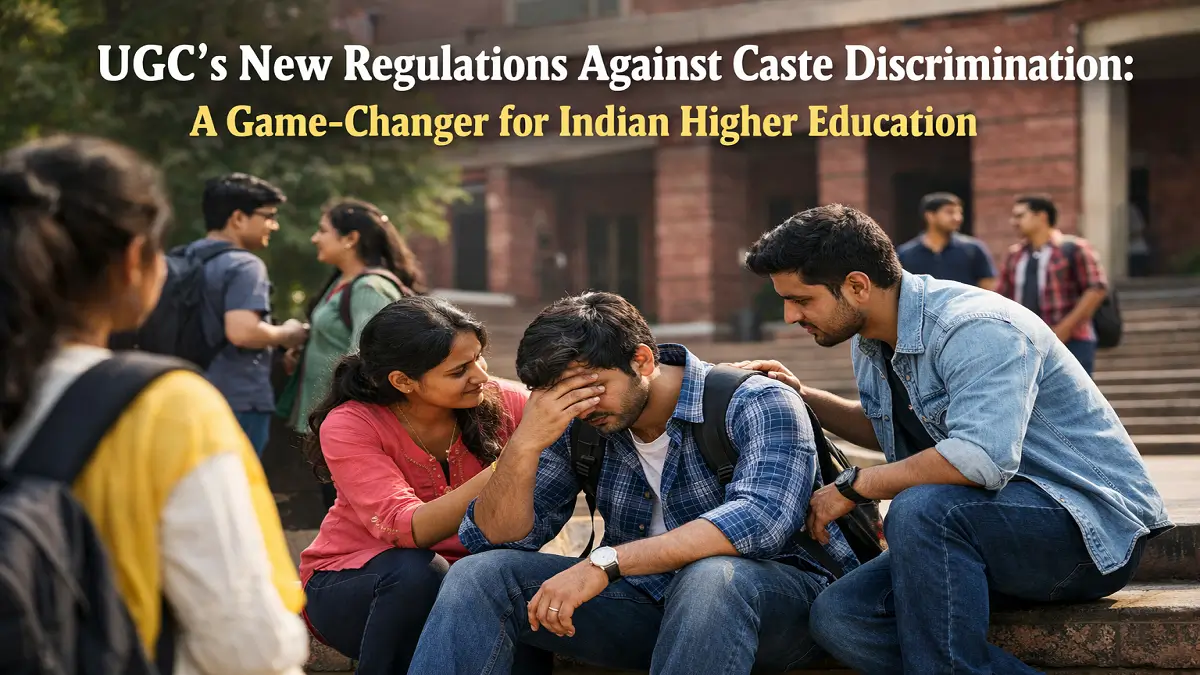
In January 2026, the University Grants Commission (UGC) released new rules to fight caste discrimination in Indian colleges and universities. These are not just suggestions—they are strict rules that must be followed. Any college that breaks these rules will face serious punishments.
Why Do We Need These Rules?
Caste discrimination in Indian colleges is a real and serious problem. In 2019, a study at IIT Delhi found that about 75% of students from lower castes faced discrimination on campus. This includes:
- Students being left out of social activities
- Being treated rudely or disrespectfully
- Being separated from other students in hostels, dining areas, and sports
The Thorat Committee (2007) found that these students were basically isolated in their own colleges, creating what they called “separate spaces” within campuses.
What Are the New Rules?
1. Who Gets Protection?
The new rules protect:
- Scheduled Castes (SCs)
- Scheduled Tribes (STs)
- Other Backward Classes (OBCs)
The rules also protect people from discrimination based on religion, gender, disability, and where they come from. This is broader than before and shows a real commitment to protecting everyone.
2. What Must Every College Do?
Every college must now create an Equal Opportunity Centre (EOC). Think of it as a special office that:
- Listens to complaints about discrimination
- Works to make the college more fair and inclusive
- Ensures all students are treated equally
This office must have a committee (a group of decision-makers) that includes:
- Students from lower castes
- Tribal students
- Students with disabilities
- Women
- Other representatives
This ensures that when decisions are made, everyone’s voice is heard.
3. Keeping Colleges Honest
Colleges must now write regular reports about:
- How many discrimination cases they received
- What they did about them
- How they are making the campus more inclusive
These reports go to the UGC twice a year. This means colleges cannot hide problems anymore.
4. National-Level Checking
The UGC created a national committee made up of government officials and civil society members. This committee:
- Reviews what colleges are doing
- Listens to complaints
- Suggests improvements
- Meets at least two times per year to stay updated
What Happens If Colleges Don’t Follow the Rules?
This is the most important part. These rules have real consequences:
- Colleges that break the rules lose government funding
- They cannot offer online or distance learning programs
- They lose their official recognition from the UGC
This is completely different from old rules that were just suggestions. Now, colleges have to listen or face serious problems.
Why This Matters
Old Problem: Many colleges had SC/ST Cells (offices for these students), but they didn’t really work. These offices often:
- Didn’t help students properly
- Protected the college’s reputation instead of helping victims
- Didn’t have real power to make changes
New Solution: The new Equal Opportunity Centres are independent, have real resources, and have the power to make actual changes.
Mental Health: The rules also recognize something important—discrimination hurts students emotionally. When students feel they don’t belong, they become anxious, lose confidence, and do poorly in studies. These new rules aim to create safe spaces where all students can succeed.
What This Means for Students
These new regulations mean: ✓ Students can report discrimination without fear ✓ Colleges must take complaints seriously ✓ There is real punishment if colleges don’t act ✓ Everyone gets treated fairly regardless of caste, religion, or background ✓ Colleges will focus on creating truly inclusive environments


 After 10 Years, Great Indian Bustard Chi...
 Jewar Airport Opens: 10 Key Facts About ...
 India’s Unemployment Rate Falls to 6.5% ...