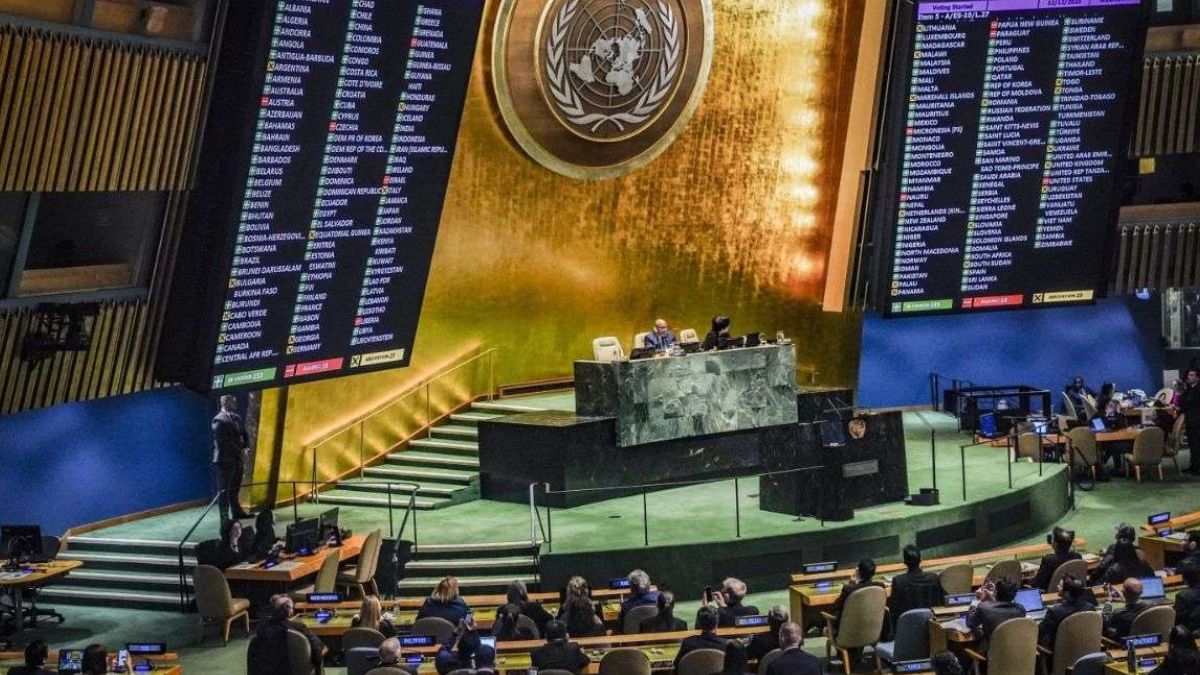
United Nations General Assembly adopted a resolution calling on the Taliban rulers of Afghanistan to end their oppression of women and girls and to fight terrorist groups in the country. The vote passed with 116 countries in favor, while the United States and Israel voted against, and 12 countries, including India, China, Russia, and Iran, abstained. This resolution is important because it reflects growing global concern over the worsening human rights situation in Afghanistan.
What the UN Resolution Says
The 11-page resolution urges the Taliban to reverse their harsh policies, especially those affecting women and girls, such as bans on education beyond sixth grade and restrictions on movement. It also calls for the elimination of all terrorist organizations operating in Afghanistan, including al-Qaida and Islamic State groups.
While not legally binding, the resolution sends a strong message of global unity and concern for the Afghan people. It also encourages efforts for economic recovery and humanitarian support in the country, which is currently facing a severe crisis.
Different Reactions from Countries
The resolution was led by Germany. Its UN ambassador, Antje Leendertse, said the vote is meant to show that the world has not forgotten Afghan women and children, many of whom are suffering from poverty, hunger, and violence.
However, the United States, represented by Jonathan Shrier, opposed the resolution. He said it wrongly rewards the Taliban with more global engagement, even though they continue to violate human rights. He added that after years of sacrifices, it is now time for the Taliban to take responsibility for their country.
Shrier also criticized parts of the resolution that praised Iran and Pakistan for hosting Afghan refugees. He accused Iran of mistreating Afghan refugees, including executions without fair trials and forcing Afghans into militias.
What Happens Next?
The UN General Assembly suggested that Secretary-General António Guterres appoint a special coordinator to better manage global actions and talks on Afghanistan. The aim is to make future efforts more structured, united, and effective.
This resolution comes at a time when Russia has become the first country to formally recognize the Taliban government, raising further international debate. Still, most countries agree that the Taliban must protect human rights and stop supporting terrorist groups if they want full acceptance in the world.


 Newcastle Disease Spread in Europe 2026:...
 Mongolia Gets New Prime Minister Amid Po...
 Myanmar Military Chief Min Aung Hlaing B...