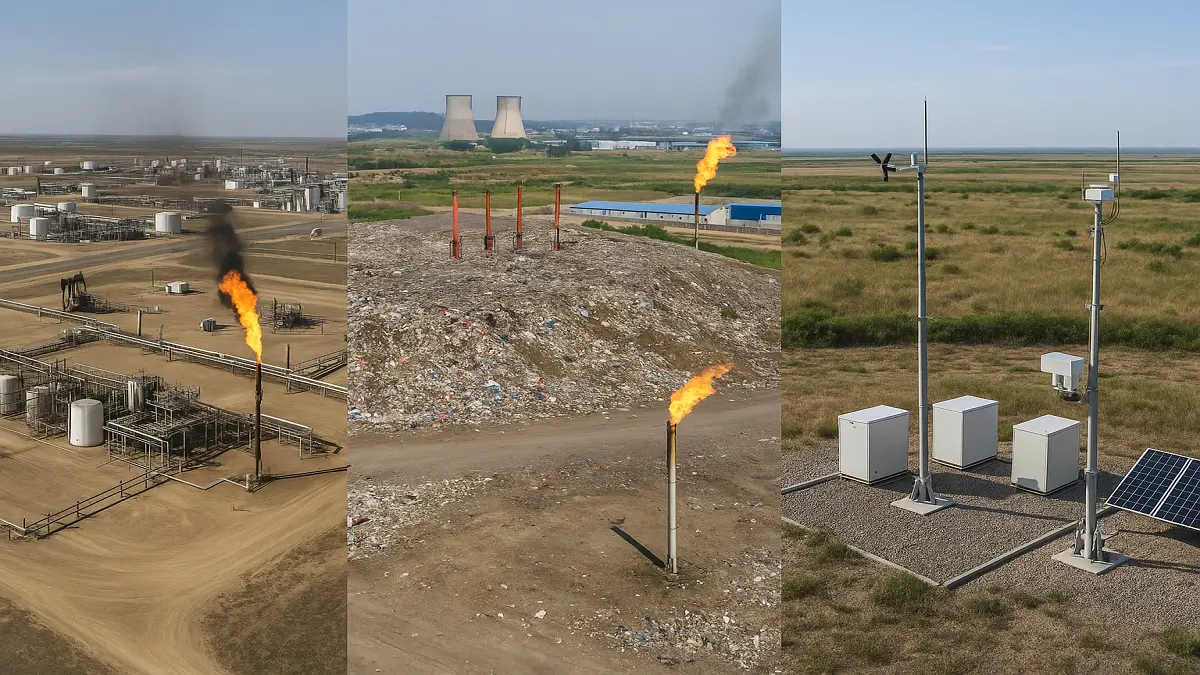
Methane has become one of the most urgent concerns in the global fight against climate change. Although it stays in the atmosphere for a much shorter period than carbon dioxide (CO₂), methane traps far more heat and contributes significantly to the rise in global temperatures. The UN Environment Programme’s (UNEP) Global Methane Status Report 2025, released at the COP30 summit, highlights how rapidly methane emissions are increasing and why immediate global action is necessary.
For countries like India—one of the world’s largest methane emitters—the findings of this report carry major environmental, economic, and policy implications. Understanding methane’s impact, the global policy landscape, and India’s position is essential not only for climate discussions but also for competitive exam aspirants who must stay updated on current environmental developments.
What is Methane?
Methane is a powerful greenhouse gas, second only to carbon dioxide (CO₂) in contributing to global warming. According to the International Energy Agency (IEA), it is responsible for about 30 percent of the rise in global temperatures since the Industrial Revolution.
Potent Heat-Trapper
Over a 20-year period, methane is over 80 times more potent than CO₂ at trapping heat. This makes it a short-lived but high-impact pollutant.
Shorter Lifespan in Atmosphere
While CO₂ can remain in the atmosphere for centuries, methane breaks down in about 12 years, making it a quick target for climate action with fast benefits.
Key Findings of the Global Methane Status Report 2025
Released by the UN Environment Programme (UNEP) at the COP30 summit, the report presents some alarming trends.
Emissions Are Rising
Human-caused methane emissions are increasing. The energy sector released 120 million tonnes of methane in 2023 alone. If current trends continue, methane emissions could rise by 13 percent by 2030 and 56 percent by 2050. This would seriously affect climate goals under the Paris Agreement and the Global Methane Pledge.
Main Sources of Methane Emissions
Globally, around 600 million tonnes of methane are released every year. About 60 percent of this is from human activities, mainly:
- Agriculture – Responsible for 42 percent of emissions, especially from livestock, rice farming, and manure
- Energy production – Oil, gas, and coal sectors
- Waste management – Landfills and wastewater
What is the Global Methane Pledge?
Launched during COP26 in 2021 by the European Union and the United States, the Global Methane Pledge aims to cut global methane emissions by 30 percent by 2030 compared to 2020 levels. As of November 2025, 159 countries have joined the pledge.
India’s Stand on Methane Emissions
Third Largest Emitter
India is now the third-largest methane emitter, after China and the United States. It contributes nearly 9 percent of global methane emissions.
Why India Has Not Signed the Pledge
India has chosen not to join the Global Methane Pledge due to several key reasons:
- Focus on CO₂: India believes long-term action should remain centered on carbon dioxide, not short-lived gases like methane.
- Agriculture Dependency: A large share of India’s methane emissions comes from agriculture, especially small-scale farming that supports millions of livelihoods.
- Food Security: Binding methane targets could harm crop production and farmer incomes.
- National Sovereignty: India prefers to manage its climate commitments under the UN Framework Convention on Climate Change (UNFCCC) and Paris Agreement, not under external pledges.
Methane Reduction Measures in India
Even though India has not joined the pledge, it is taking domestic action to reduce methane emissions through various initiatives.
National Mission on Sustainable Agriculture (NMSA)
This mission promotes climate-resilient farming practices to reduce methane from rice cultivation.
Sustainable Techniques Include:
- Direct Seeded Rice (DSR) – Requires less water, lowering methane generation
- Alternate Wetting and Drying (AWD) – A technique that reduces emissions by up to 45 percent
National Livestock Mission
Aims to reduce emissions from livestock by:
- Improving cattle breeds
- Encouraging balanced and efficient feeding practices
GOBAR-Dhan Scheme
Encourages the use of cow dung and organic waste to produce biogas, turning a methane source into a clean energy alternative for rural areas.


 QS World University Rankings 2026: India...
 Best Airlines in the World 2026: Best Fu...
 Top 10 Self-Made Women Billionaires 2026...