The bilateral relationship between India and Israel has reached a historic milestone. Following high-level talks between Prime Minister Narendra Modi and Prime Minister Benjamin Netanyahu in February 2026, the two nations have officially upgraded their ties to a Special Strategic Partnership.
This transition is backed by 16 landmark agreements spanning Fintech, Defense, and Green Energy, positioning India as a primary digital infrastructure partner for Israel.
1. UPI Integration: NPCI International x MASAV
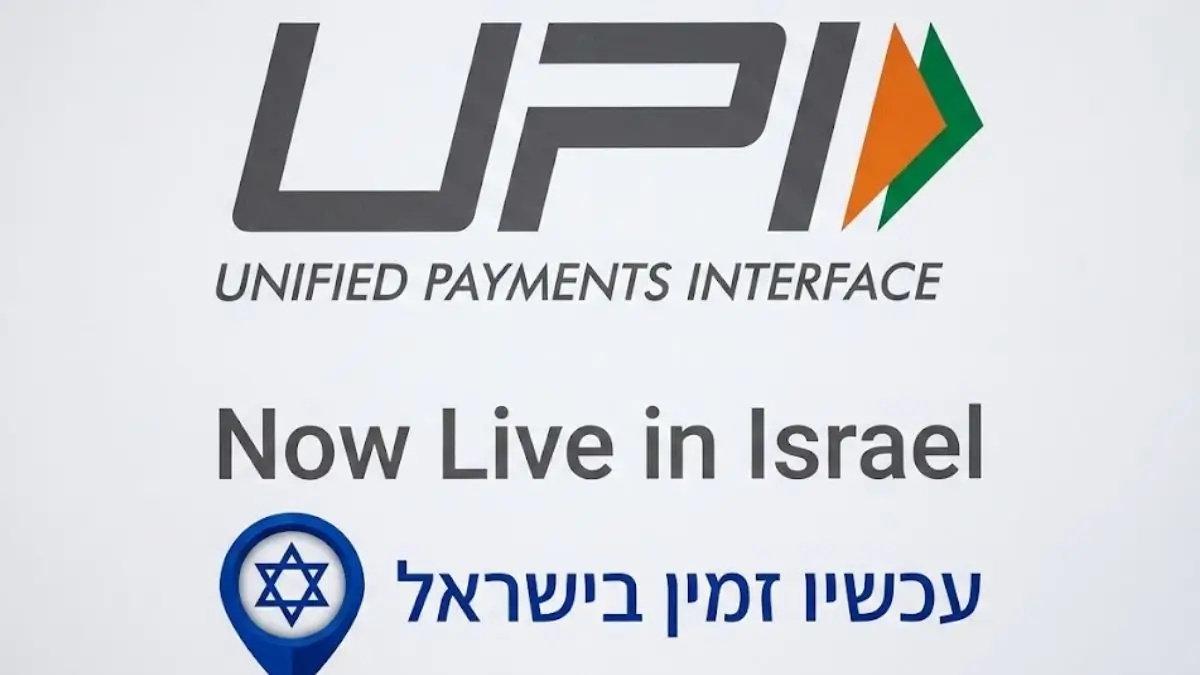
The most significant development for the digital economy is the rollout of the Unified Payments Interface (UPI) in Israel.
- The Partnership: NPCI International (NIPL) has signed a definitive agreement with MASAV, Israel’s central payment processor.
- Seamless Transactions: This allows Indian tourists and professionals to use UPI for merchant payments and enables a low-cost corridor for cross-border remittances.
- Global Footprint: Israel joins an elite list of nations—including Singapore, UAE, France, and Sri Lanka—that have adopted India’s Digital Public Infrastructure (DPI).
2. The $3.62 Billion Trade Pact (FTA)
Economic cooperation is moving toward a formal Free Trade Agreement (FTA).
- Negotiation Status: The first comprehensive round of FTA negotiations concluded on February 26, 2026.
- Current Trade: Bilateral merchandise trade stood at $3.62 billion in FY 2024-25.
- Labor Mobility: A crucial pact was signed to allow 50,000 additional Indian workers into Israel over the next five years, primarily to bolster Israel’s manufacturing sector.
3. Beyond Fintech: AI, Nuclear, and Space
The partnership has expanded into high-tech domains that will define the next decade:
- Emerging Tech: Joint declarations on Quantum Computing and Artificial Intelligence (AI).
- Energy Security: A new framework for cooperation in Civil Nuclear Energy and maritime heritage protection.
- Critical Minerals: Strategic collaboration to secure supply chains for minerals essential to EV battery production.
Practice Your Knowledge
Q. Match the following entities and events with their respective descriptions based on the 2026 India-Israel agreements:
| Column A (Entity/Event) | Column B (Description) |
| 1. MASAV | i. India’s real-time payment system launched in 2016. |
| 2. February 26, 2026 | ii. Israel’s payment operator collaborating with NPCI. |
| 3. UPI | iii. Date marking the conclusion of the first FTA negotiations. |
| 4. $3.62 Billion | iv. Value of bilateral merchandise trade in FY 2024-25. |
| 5. 50,000 | v. Number of Indian workers to be recruited by Israel in 5 years. |
Correct Option: 1-ii, 2-iii, 3-i, 4-iv, 5-v
Explanation: The 2026 agreements represent a “whole-of-government” approach, linking India’s digital prowess (UPI) with Israel’s institutional operators (MASAV) while scaling up trade and labor mobility.
Information Booster:
- UPI was developed by the National Payments Corporation of India (NPCI) and launched in 2016.
- The system is built on the IMPS (Immediate Payment Service) infrastructure but allows for “Pull” and “Push” transactions.
- The “Special Strategic Partnership” status is a rare diplomatic designation reserved for India’s closest global allies.
Additional Knowledge:
- NPCI International: The dedicated subsidiary of NPCI focused on the internationalization of RuPay and UPI.
- FTA Benefits: Once signed, the FTA is expected to significantly reduce import duties on Israeli high-tech equipment and Indian agricultural products.
- Civil Nuclear Energy: This marks a significant shift, as both nations look toward carbon-neutral energy solutions for the future.


 Preeti Saran Re-Elected as UN Committee ...
 Global Trade Hits New High in 2025: Key ...
 Iran–US Ceasefire: Iran’s 10 Conditions ...