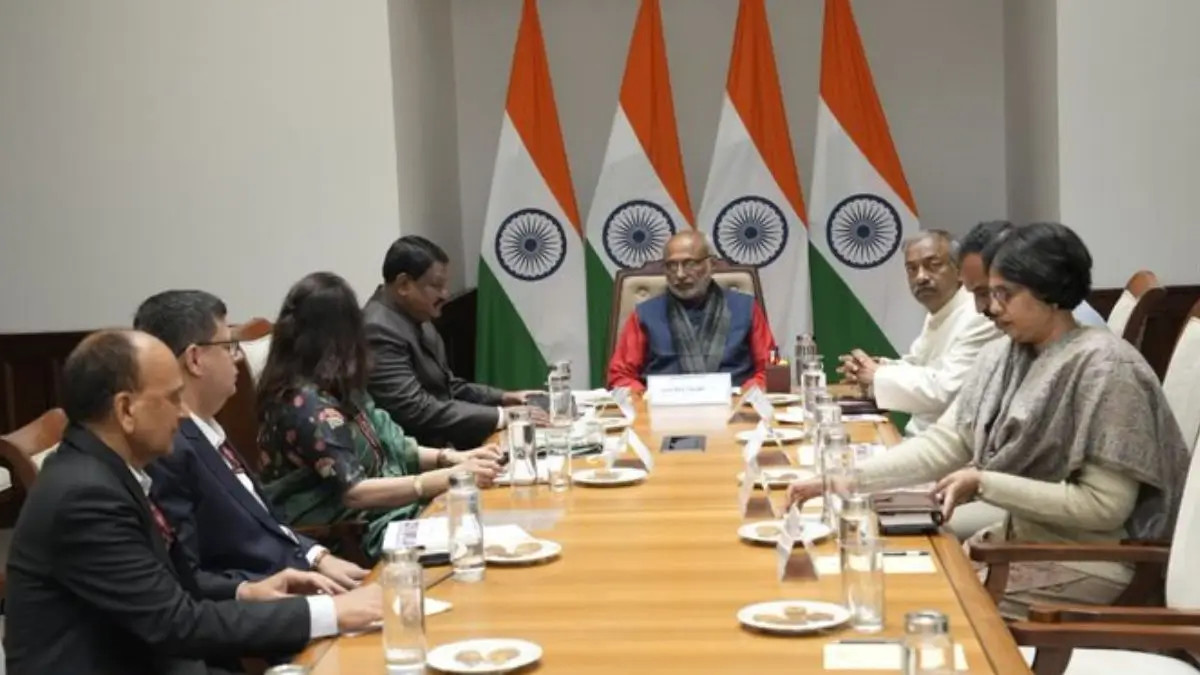
The Vice-President of India, C. P. Radhakrishnan, was recently briefed by Union Tribal Affairs Minister Jual Oram and senior officials about the Ministry’s initiatives aimed at empowering tribal communities. The meeting at Parliament House showcased a wide range of programmes focusing on education, health, livelihoods, and rights of tribal populations across India. The Vice-President applauded the Ministry for significantly increasing its budget and called for greater academic support, stronger links between schools and universities, and urgent health interventions—especially in tribal-dominated areas.
Major Budget Boost for Tribal Welfare
One of the most notable developments discussed was the three-fold rise in the Ministry’s budget outlay over the last eleven years. The Ministry’s allocation has increased from around ₹4,500 crore in 2014-15 to nearly ₹15,000 crore in 2025-26.
This rise reflects the government’s commitment to intensify efforts in tribal development, support for education, village infrastructure, and the well-being of vulnerable tribal groups.
Empowering Education: From EMRS to University
Education remains a cornerstone of the Ministry’s tribal upliftment strategy. The government has expanded the Eklavya Model Residential Schools (EMRS) network to deliver quality education in remote tribal areas.
As of mid-2025,
- 728 EMRSs have been approved
- 479 schools are currently functional
- Over 1.38 lakh tribal students are enrolled
The Vice-President stressed the importance of university-school partnerships to help tribal students transition smoothly into higher education, including global opportunities. He also urged for continuous academic support and monitoring to reduce school dropout rates among tribal children.
Key Schemes for Holistic Development
The Ministry’s approach spans multiple sectors and is driven by flagship schemes that aim to uplift all aspects of tribal life.
PM-JANMAN
The Pradhan Mantri Janjati Adivasi Nyaya Maha Abhiyan targets Particularly Vulnerable Tribal Groups (PVTGs) by ensuring their access to basic services such as education, healthcare, clean water, and housing.
Dharti Aaba Janjatiya Gram Utkarsh Abhiyan
This scheme focuses on infrastructure saturation in tribal villages. It works across ministries to ensure every tribal village has roads, schools, electricity, and digital connectivity.
Adi Karmayogi Abhiyan
A unique initiative to build institutional capacity and leadership among tribal youth and officials, equipping them with administrative and entrepreneurial skills.
Health Priorities: Fighting Sickle Cell Anaemia
A major health challenge in tribal regions is the high incidence of sickle cell anaemia—a genetic blood disorder that affects many tribal populations.
The Ministry has launched focused health campaigns to,
- Conduct widespread screening and early diagnosis
- Improve access to treatment and counseling
- Strengthen tribal health infrastructure, especially in remote areas
The Vice-President appreciated these efforts and stressed the need for sustained focus on tribal health to close the critical gap in medical care access.
Promoting Tribal Culture and Livelihoods
The Ministry is also reviving tribal art, culture, and heritage, while helping communities build sustainable livelihoods. Traditional skills such as handicrafts, forest produce collection, and tribal entrepreneurship are being supported through financial aid and training.
These efforts aim to preserve tribal identity while boosting income levels and economic independence.
Challenges That Need Attention
Despite major gains, several challenges remain,
- Ensuring schemes reach every tribal household
- Reducing school dropouts and enhancing higher education opportunities
- Filling healthcare delivery gaps in hard-to-reach tribal areas
- Encouraging community participation in schemes for better implementation
The Vice-President noted that only when the benefits of welfare programmes are fully realised by tribal communities can the vision of a Viksit Bharat (Developed India) be achieved.
Static Facts
- Ministry Budget (2025-26): ₹14,925.81 crore
- EMRSs Approved: 728
- EMRSs Functional: 479
- EMRS Enrolment: 1.38 lakh+ students
- Major Schemes: PM-JANMAN, Dharti Aaba Abhiyan, Adi Karmayogi Abhiyan
- Target Group: Scheduled Tribes, particularly PVTGs
- Health Focus: Sickle cell anaemia screening and treatment
- Education Emphasis: University-school linkage, overseas study for tribal students
- Vision Statement: Upliftment of tribals essential for a Viksit Bharat

 Supreme Court Rules on SC Status: Conver...
 Lok Sabha Passes Transgender Amendment B...
 Indian Railways New Ticket Cancellation ...