
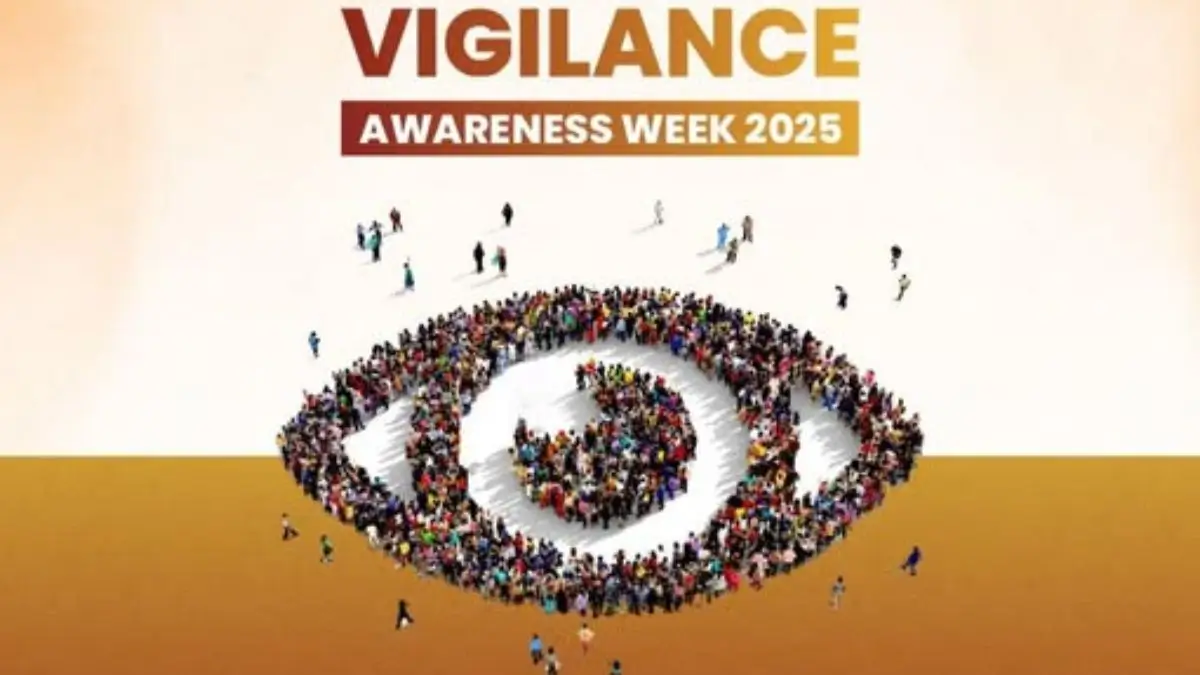
India commenced its observance of Vigilance Awareness Week 2025 from 27 October, rallying citizens and public institutions around the theme: “Vigilance – Our Shared Responsibility.” Celebrated annually in the last week of October to commemorate the birth anniversary of Sardar Vallabhbhai Patel (31 October), this initiative aims to foster greater public awareness about the importance of integrity, accountability, and ethical conduct in public life.
The campaign serves as a nationwide call to action to fight corruption and reinforce transparent governance, with active participation from ministries, departments, public sector units (PSUs), banks, schools, and civil society.
Thematic Focus: Vigilance as a Collective Duty
The 2025 theme, “Vigilance – Our Shared Responsibility,” emphasizes that the fight against corruption and unethical practices is not the burden of a single agency but a collective societal duty. It seeks to empower individuals across all levels—government officials, corporate employees, students, and citizens—to recognize their role in ensuring clean and responsible governance.
By invoking shared responsibility, the theme aligns with the growing recognition that systemic reforms and social vigilance must go hand-in-hand to create lasting change.
Observance Highlights
The week began with pledge ceremonies in government offices across India. At the Central Vigilance Commission (CVC) headquarters in New Delhi, Central Vigilance Commissioner Praveen Kumar Srivastava and Vigilance Commissioner A. S. Rajeev administered the oath to officials, affirming their commitment to ethical conduct and corruption-free work environments.
Various organisations across the public and private sectors also took part in the observance by conducting,
- Awareness sessions and seminars on integrity and public accountability
- Debates, quizzes, and essay competitions in schools and colleges
- Integrity clubs and anti-corruption drives
- Grievance redressal camps and information campaigns on vigilance mechanisms
Importance of Vigilance in Public Life
Vigilance is not merely about surveillance; it is about instilling a culture of ethical behavior, transparency, and honesty in everyday transactions. In a democratic society like India, it helps,
Build public trust in institutions
- Strengthen governance mechanisms
- Ensure efficient and fair delivery of public services
- Empower citizens to report irregularities and demand accountability
The CVC, established under the CVC Act, 2003, plays a pivotal role in promoting vigilance administration by advising the government, investigating complaints, and recommending systemic improvements.
Why the Week Coincides with Sardar Patel’s Birthday
Sardar Vallabhbhai Patel, born on 31 October 1875, was one of India’s founding leaders, known for his visionary leadership, integrity, and commitment to nation-building. His birthday is observed as Rashtriya Ekta Diwas (National Unity Day), and Vigilance Awareness Week is held around this time to draw inspiration from his principles.
Patel’s legacy serves as a reminder that integrity and unity are twin pillars of national strength—making the observance of this week especially meaningful.
Challenges in Promoting Vigilance
Despite consistent awareness efforts, challenges persist in rooting out corruption,
- Institutional delays and lack of accountability
- Fear of retaliation among whistleblowers
- Inadequate public knowledge about complaint mechanisms
- Cultural normalization of unethical behavior in some contexts
Addressing these issues requires not just enforcement but education, capacity-building, and public engagement.


 World Autism Awareness Day 2026: Underst...
 RBI Foundation Day 2026: History, Functi...
 List of Important Days in April 2026, Na...











