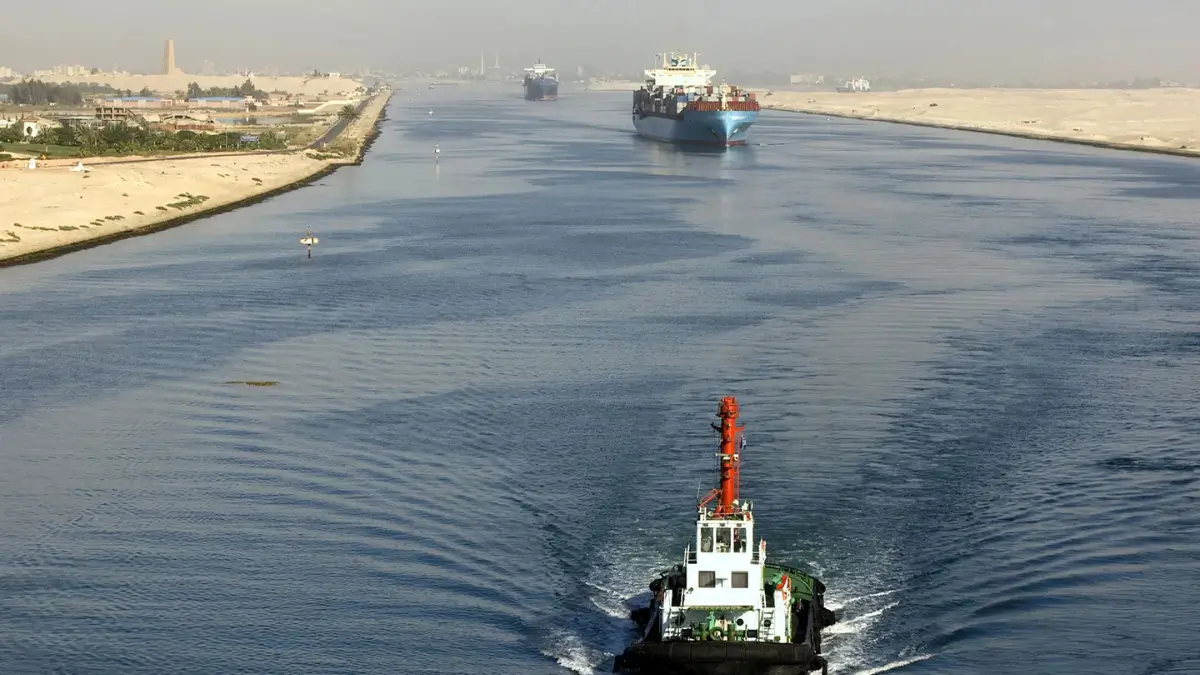
In our world, many natural and man-made waterways connect different seas and oceans, helping ships move easily between continents. One special canal plays a very important role in world trade by linking two major seas. This canal allows ships to travel a shorter route between Europe, Asia, and Africa, saving both time and distance.
Canal that Links the Mediterranean Sea and the Red Sea
The canal that links the Mediterranean Sea and the Red Sea is the Suez Canal. It is located in Egypt and is one of the most important waterways in the world. This man-made canal allows ships to travel between Europe and Asia directly, without going around Africa. It saves time, distance, and fuel, making it a vital route for global trade and transportation.
What is the Suez Canal?
The canal that links the Mediterranean Sea and the Red Sea is called the Suez Canal. It is located in Egypt, a country in northeastern Africa. The canal is a key waterway for international trade and helps connect Europe, Asia, and Africa directly. Ships carrying goods, oil, and containers from one continent to another pass through this canal every day.
Where is it Located?
The Suez Canal stretches from Port Said on the Mediterranean Sea in the north to Port Suez on the Red Sea in the south. Because of its position, Egypt plays an important role in world shipping. The canal is especially useful for oil and gas shipments traveling from the Middle East to Europe. Its location makes it one of the busiest and most secure sea routes in the world.
History and Construction of the Suez Canal
The idea of connecting the two seas existed for centuries, but the Suez Canal was finally built in the 19th century. French engineer Ferdinand de Lesseps led the construction, which began in 1859 and finished in 1869. It took around ten years to complete. When it opened, it changed world trade by giving ships a much shorter route between the East and the West.
Modern Upgrades and Development
Over time, the canal has been improved to handle modern, larger ships. In 2015, Egypt completed the New Suez Canal Project, which added a new lane and widened parts of the old canal. This allowed more ships to pass at the same time and reduced waiting time for vessels, making the canal even more efficient for trade.
World’s Longest Sea-Level Canal
The Suez Canal is known as the world’s longest sea-level canal, which means it does not have any locks. Locks are used in other canals to raise or lower ships to different water levels. But in the Suez Canal, the water levels in both the Mediterranean and Red Seas are nearly the same. This allows ships to pass directly and smoothly without delay.
Interesting Facts About the Suez Canal
- Connects Europe and Asia Directly: The Suez Canal offers the shortest sea route between Europe and Asia. Ships no longer need to travel around the Cape of Good Hope in South Africa, saving thousands of kilometres and nearly two weeks of travel time.
- Handles Around 12% of Global Trade: About 12% of all global trade moves through the Suez Canal every year. This includes goods like oil, gas, and everyday products shipped around the world.
- Major Economic Importance: The canal brings Egypt a large amount of income through tolls paid by ships. It also strengthens Egypt’s position as an important global trade hub.
- Engineering Marvel: When it was built in 1869, the Suez Canal was seen as one of the greatest engineering achievements of its time. Even today, it remains a symbol of human creativity and hard work.


 Which Country is the Largest Coal Produc...
 Which Lake is known as the Lake Above th...
 How many International Airports are ther...