
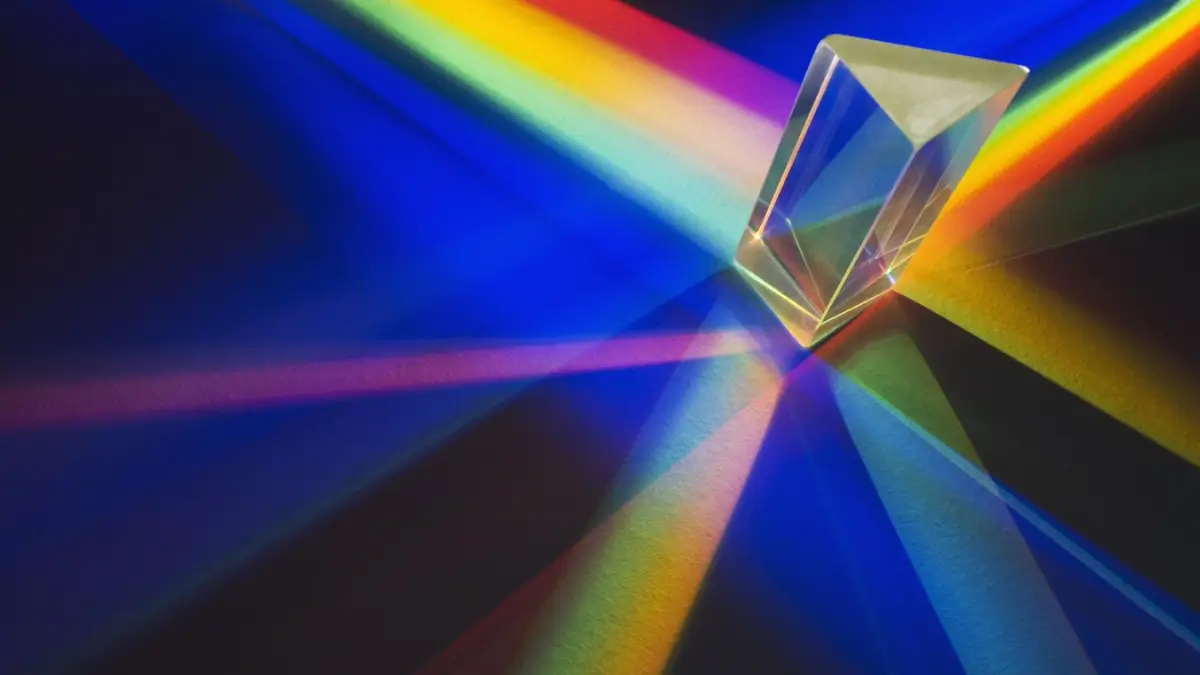
Light is all around us, and it is made up of many different colours. Each colour has a special property called wavelength, which is the distance between one wave and the next. Wavelength affects how we see colours and how they behave in nature. Some colours have short wavelengths, while others have long ones. Learning about wavelengths helps us understand light and its effects better.
Which Colour has the Longest Wavelength?
The colour with the longest wavelength in the visible spectrum is red. Red light waves are the slowest and carry the least energy, which makes them stretch out the most. This is why red can travel long distances without being scattered, making it highly visible in fog, rain, or dust. That is also why stop signs, traffic lights, and brake lights are red, as it easily catches our attention from far away.
What is Wavelength?
Wavelength is the distance between two high points (peaks) or low points (troughs) of a wave. Think of waves in the ocean: the distance from one wave top to the next is similar to a light wave’s wavelength. In light, wavelength is tiny and measured in nanometres (nm). Short waves carry more energy, and long waves carry less.
Colours and Their Wavelengths
White light can be split into different colours using a prism. These colours are always arranged by wavelength, from longest to shortest:
- Red: ~620–750 nm
- Orange: ~590–620 nm
- Yellow: ~570–590 nm
- Green: ~495–570 nm
- Blue: ~450–495 nm
- Indigo: ~425–450 nm
- Violet: ~380–425 nm
Red is at one end of the spectrum with the longest wavelength, while violet is at the other end with the shortest.
Why Red has the Longest Wavelength?
Red light waves are the slowest and carry the least energy among visible colours. Because of this, their waves stretch out the most. Red sits next to infrared light in the electromagnetic spectrum, which is why it can travel long distances without scattering.
This property is one reason why stop signs, traffic lights, and brake lights are red. Red is easy to see from far away and can pass through fog, rain, or dust better than any other colour.
Interesting Facts About Red
- Red disappears first underwater; at around 15–20 feet deep, it looks grey or black.
- Mars looks red because of iron oxide (rust) on its surface.
- Many fast-food restaurants use red because it can increase appetite.
- During a lunar eclipse, the moon can appear red, known as a “Blood Moon.”
- Red is often the first colour humans name after black and white.


 List of Important Days in April 2026, Na...
 Which Place is known as the Glass Capita...
 Who is known as the Father of Census of ...











