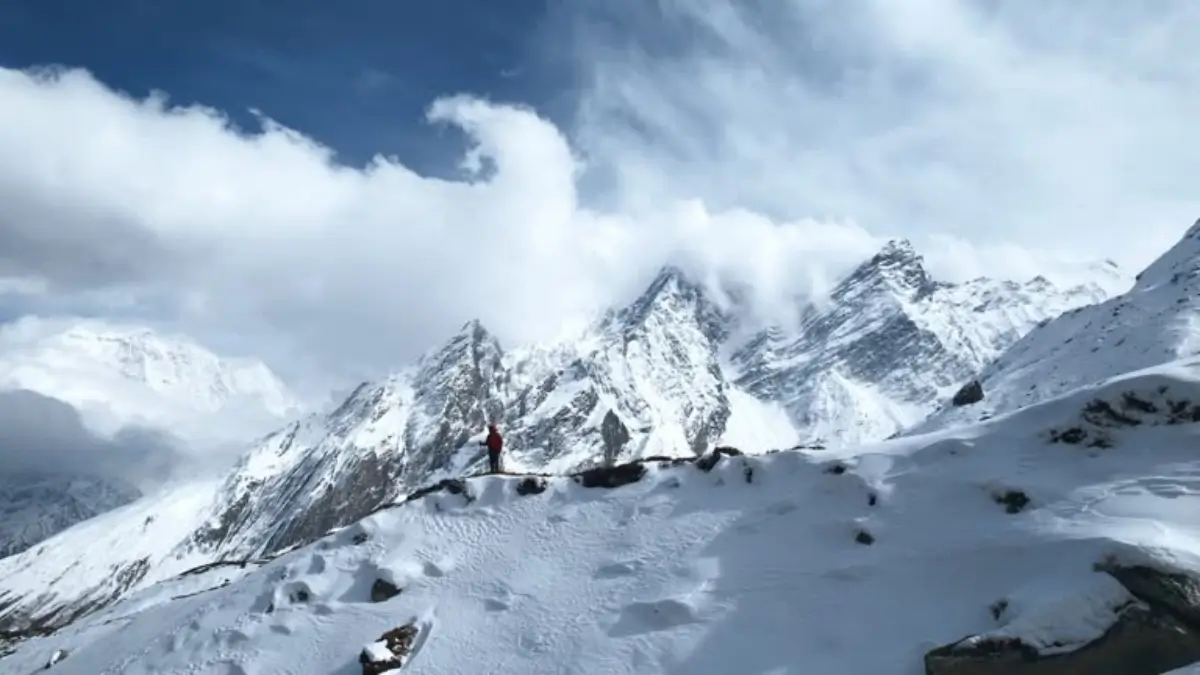
The Himalayas are the highest and most famous mountains in the world, stretching across several countries in Asia. These mountains are known for their snow-covered peaks, deep valleys, and beautiful landscapes. Many rivers start from these mountains, and they are home to unique plants and animals. People from around the world visit the Himalayas for trekking, climbing, and exploring the natural beauty of this majestic mountain range.
Which Country has the Most Himalayan Peaks?
The Himalayas are the tallest mountains in the world, stretching across several countries in Asia. They are famous for snow-covered peaks, deep valleys, and beautiful scenery. Among all the countries, Nepal has the most Himalayan peaks. Its central location in the Himalayas, high mountains, glaciers, and steep valleys make it home to many famous peaks, including Mount Everest. Nepal is a top destination for climbers and mountain lovers.
Why Nepal has the Most Himalayan Peaks?
Nepal has the most Himalayan peaks because about three-quarters of its land is mountainous. The Himalayan range runs across the northern part of the country, giving Nepal the highest number of tall mountains. Its central location in the Himalayas also makes it home to many famous and very high peaks.
Famous Himalayan Peaks in Nepal
Some of the most well-known mountains are in Nepal. These include Mount Everest, Lhotse, Makalu, Cho Oyu, Dhaulagiri, Manaslu, and Annapurna I. Kanchenjunga is shared with India. These peaks attract climbers from all over the world and make Nepal famous as a mountain country.
Himalayan Range Across Different Countries
The Himalayas stretch across five main countries: Nepal, India, Bhutan, China (Tibet), and Pakistan. Nepal has the densest group of the tallest mountains. Other countries have important peaks too, but none have as many as Nepal.
Top-5 Countries with the Most Himalayan Peaks
- Nepal: Nepal has the highest number of Himalayan peaks, including eight mountains above 8,000 metres. Its steep slopes, glaciers, and high valleys make it a mountaineer’s paradise.
- India: India has a large section of the Himalayas in the west and east. Famous peaks include Kangchenjunga, Nanda Devi, Kamet, and Trisul, along with ranges in Ladakh, Garhwal, Kumaon, and Sikkim.
- China: China shares part of the Himalayas with Nepal and India. Major peaks like the northern side of Everest and Shishapangma are in Tibet.
- Bhutan: Bhutan has beautiful Himalayan mountains. Gangkhar Puensum, one of the highest unclimbed mountains in the world, is in Bhutan due to local traditions.
- Pakistan: Pakistan is mostly famous for the Karakoram Range, but it also has parts of the western Himalayas. Nanga Parbat is a dangerous 8,000-metre peak located here.
Interesting Facts About the Himalayas
- Young Mountains: The Himalayas are young mountains, formed about 50 million years ago when the Indian Plate collided with the Eurasian Plate. They are still rising a little each year.
- Tallest Peak in the World: Mount Everest, at 8,848.86 metres, is the world’s tallest mountain. It is in Nepal and continues to grow slightly due to natural movements of the Earth.
- Source of Major Rivers: Many important rivers start in the Himalayas, including the Ganga, Yamuna, Indus, Brahmaputra, and Mekong. These rivers provide water for millions of people.
- A Natural Weather Barrier: The mountains block cold winds from Central Asia and trap monsoon rain, helping shape the climate of surrounding countries.
- Rich Wildlife: The Himalayas are home to rare animals like snow leopards, red pandas, Himalayan monals, and blue sheep. The forests vary from subtropical to alpine, supporting many species.


 Blanka Vlasic Appointed Global Ambassado...
 Veteran Congress Leader and Former Union...
 INS Aridhaman Nuclear Submarine Joins In...