
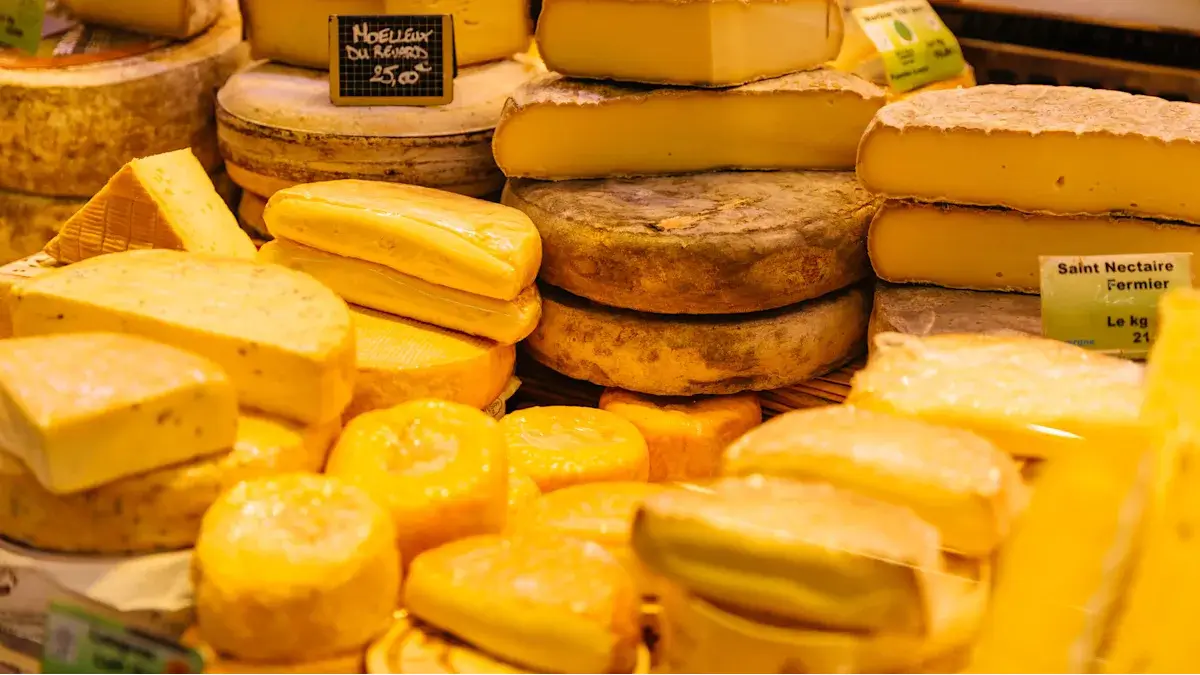
Did you know there is a place in the world where cheese is not just food, but a part of daily life and tradition? People there enjoy it at breakfast, lunch, and dinner, and even celebrate special festivals dedicated to it. Markets are filled with different shapes, smells, and flavors that make visitors curious and hungry at the same time.
In this country, cheese making is an old skill passed from grandparents to children. Farmers wake up early to collect fresh milk, and careful hands turn it into soft, hard, and creamy varieties. Each region proudly protects its own recipe.
Some cheeses here are aged for months, even years, in cool wooden rooms.
Tourists often visit farms to watch how cheese is made and taste it right away. Warm melted cheese dishes are especially popular in winter, bringing families together around the table. Eating it is not just about taste, but also about sharing moments.
Because of its long history, rich dairy culture, and hundreds of famous varieties, the nation earned a special nickname connected completely to cheese. People across the world remember it whenever they think of creamy, delicious dairy treats.
Land of Cheese
Switzerland is widely known as the Land of Cheese. The country produces some of the world’s finest and most recognised cheeses, especially Emmental and Gruyère.
Cheese making in Switzerland is not just an industry — it is part of everyday life and national culture.
Why is Switzerland known as the Land of Cheese?
Here are some reasons why Switzerland is known as the Land of Cheese:
1. Ideal Natural Conditions
Switzerland has green Alpine mountains covered with fresh grass. Cows graze on clean, natural pastures, which gives their milk a rich taste. Better milk naturally produces better cheese.
2. Very Strict Quality Standards
Swiss dairy farmers follow traditional rules that control:
- Animal diet
- Milk freshness
- Production method
- Storage time
These rules make Swiss cheese consistent and high quality across the world.
3. Centuries-Old Cheese Tradition
Swiss people have been making cheese for hundreds of years. Mountain communities originally created cheese to store extra milk during long winters. Over time, these methods became famous worldwide.
Traditional Swiss Cheese-Making Process
- Milk Collection: Fresh milk is collected from cows grazing in mountain pastures. It is processed quickly to keep its natural flavor.
- Heating and Curd Formation: The milk is heated and mixed with natural cultures. This separates curds from whey.
- Pressing and Shaping: Curds are pressed into large round wheels — a typical shape of Swiss cheese.
- Aging (Maturation): Cheese wheels are stored for months or even years. During aging, flavors develop and the famous holes appear in some varieties.
Global Fame of Swiss Cheese
Swiss cheese is recognised worldwide for:
- Smooth texture
- Nutty flavor
- Excellent melting quality
- Reliable purity
It is used in many international dishes like fondue, burgers, pasta, and baked foods. Many countries import Swiss cheese because of its trusted quality.
Interesting Facts About the Land of Cheese
- Alpine Grass Makes the Flavor Special: Herbs and flowers growing in mountain grasslands give Swiss milk a natural aroma.
- Protected Origin Labels: Many Swiss cheeses are protected by official origin certificates. This means they must be produced in specific regions using traditional methods.
- The Famous Holes: The holes in Swiss cheese form naturally due to gas released by friendly bacteria during aging.
- One of the Oldest Preservation Foods: Cheese was first made to save extra milk before refrigeration existed.


 Which is the Highest Airport in the Worl...
 Which Country is the Largest Exporter of...
 GK Quiz on Good Friday 2026, Questions a...











