
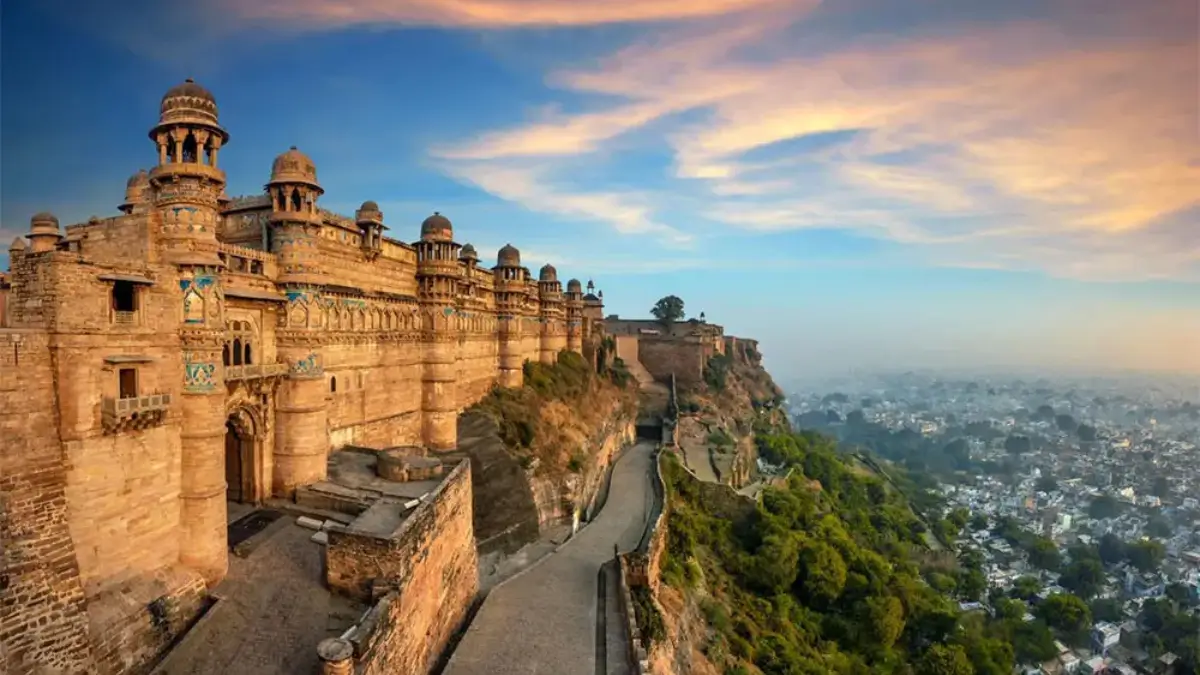
India is home to many magnificent forts that tell stories of bravery, history, and architectural brilliance. These forts have witnessed battles, royal lives, and the rise and fall of empires over centuries. Some forts are so extraordinary in their design, strength, and cultural significance that they are admired by people from all over the world. One such fort is often called the most precious among all forts in India.
Which Fort is known as the Jewel of Forts?

The fort known as the “Jewel of Forts” is Gwalior Fort, located in Madhya Pradesh, India. This fort is famous for its strong defenses, beautiful architecture, and rich history. Built on a high hill, it was almost impossible for enemies to attack. The fort has colorful designs, ancient temples, and even the earliest known use of the number zero. Many dynasties like the Tomars, Mughals, Marathas, and British ruled here, making it a historic treasure.
Who Gave This Title?
The title of “Jewel of Forts” was given by Babur, the founder of the Mughal Empire in India. Babur was so impressed by the fort’s strength and beauty that he described it as the “Pearl Among Forts of India.” This recognition added to the fort’s fame across the country.
Why is Gwalior Fort known as the Jewel of Forts?
There are several reasons why Gwalior Fort is called the Gem of Forts. Let’s look at the main ones:
Built on a High Hill
Gwalior Fort is built on Gopachal Hill, which is part of the Vindhya mountain range. The fort sits about 300 feet above the ground, which made it very difficult for enemies to attack. This strategic location made the fort almost invincible during ancient times.
Unique Architecture
Unlike many forts in India, which are made of red sandstone or grey stone, Gwalior Fort has colorful tiles in red, blue, green, and yellow. These tiles have different designs and patterns, which still shine brightly even today. The fort’s design and decoration make it stand out among other forts in India.
Historical Importance of Zero
One of the most interesting facts about Gwalior Fort is that it contains one of the earliest recorded examples of zero. Inside the fort, there is an inscription in a temple that dates back to the 9th century, showing the use of the number zero. This makes the fort not only architecturally important but also historically significant in the development of mathematics.
Temples in Different Styles
The fort is also famous for its temples. There is a Teli Mandir, built in the Nagara style of North India, and a Saas-Bahu Mandir, built in the Dravidian style of South India. These temples reflect the blend of cultural and architectural styles that existed in India over centuries.
Rulers Who Controlled the Fort
Over the years, Gwalior Fort was ruled by many dynasties, including the Pals, Tomars, Mughals, Marathas, and the British. Each ruler added something unique to the fort, making it a living monument of Indian history.


 Which Place is known as the Onion Hub of...
 RBI Plans to Make TReDS Registration Eas...
 KreditBee Joins Unicorn Club After Raisi...











