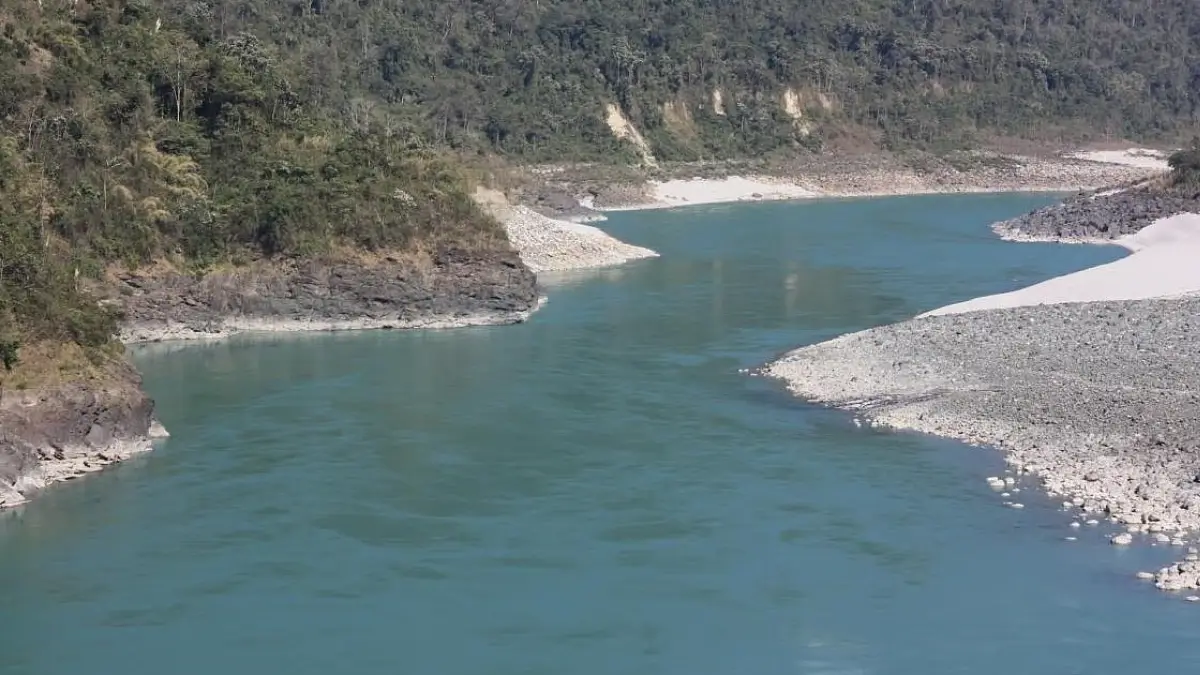
Rivers are very important for life, providing water for drinking, farming, and transportation. Some rivers travel thousands of kilometers across mountains, plains, and valleys, shaping the land and supporting people along the way. They often begin from high, cold places where snow and ice melt, forming streams that grow into mighty rivers. These rivers play a key role in nature, culture, and the economy of the regions they flow through.
Which Glacier is the Source of the Brahmaputra River?
The Brahmaputra River starts from the Angsi Glacier in Tibet’s Burang County. Earlier, many believed the nearby Chemayungdung Glacier was the source, but modern satellite studies confirmed Angsi as the true origin.
- Location: Burang County, Tibet
- Altitude: Over 5,000 metres above sea level
- Nearby Landmark: Sacred Mount Kailash
From here, the river is first known as the Yarlung Tsangpo, flowing across the high Tibetan plateau.
Journey Through these Countries
The Brahmaputra travels through three countries—China (Tibet), India, and Bangladesh—under different names.
| Country | Local Name | Approx. Length | Key Areas |
| Tibet (China) | Yarlung Tsangpo | 1,625 km | Yarlung Tsangpo Canyon |
| India | Brahmaputra / Siang | 916 km | Arunachal Pradesh, Assam, Majuli Island |
| Bangladesh | Jamuna | 337 km | Mymensingh, Dhaka; joins Ganges |
The river first flows east across Tibet, makes a sharp U-turn near the Himalayas, and enters India through Arunachal Pradesh as the Siang or Dihang. In Assam, it widens greatly, and finally, in Bangladesh, it is called the Jamuna and merges with the Ganges before emptying into the Bay of Bengal.
Unique Facts About the Brahmaputra
- The name Brahmaputra means “Son of Brahma,” which is unusual because most rivers in India have female names.
- It is sometimes called the Red River because of the reddish tint of water during the monsoon caused by iron-rich soil.
- Majuli, in Assam, located in the Brahmaputra, is the world’s largest river island.
- The Yarlung Tsangpo Grand Canyon is even deeper than the Grand Canyon in the USA.
- It experiences a tidal bore, where waves travel upstream from the ocean.
- The river is braided, constantly changing its channels.
- It is one of the highest major rivers in the world, flowing at around 4,000 metres in Tibet.
- The river supports wildlife like the One-Horned Rhinoceros and the Gangetic Dolphin.
- Geologists suggest the Brahmaputra is older than the Himalayas themselves.
- The river changes its name three times: Tsangpo in Tibet, Brahmaputra in India, and Jamuna in Bangladesh.
Tributaries of the Brahmaputra
The Brahmaputra has a large network of tributaries coming from both the northern Himalayas and southern hills.
Right Bank Tributaries (From North / Himalayas)
These rivers are snow-fed, meaning they flow year-round.
- Subansiri: Largest tributary; also called the “Gold River” due to gold dust.
- Kameng: Known for fast white-water rapids.
- Manas: Flows through Bhutan and Assam.
- Sankosh: Forms part of Assam-West Bengal border.
- Teesta: Starts in Sikkim; joins Brahmaputra in Bangladesh.
Left Bank Tributaries (From South / Hills)
These rivers are rain-fed and depend on monsoon rainfall.
- Lohit: Called the “River of Blood” due to reddish soil.
- Dibang: Powerful river joining Brahmaputra in Upper Assam.
- Dhansiri: Flows through Kaziranga National Park.
- Burhi Dihing: Passes through coal and oil regions of Assam.
- Kopili: Major source of hydroelectric power in Assam.
Ecological and Geographical Importance
The Brahmaputra flows through three very different landscapes:
- High-altitude cold deserts of Tibet.
- Tropical forests and valleys of Arunachal Pradesh.
- Fertile floodplains of Assam and Bangladesh.
This diversity makes it one of the most ecologically rich rivers in the world. Its water supports millions of people, agriculture, and wildlife. It also forms part of the largest delta in the world, joining the Ganges at the Sundarbans.


 Weekly Current Affairs One Liners (30th ...
 Who is known as the Father of Mobile Pho...
 Which is the Highest Airport in the Worl...