
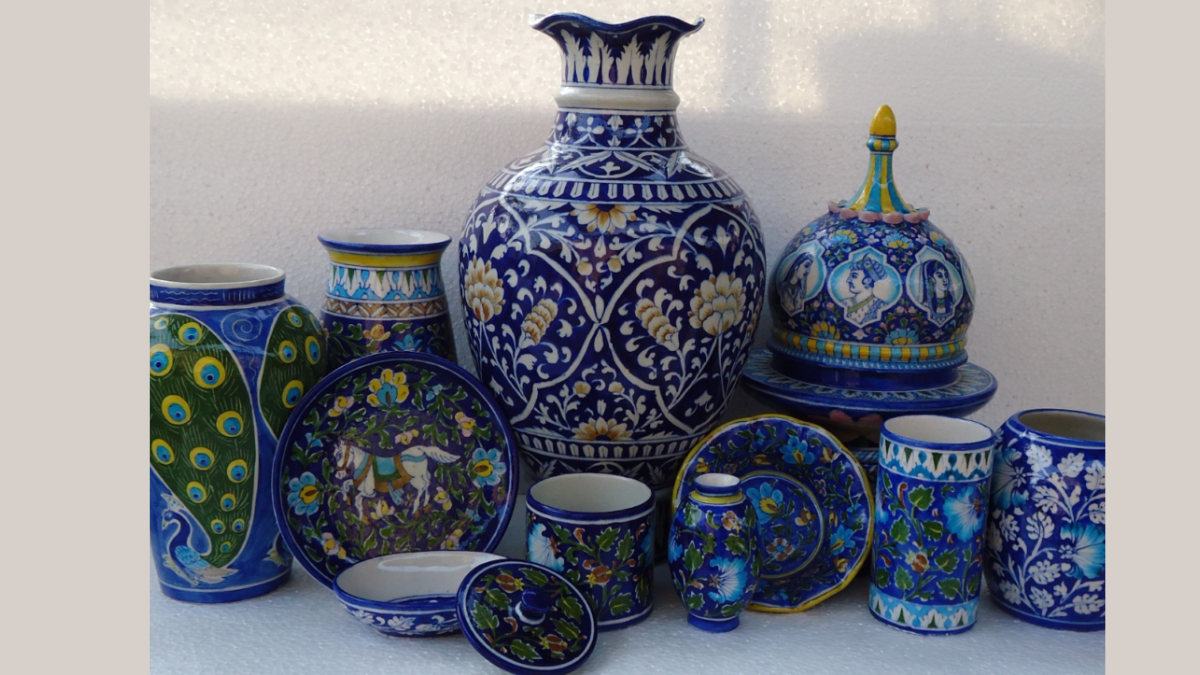
India is a land of rich culture and traditional handicrafts, where every region is known for its unique art form. Among these, one of the most eye-catching crafts is Blue Pottery, admired worldwide for its vibrant blue shades and delicate floral designs. This beautiful pottery has a fascinating history and continues to be a symbol of India’s artistic excellence, especially in one particular district.
An Overview of India
India, officially known as the Republic of India, is a South Asian nation and the world’s most populous democracy since 2023. It is the seventh-largest country by area, bordered by Pakistan, China, Nepal, Bhutan, Bangladesh, and Myanmar. Surrounded by the Indian Ocean, Arabian Sea, and Bay of Bengal, it also lies close to Sri Lanka, Maldives, and shares maritime boundaries with Myanmar, Thailand, and Indonesia.
Number of Districts in India
By 2025, India has nearly 800 districts in total. The most recent count records 787 districts across the country. Among the big states, Uttar Pradesh has 75 districts, Rajasthan has 50, and Tamil Nadu has 38. These numbers can change over time, as new districts are often formed to make administration and governance easier.
Which Indian District is Famous for the Blue Pottery Craft?
The Indian district most famous for Blue Pottery is Jaipur, located in the state of Rajasthan. This handicraft is one of the city’s oldest traditions and has even received Geographical Indication (GI) status. Blue Pottery is also included under Rajasthan’s One District One Product (ODOP) initiative, which highlights its cultural importance.
Why is Jaipur Known for the Blue Pottery?
Jaipur is world-famous for its Blue Pottery, a unique craft known for its vibrant cobalt blue designs and clay-free technique. With Persian origins and royal patronage, it has become an important part of Jaipur’s cultural identity and heritage.
Here are few reasons why Jaipur is famous for the Blue Pottery Craft:
Historical Origins
Blue Pottery was introduced to Jaipur from Persia and Afghanistan during the Mughal period. In the 17th century, it was influenced by Islamic and Chinese pottery styles. Later, in the 19th century, Maharaja Sawai Ram Singh II encouraged local artists to refine their skills, making Jaipur the true hub of this craft.
Unique Technique
Unlike ordinary pottery made with clay, Jaipur’s Blue Pottery uses no clay at all. Instead, it is made from a mixture of quartz stone powder, glass, Fuller’s Earth, borax, and gum. This special combination gives it durability and a smooth finish.
Eye-Catching Colors
The pottery gets its name from the deep cobalt blue dye used in decoration. This striking shade, created with cobalt oxide, makes the craft instantly recognizable and visually appealing.
Artistic Designs
Every piece of Jaipur’s Blue Pottery is hand-painted with delicate floral, geometric, and animal patterns. These designs often draw inspiration from Mughal art, giving the craft a royal and timeless touch.
Cultural and Economic Value
Blue Pottery is not just an art form but also an important part of Jaipur’s identity and economy. It is a favorite among tourists and art lovers and has become one of Rajasthan’s best-selling handicrafts.


 What is National Investigation Agency? C...
 Which State is the Largest Petroleum Pro...
 Largest Crude Oil Supplier Countries to ...











