Did you know when most people hear the word desert, they imagine endless sand dunes, hot winds, and camels walking under the blazing sun? But nature is full of surprises, and deserts are not always what they seem.
A desert is actually defined by how little rain it gets, not by temperature. Some deserts are extremely hot, while others are freezing cold for most of the year.
There is one desert on Earth so vast that it covers a huge part of our planet’s surface.
It spreads across a lonely and quiet region where very few plants and animals can survive.
Scientists study it to understand climate, ice, and even space-like conditions. Many people guess the largest desert lies in Africa or Asia, but that is not correct. The real answer surprises students in geography classes every time.
Exploring this unique landscape helps us learn how Earth works and why extreme environments are important for our future.
Largest Desert in the World
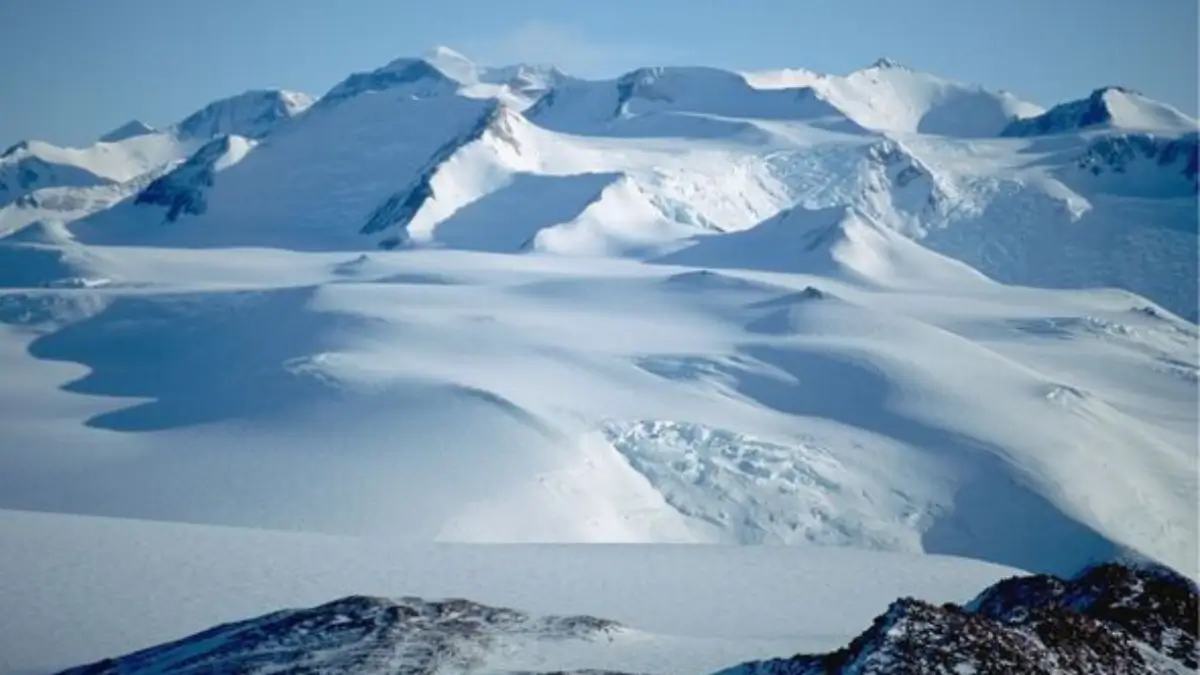
The largest desert in the world is the Antarctic Desert in the Southern Hemisphere around the South Pole. It covers about 14.2 million square kilometers, much bigger than the Sahara. Even though it is full of ice, it is called a desert because it gets very little snowfall each year. Temperatures can fall below −89°C, making it the coldest place on Earth. Very few plants and animals live there, and only scientists stay temporarily for research.
Where is the Antarctic Desert Located?
The Antarctic Desert covers the entire continent of Antarctica in the Southern Hemisphere around the South Pole. Its total area is about 14.2 million square kilometers, making it far larger than the Sahara Desert.
Nearly 98% of this land is buried under ice, which is why it looks like a giant white continent from space.
Check This: Which is the Largest Glacier in the Himalayas?
Why Antarctic called a Desert?
A desert is not defined by heat — it is defined by lack of rainfall. Antarctica receives extremely little precipitation, so it qualifies as a desert.
- Interior snowfall: less than 50 mm per year
- Coastal snowfall: about 200 mm per year
In some places, strong winds remove snow faster than it falls. Because of this dryness, Antarctica is actually the driest continent on Earth.
Extreme Climate Conditions
Antarctica is famous for its harsh weather conditions.
Coldest Place on Earth
The lowest temperature ever recorded on Earth was
−89°C (−128.6°F) at Vostok Station.
Windiest Continent
Powerful winds called katabatic winds rush down from the high ice plateau and can reach over 300 km/h.
- Long Darkness
- The South Pole experiences:
- 6 months of sunlight
- 6 months of darkness
This makes survival extremely difficult.
Massive Ice Sheet
The Antarctic ice sheet is one of the most important natural features on Earth.
- Holds about 90% of the world’s fresh surface water
- Ice thickness: 1.6 to 2.45 km on average
If this ice melted completely, global sea levels would rise dramatically.
Plants and Animals
Life is very limited due to extreme cold and dryness.
On Land
Only simple organisms survive:
- Bacteria
- Lichens
- Algae
Near the Coast and Ocean
Marine life is more active:
- Penguins
- Seals
- Whales
- Fish
- Seabirds
Human Presence
No one lives in Antarctica permanently. However, scientists stay temporarily for research.
- About 1,000 to 5,000 researchers live there depending on the season
- Activities are controlled by the Antarctic Treaty, which protects the environment and allows peaceful scientific study only
Importance of the Antarctic Desert
Antarctica plays a major role in Earth’s climate system.
- Regulates global temperature
- Stores massive freshwater reserves
- Helps scientists study climate change
- Provides clues about life on other planets


 Who Invented the QR Code? Check Here
 Who is known as the Father of Microbiolo...
 Which City is known as the City of Thous...