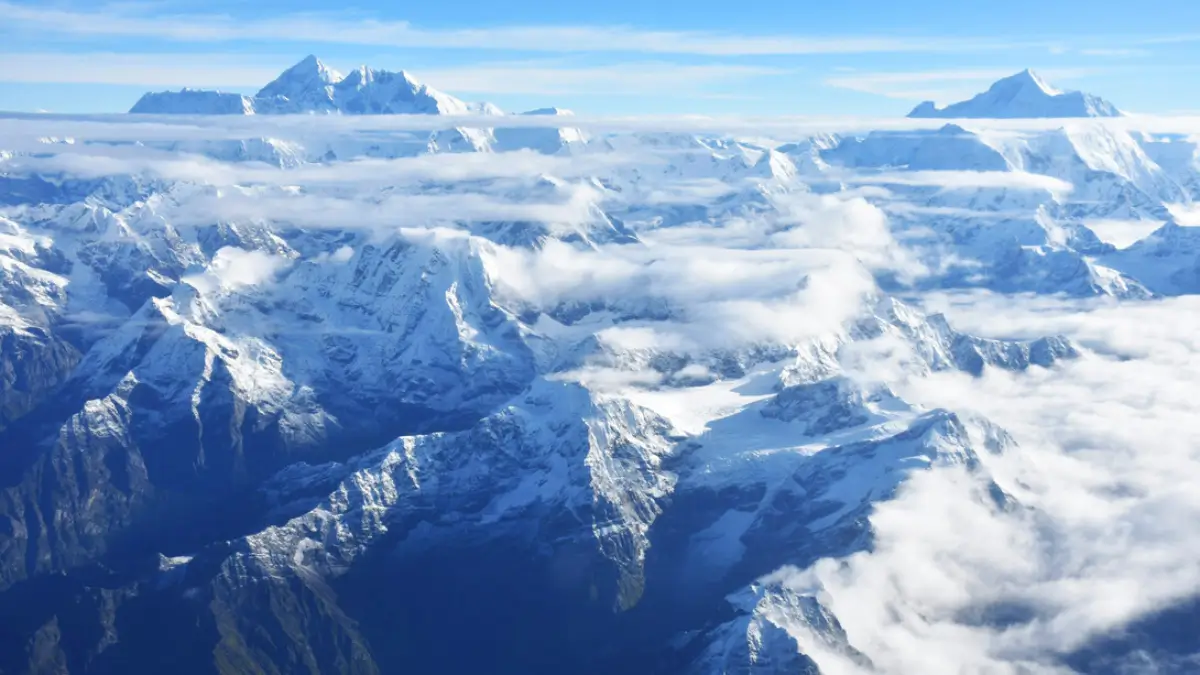
The Earth has many special places that are full of natural beauty and wonder. Some regions are covered with snow and ice, while others have tall mountains and deep valleys. These areas are very important for the environment and for the people who live nearby. They help provide water, affect the weather, and play a big role in keeping our planet healthy and balanced.
The Third Pole of the Earth
Mount Everest is not just the tallest mountain in the world; it is also called the Third Pole of the Earth. This is because the Himalayan region around it holds a huge amount of ice and snow, second only to the North and South Poles. This frozen water is very important for millions of people in Asia, as it feeds many rivers and supports life.
Why is it Called the Third Pole?
Mount Everest is part of the Himalayan mountain system, which has many glaciers and permanent snowfields. These glaciers store a massive amount of freshwater. The meltwater from these glaciers flows into major rivers, supporting farming, drinking water, and energy needs. This is why the area is called the Third Pole.
Location of Mount Everest
Mount Everest is located in the Himalayas, on the border between Nepal and China (Tibet). It is part of the Mahalangur range, one of the most famous Himalayan subranges. Its location makes it a key source of ice and water for Asia.
Highest Mountain on the Earth
Mount Everest stands at 8,848.86 meters above sea level, making it the tallest mountain in the world. Its high altitude keeps it covered in snow and ice all year. Even in summer, snow continues to accumulate on the summit and surrounding peaks.
Importance of Himalayan Glaciers
Glaciers near Mount Everest provide water to major rivers like the Ganga, Brahmaputra, and Indus. These rivers are lifelines for over a billion people, supporting agriculture, drinking water, and hydroelectric power across South Asia.
Role in Climate and Weather
The ice and snow of the Himalayas help control temperatures and influence the monsoon system. They play a crucial role in regulating weather patterns across much of Asia, showing how important the Third Pole is for the environment.
Environment Challenges
Mount Everest and the surrounding glaciers are very sensitive to climate change. Rising temperatures are causing glaciers to melt faster, which can lead to water shortages, floods from glacial lakes, and long-term ecological problems.
Interesting Facts About Mount Everest
- Largest Ice Reserve Outside the Poles: The Himalayan region around Everest holds the biggest concentration of ice outside the Arctic and Antarctic.
- Source of Major Rivers: Glacial meltwater feeds Asia’s major rivers, sustaining millions of people.
- Ongoing Growth: Everest rises a few millimeters each year due to the movement of tectonic plates.
- Permanent Snow Cover: Snow stays year-round because of the cold temperatures at high altitudes.


 Blanka Vlasic Appointed Global Ambassado...
 Veteran Congress Leader and Former Union...
 INS Aridhaman Nuclear Submarine Joins In...