
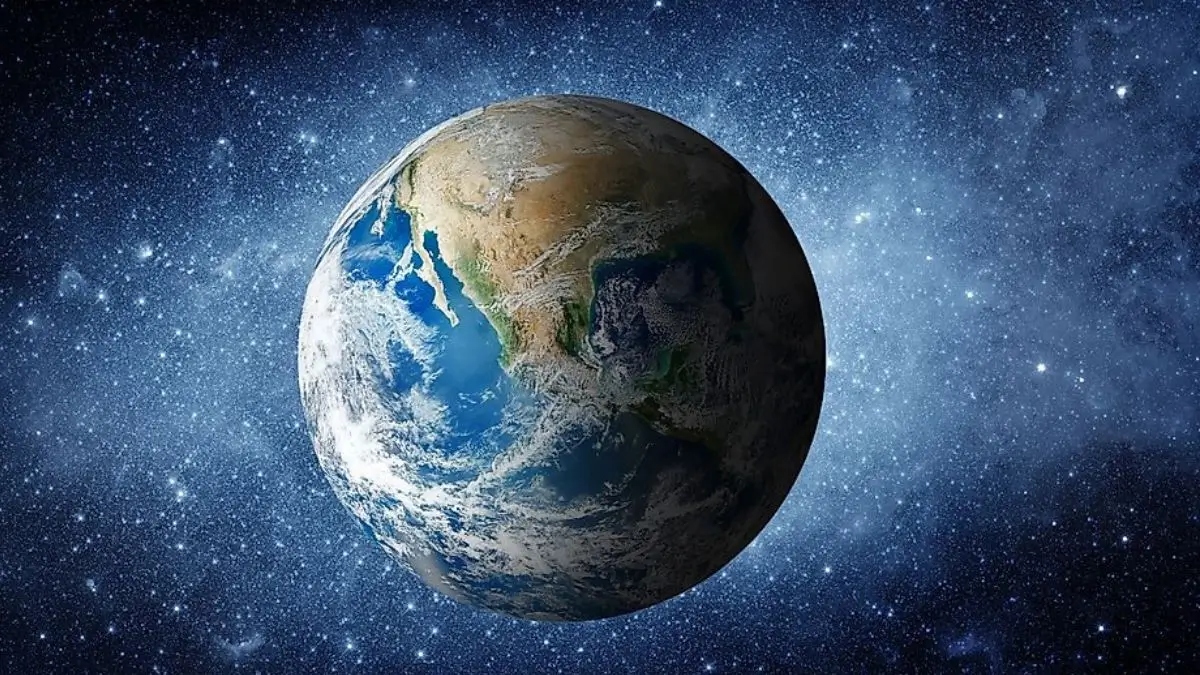
When we think about oxygen in a space the planet Earth immediately comes to our mind. After all, our other planet’s atmosphere contains the oxygen that makes life possible. But have you ever wondered which planet has the highest oxygen percentage after the Earth?
The answer of this question may surprise you. It isn’t Mars, Venus or one of the giant gas planets. Instead, this title belongs to a small, rocky world that orbits closest to the Sun.
Despite being as one of the harshest places in the Solar System Planet Mercury contains the highest percentage of the oxygen in the its extremely thin atmosphere.
Let’s explore why Mercury tops this unusual list and what makes it as one of the most fascinating planets in earth’s cosmic neighborhood.
Which Planet Has the Most Oxygen in the Solar System?
Mercury has the highest percentage of the oxygen in its atmosphere among all planets in the Solar System.
Scientific observations have shown that the Mercury’s exosphere that is the extremely thin layer of gases surrounding the planet and it contains approximately 42% oxygen.
By comparison, Earth’s atmosphere contains about 21% oxygen.
At the first glance, this might suggest that the Mercury has more breathable air than Earth. However, the reality is very different.
Can Humans Breathe on Mercury?
The simple answer is no.
Although oxygen makes up the large percentage of the Mercury’s exosphere but the atmosphere is so thin that it is almost a vacuum.
There are very few gas molecules present in Mercury as compared to the Earth.
In practical terms, Mercury does not have enough atmospheric pressure or oxygen density to support the human life.
Also any astronaut visiting the planet would need a fully pressurized spacesuit and the life-support system.
So while Mercury wins the oxygen percentage contest but Earth remains as the only planet with a naturally breathable atmosphere.
Why Does Mercury Have So Much Oxygen?
Mercury’s oxygen is produced via a fascinating process involving the Sun.
Because Mercury is the closest planet to the Sun, it is constantly bombarded by the powerful streams of the charged particles which is known as the solar wind.
When these particles strike the Mercury’s rocky surface, they knock the atoms to loose from the soil and rocks.
Some of these released atoms includes the oxygen which temporarily become part of the Mercury’s exosphere.
Unlike Earth, Mercury lacks a dense atmosphere and it has a strong protective environment, so these oxygen particles constantly escape into the space while new ones are continuously created.
What Is Mercury Known For?
Mercury is the smallest planet in the Solar System and it the closest one to the Sun.
It is often called as the “Swift Planet,” and Mercury completes one orbit around the Sun in just 88 Earth days which makes it as the fastest-moving planet in our planetary system.
It is also nicknamed the “Iron Planet” because of the its enormous iron-rich core, which makes up a significant portion of the planet’s interior.
Mercury’s Extreme Environment
Mercury is a world of the extremes.
During the daytime, temperatures can soar above 430°C and it is hot enough to melt certain metals.
At night, temperatures can plunge to nearly -180°C because the planet lacks the thick atmosphere to retain heat.
Its surface is covered with the countless impact craters, rocky plains and massive cliffs which giving it an appearance similar to the Earth’s Moon.
Despite having the highest oxygen percentage among the planets it is one of the least hospitable places in the Solar System.
Does Mercury Have Moons?
Unlike the many planets, Mercury has no natural satellites.
While planets like Jupiter and Saturn possess the dozens of moons, Mercury also remains moonless.
Scientists believe that its close proximity to the Sun makes it difficult for the planet to maintain a stable moon because of the Sun’s powerful gravitational influence.
Does Mercury Have Water?
Mercury has no liquid water, rivers, lakes or waterfalls.
However, scientists have discovered the water ice hidden inside the permanently shadowed craters near to the planet’s poles.
Since sunlight the never reaches these regions, temperatures remain cold enough for ice to survive despite the Mercury’s location near the Sun.
This discovery was one of the most significant findings about the Mercury in recent decades.
Five Interesting Facts About Mercury
Mercury completes one orbit around the Sun in just 88 Earth days but it takes approximately 59 Earth days to rotate once on its axis.
- A full day-night cycle on Mercury lasts about around 176 Earth days.
- Many people assume that Mercury is the hottest planet because it is closest to the Sun. Surprisingly, Venus is hotter because of its dense carbon dioxide atmosphere which traps heat through an extreme greenhouse effect.
- Scientists believes that the Mercury’s large iron core has been cooling for billions of years. As the core contracts, the entire planet gradually shrinks and it creating giant cliffs and surface wrinkles.
- Despite the its scorching temperatures, Mercury contains water ice in to the permanently shadowed polar craters.
- Mercury is visible to the naked eye and it has been observed by the humans for thousands of years. Ancient civilizations has also recorded sightings of the planet long before the invention of telescopes.
Oxygen Beyond Earth: Other Surprising Places
Mercury is not the only celestial body that is associated with oxygen.
Venus
Although Venus has very little free oxygen but its atmosphere consists mainly of the carbon dioxide, which contains oxygen atoms.
As a result, Venus contains the enormous amounts of oxygen that are chemically bound within the its atmosphere.
Uranus
Uranus contains the vast quantities of oxygen locked inside water, methane and icy compounds deep within its interior.
In terms of the total oxygen content, Uranus likely surpasses all the rocky planets.
Europa
Europa, that is one of the Jupiter’s moons, possesses a thin oxygen atmosphere created when the radiation breaks apart surface ice.
Scientists considers that the Europa as one of the most promising locations in the search for extraterrestrial life.








 Who Is Navi Pillay? Nobel Peace Prize 20...
 Vande Bharat vs Amrit Bharat Express: Ke...
 Asian Games to LA28: Which Sports Earned...










