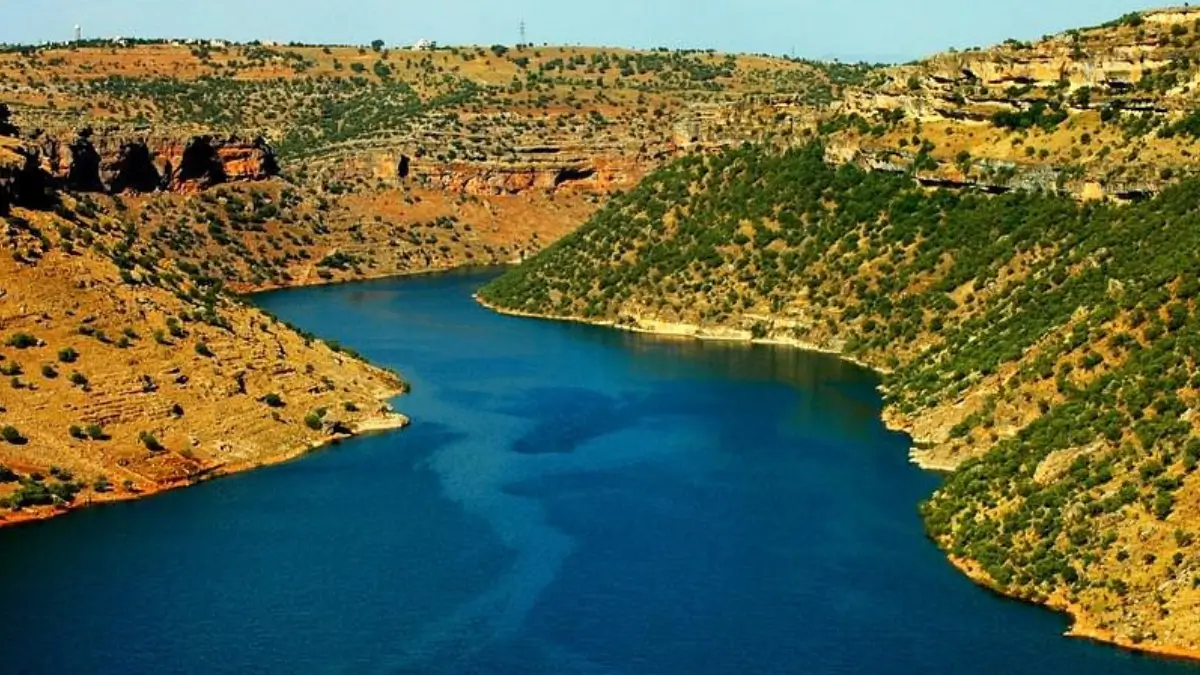
Did you know that some rivers are given special nicknames because of their importance and unique features? Just like how the famous Tigris River has played a major role in shaping ancient civilizations, there is a river in India that shares similar significance.
Rivers are often compared based on their historical, cultural, and geographical value. In India, many rivers have supported life for centuries, helping in farming, trade, and the growth of cities along their banks.
One such river stands out for its deep historical connection and its role in nurturing one of the oldest civilizations in the Indian subcontinent. Its importance in history makes it comparable to some of the world’s most well-known rivers.
This river has also been a lifeline for people living nearby, providing water, fertile land, and a means of transport. Over time, it earned a special nickname that reflects its resemblance to a famous river of the ancient world.
Exploring such names helps us understand how geography and history are closely connected, and how rivers continue to shape human life even today.
Which River is known as the Tigris of India?
The Indus River is known as the “Tigris of India.” It got this name because it played a very important role in the growth of the ancient Indus Valley Civilisation, just like the Tigris River supported Mesopotamian civilisation. The Indus provides water, fertile soil, and supports farming in dry regions. It is one of the oldest and most important rivers in the world.
Origin and Course of the Indus River
The Indus River begins near Lake Mansarovar in the Tibetan Plateau. From there, it flows through the high mountains of the Himalayas and enters India in the region of Ladakh.
After passing through India, the river moves into Pakistan and continues its long journey before finally emptying into the Arabian Sea. Overall, the Indus travels thousands of kilometres, making it one of the longest rivers in Asia.
Historical Importance of the Indus River
The Indus River is closely linked with the ancient Indus Valley Civilisation. This civilisation existed more than 4,000 years ago and is known for its well-planned cities, drainage systems, and advanced lifestyle.
In the same way, the Tigris River supported the Mesopotamian Civilisation. Because both rivers helped create early civilisations, the Indus is often compared to the Tigris.
Why is the Indus Called the Tigris of India?
There are several reasons why the Indus River is given this special nickname.
1. Cradle of Civilisation
Both rivers were the birthplace of some of the earliest human civilisations. They provided water, food, and a stable environment for people to settle.
2. Lifeline in Dry Regions
The Indus flows through areas that are dry or semi-arid. Without it, these regions would struggle to support life, just like areas around the Tigris.
3. Snow-Fed River
The Indus gets its water mainly from melting snow in the Himalayas, similar to how the Tigris depends on mountain sources.
4. Fertile Soil
In ancient times, the Indus used to flood regularly. These floods deposited rich soil, which helped farmers grow crops easily.
Key Features of the Indus River
The Indus River has many unique characteristics that make it special:
- It is one of the longest rivers in Asia.
- It flows at very high altitudes in its upper course.
- It carries large amounts of silt, which enriches the soil.
- It supports agriculture, irrigation, and hydroelectric power.
- It is home to rare species like the Indus river dolphin.
Role in Modern Times
Even today, the Indus River is extremely important. It provides water for farming and daily use in both India and Pakistan. It also plays a key role in electricity generation and supports millions of people.
The river is also part of international agreements related to water sharing, which shows its importance beyond just geography.


 Which Place is known as the Onion Hub of...
 RBI Plans to Make TReDS Registration Eas...
 KreditBee Joins Unicorn Club After Raisi...