
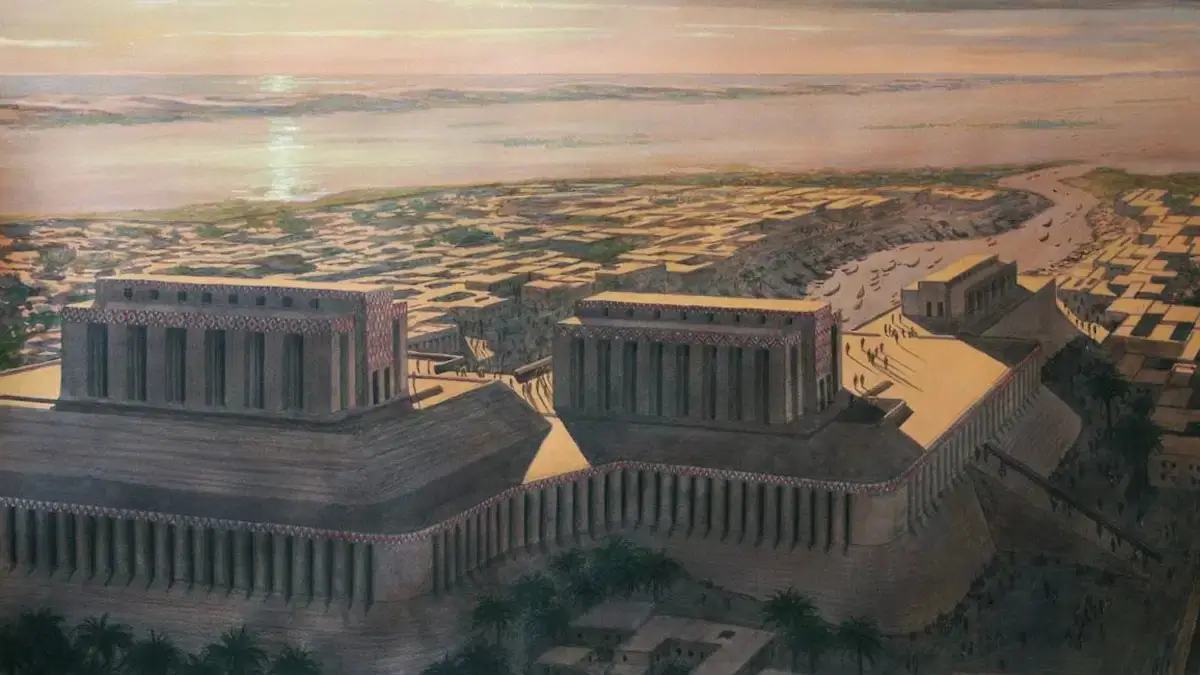
Many people wonder which city can truly be called the first city in the world. Human civilization began thousands of years ago, and over time small villages slowly grew into large and organised cities. Historians study ancient ruins, old writings, and archaeological discoveries to understand where the earliest city life began. Knowing about the world’s first city helps us learn how human settlements developed and how modern cities came into existence.
Which was the First City in the World?
The first city in the world is widely believed to be Uruk, an ancient city in southern Mesopotamia, today’s Iraq. It began growing around 4000–3500 BCE and became the earliest large urban centre with thousands of people, huge temples, organised leadership, and the world’s first writing system. Uruk’s size, culture, and advanced development make it the earliest true city in human history.
Where Exactly was Uruk Located?
Uruk was built in southern Mesopotamia, which is in modern-day Iraq. This region was close to two important rivers—the Tigris and the Euphrates—which helped people grow crops and build a stable life.
Why is Uruk called the First City?
Several important developments make Uruk stand out as the first true city:
1. Large Population
Uruk grew much bigger than earlier settlements. It had tens of thousands of people living together, which was extremely rare for that time.
2. First Writing System
The earliest known writing system, cuneiform, was created here. People used it to record trade, taxes, laws, and stories.
3. Monumental Buildings
Uruk had giant temples and public structures made of mud-brick, including early ziggurats—tower-like religious buildings.
4. Organised Society
The city had priests, farmers, workers, scribes, and leaders. This social structure made it a fully functioning city rather than a simple village.
Was Uruk Truly the First City?
Some scholars say that another ancient settlement called Eridu, also in Mesopotamia, might be even older—dating back to around 5400 BCE. However:
- Eridu was spiritual and religiously important
- but it did not have the size, population, or complex systems of Uruk
Because of this, most historians agree that Uruk is the first real city.
Key Innovations that Started in Uruk
Uruk gave the world many important firsts:
1. Writing: Cuneiform began here, marking the start of record-keeping and written communication.
2. Architecture: The city built huge temples and public spaces that showed advanced planning and construction skills.
3. Social Roles: Uruk’s residents had different jobs: farmers, builders, leaders, scribes, and merchants—proof of an organised society.
These developments helped create the foundations of urban life that still influence cities today.
Why is the Story of Uruk Important?
Learning about Uruk helps us understand how humans moved from small farming groups to big, organised cities. It shows:
- how writing started
- how governments and administration began
- how early people built complex buildings
- how society became structured
Uruk marks the moment when humans took a big step toward the modern world.


 IIM Rohtak Wins BIMTECH's 'Hermes' Dialo...
 Blanka Vlasic Appointed Global Ambassado...
 Veteran Congress Leader and Former Union...











