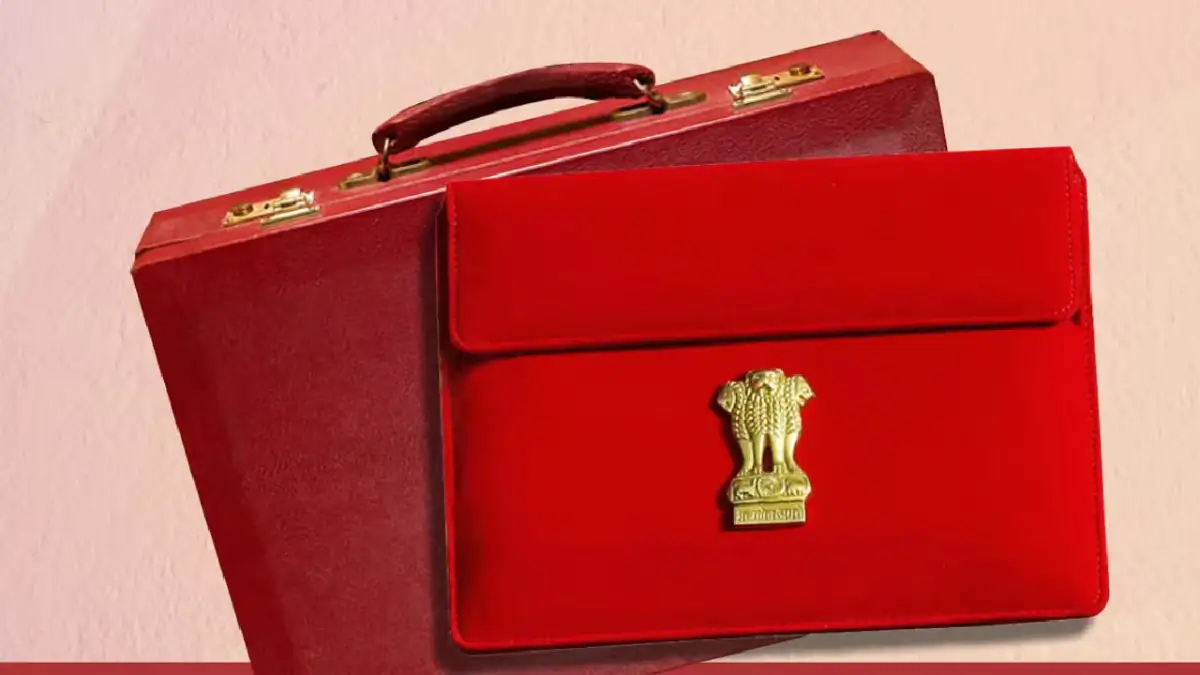
Every year on Budget Day, the Finance Minister’s appearance outside Parliament attracts huge public attention. Apart from economic announcements, people also notice the bag or folder used to carry the Budget documents. Over the years, this small detail has become a powerful symbol of governance, tradition, and change in India’s financial history.
Breaking Away from the British-Era Briefcase
For decades, Indian finance ministers followed a tradition inherited from British rule—carrying Budget papers in a leather briefcase. This practice symbolised authority but also reminded many of India’s colonial past.
In 2019, Finance Minister Nirmala Sitharaman made history by breaking this long-standing custom. Instead of a leather briefcase, she carried the Budget documents wrapped in a red cloth. This move was widely seen as a shift towards Indian cultural values and a step away from colonial symbols.
The Meaning Behind the Red Cloth
The red cloth used by Sitharaman was not a random choice. In Indian tradition, red is considered auspicious and is often used to cover sacred books and important documents. By using red fabric, the Finance Minister added a cultural and symbolic Indian touch to the Budget presentation.
At the same time, the colour red also draws attention, making it suitable for such an important national event.
The Shift to a Paperless and Digital Budget
From 2021 onwards, Nirmala Sitharaman introduced another major change by presenting a paperless Budget. She began using a digital tablet instead of printed documents. However, to maintain tradition, the tablet was placed inside a traditional bahi-khata style cover wrapped in red cloth.
This combination perfectly reflected a balance between modern technology and Indian heritage—showing progress without forgetting tradition.
British Origins of the Red Budget Box
The red colour used in Budget presentations has deep roots in British history. In 1860, British Chancellor William E. Gladstone introduced a red leather briefcase decorated with the Queen’s monogram. This box later became known as the “Gladstone Box.”
Red was chosen because it appeared prominently in royal symbols and was favoured by Prince Albert. Over time, this red box became a permanent feature of British Budget Day.
Stories Linked to the Red Colour Tradition
There are several interesting stories behind the red Budget box. One popular belief is that red was selected due to its strong visual impact, helping draw attention during parliamentary announcements.
Another historical tale traces the tradition back to Queen Elizabeth I’s era, when a red case was presented to a foreign ambassador, eventually setting a lasting custom in British politics.
Why Finance Ministers Pose with the Budget Bag?
The word “budget” comes from the French term bougette, meaning a small leather bag. This is why finance ministers traditionally pose with a bag before entering Parliament on Budget Day.
This practice dates back to the 18th century, when Britain’s finance officials were asked to “open the budget” during their annual speech.
How the Budget Bag Tradition Began in India?
India adopted this tradition after independence. The country’s first Finance Minister, R. K. Shanmukham Chetty, presented the first Union Budget in 1947 while carrying a bag—starting a custom that continues today.
Over the years, Indian finance ministers have experimented with different bag styles and colours while still respecting the tradition.
Notable Budget Bags Used by Indian Finance Ministers
India has seen many variations in Budget bags. In 1958, Jawaharlal Nehru used a black briefcase instead of red. In 1991, Manmohan Singh carried a black bag while presenting the historic economic reform Budget.
In 1998, Yashwant Sinha used a uniquely designed black leather bag with buckles. Later, Pranab Mukherjee surprised many by bringing back a red box similar to the British Gladstone style.
The Symbolism of the Budget Bag Today
Though small in size, the Budget bag carries enormous importance. It represents the economic direction of the country and the hopes of millions of citizens.
Even as designs, colours, and materials change, the symbolic value of the Budget bag remains strong—standing for responsibility, progress, and national development.


 Which Place is known as the Diamond Capi...
 List of Major LPG Gas Companies in India...
 Which Fish Can Produce Electricity?