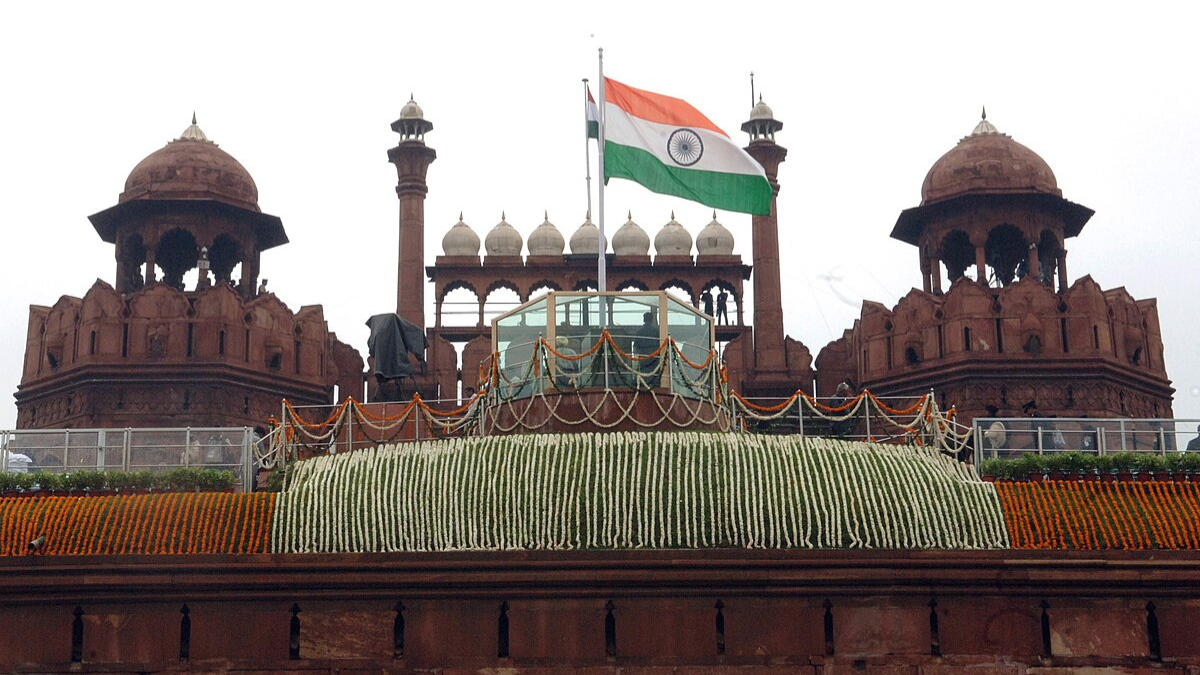
India’s Independence Day is one of the most special day in our history. On August 15, 1947, India finally became free after being ruled by the British for almost 200 years. First, the British East India Company controlled India (1757-1857) and then the British Government (1858-1947).
This freedom did not come easily. Freedom fighters and common people struggled, protested and sacrificed their lives to win independence. But why did we become free on August 15 and not on any other day? The reason is a mix of politics, history and even events from World War II.
India’s Fight For Freedom
For many years, Indians suffered under British rule. People were treated unfairly, farmers were exploited and Indian industries were destroyed. To fight this, people started many important movements, such as:
- Swadeshi Movement (1905): Using Indian-made goods instead of British goods.
- Non-Cooperation Movement (1920): Boycotting British schools, offices and laws.
- Quit India Movement (1942): Asking the British to leave Indian immediately.
These protests slowly made the British understand that they could no longer rule India.
January 26, The First Independence Day
Long before 1947, January 26 was celebrated as India’s Independence Day. In 1929, when Jawaharlal Nehru was Congress President, the party declared ”Poorna Swaraj” – complete independence from British rule. From 1930 onwards, Congress celebrated January 26 every year as Independence Day.
Later, when India got freedom in 1947, January 26 was chosen to be the Republic Day from 1950, because on that day India got its own Constitutional and became a republic.
The British Decision to Quit India
After the World War II, Britain was weak and could not rule India any longer. The British Parliament told Lord Louis Mountbatten, the last Viceroy of India, to give India freedom by June 30, 1948.
But Indian leaders wanted freedom earlier because they feared more riots and violence. So Mountbatten decided to give independence before that day.
Why Mountbatten Chose August 15?
Lord Mountbatten decided on August 15, 1947 for India’s freedom. He said he chose this date because it was the second anniversary of Japan’s surrender in World War II.
Japan surrendered on August 15, 1945, after the atomic bombings of Hiroshima (August 6) and Nagasaki (August 9). Mountbatten though it would be a meaningful date for ending India’s rule by the British too.
The Law that Made India Free
The Indian Independence Bill was passed on July 4, 1947, in the British Parliament. It created two new countries – India and Pakistan – both getting independence on August 15, 1947.
Why Pakistan Celebrates on August 14?
At first, Pakistan also celebrates its independence on August 15, 1947. Even their first postage stamp had this date. But from 1948, Pakistan started celebrating on August 14.
This may be because:
- The power transfer ceremony in Karachi happened on August 14.
- August 14, 1947, was the 27th day of Ramadan, a holy day for Muslims.
Significance of August 15 for India
For India, August 15 is not just a date. It means:
- The end of British rule.
- The start of self-rule and democracy.
- The result of the sacrifices of countless freedom fighters.
Every year, India celebrates with flag hoisting, patriotic songs, parades and the Prime Minister’s speech from the Red Fort – just like Nehru’s ”Tryst with Destiny” speech on the night of August 14-15, 1947.


 Which Place is known as the Glass Capita...
 Who is known as the Father of Census of ...
 Which Continent is known as the White Co...