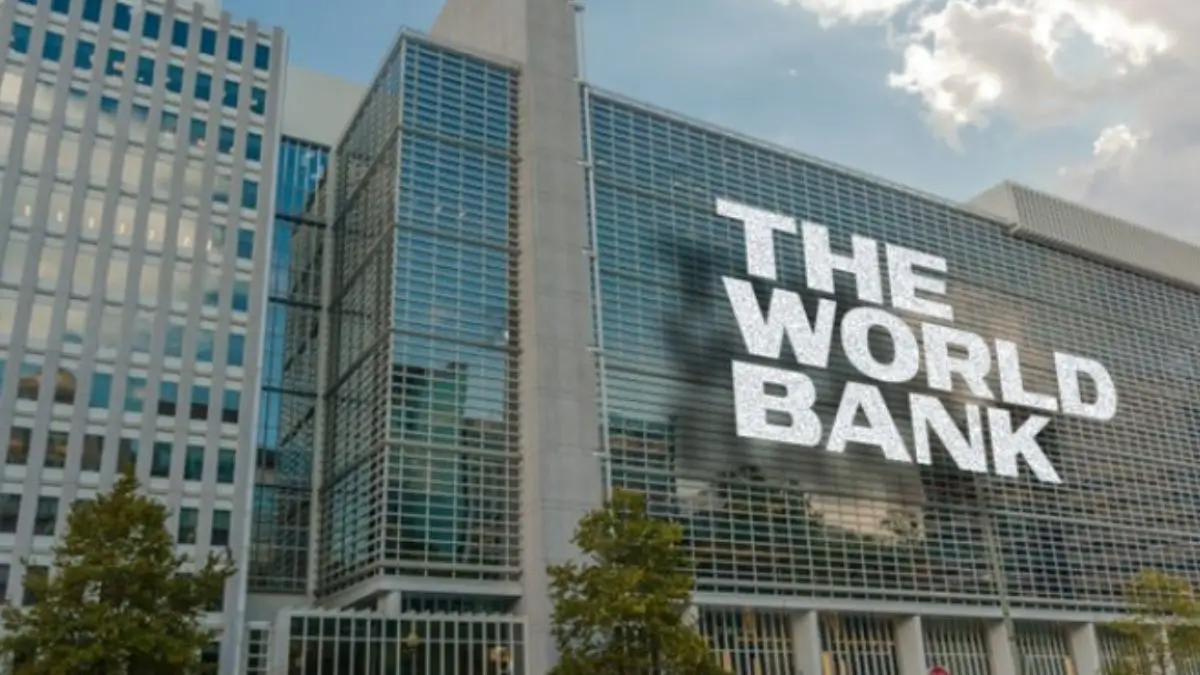
World Bank Group announced a massive financial commitment of USD 8-10 billion every year to India for the next five years. This support comes under a newly agreed Country Partnership Framework (CPF), designed to accelerate India’s growth and support its ambition of becoming a developed nation by 2047. The announcement signals deep trust in India’s economic direction and highlights the country’s growing importance as a global growth engine.
What Is the Country Partnership Framework (CPF)
- The Country Partnership Framework is a strategic roadmap that guides cooperation between India and the World Bank Group.
- The new CPF outlines priority areas where financial support, technical assistance, and global expertise will be combined to deliver large-scale development outcomes.
- According to the Finance Ministry, the framework is fully aligned with India’s Viksit Bharat vision, focusing not just on funding projects but also on strengthening institutions, sharing global best practices, and ensuring long-term sustainability.
India’s Stand: Focus Beyond Just Financing
- Union Finance Minister Nirmala Sitharaman welcomed the CPF and stressed that India values a development partnership beyond money.
- She highlighted the importance of knowledge sharing, technical assistance, and global experience brought by the World Bank Group.
- The Finance Minister underlined that leveraging public funds with private capital and creating jobs in both rural and urban India will be key to achieving impact at scale.
- The discussions took place when the World Bank delegation, led by its President, called on her in New Delhi.
Private Sector-Led Job Creation at the Core
- At the heart of the new India-World Bank partnership is private sector–led job creation.
- With nearly 12 million young people entering India’s labour market every year, job generation has become a national priority.
- The CPF aims to unlock private investment in sectors that can generate employment at scale.
- By reducing barriers for small and medium enterprises, upgrading skills, and expanding opportunities for youth and women, the partnership seeks to convert economic growth into meaningful employment outcomes.
Four Strategic Outcomes of the Partnership
- The CPF focuses on four broad strategic outcomes. These include boosting rural prosperity and resilience, supporting urban transformation and liveable cities, investing in people while strengthening energy security and core infrastructure, and enhancing overall economic and climate resilience.
- The framework benefits from internal reforms undertaken by the World Bank Group since 2023 to become faster, simpler, and more impact-oriented many of which were influenced during India’s G20 presidency.
World Bank – Overview
| Heading | Details |
| Definition & Purpose |
|
| Headquarters |
|
| History |
|
| Objectives / Mission |
|
| Structure | World Bank Group Core Institutions:
|
| Funding Mechanism |
|
Key Summary at a Glance
| Aspect | Details |
| Why in News? | World Bank commits USD 8-10 bn annually |
| Time Period | Next 5 years |
| Framework | Country Partnership Framework |
| Aligned With | Viksit Bharat vision |
| Key Focus | Jobs, private investment, infrastructure |
| Priority Sectors | Energy, agriculture, health, tourism, manufacturing |
Question
Q. Under the new CPF, the World Bank has committed how much annual financing to India?
A) USD 2-4 billion
B) USD 5-6 billion
C) USD 8-10 billion
D) USD 12-15 billion

 WHO Foundation and Novo Nordisk Launch I...
 NITI Aayog Releases Fiscal Health Index ...
 UIDAI Launches Bug Bounty Program to Str...