
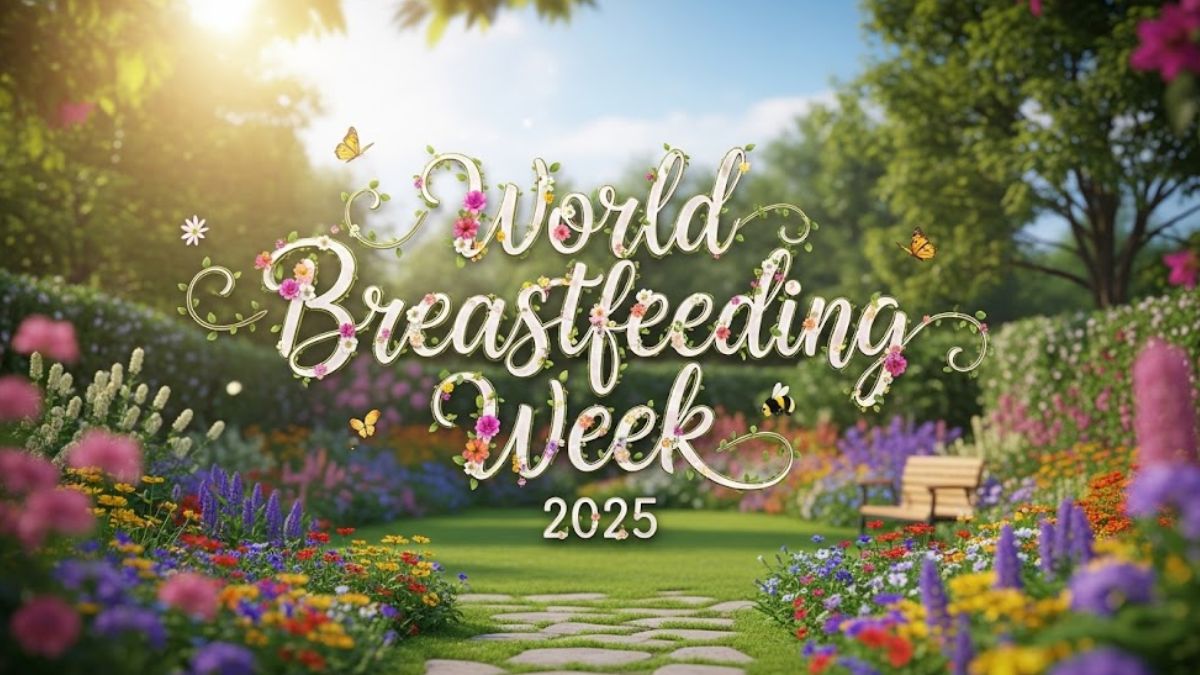
Every year, the first week of August is dedicated to World Breastfeeding Week, a global campaign that aims to create awareness about the health benefits of breastfeeding and the importance of supporting mothers during this vital phase. Even though breastfeeding is one of the most natural ways to nourish a baby, many mothers still struggle with challenges such as misinformation, cultural taboos, social stigma, and lack of workplace provisions. To address these issues, World Breastfeeding Week 2025, observed from 1st to 7th August, carries the theme “Prioritise Breastfeeding: Create Sustainable Support Systems.” The theme highlights the need for stronger and long‑lasting support structures to ensure that both mothers and children receive the full benefits of breastfeeding.
History and Significance of World Breastfeeding Week
World Breastfeeding Week was first launched in 1992 by the World Alliance for Breastfeeding Action (WABA) in collaboration with the World Health Organization (WHO) and UNICEF. The week was chosen to commemorate the 1990 Innocenti Declaration, a groundbreaking global pledge made by governments and international agencies to protect, promote, and support breastfeeding.
Since its inception, the observance has grown into a worldwide movement celebrated in more than 120 countries. Each year, a specific theme is chosen to highlight the pressing challenges related to breastfeeding and to encourage policy changes, hospital reforms, workplace adjustments, and public awareness campaigns. At its core, this week reminds society that breastfeeding is not merely a personal responsibility of the mother but a shared duty that requires support from families, workplaces, healthcare providers, and communities.
The Theme of 2025: Prioritise Breastfeeding for Sustainable Support
The theme for World Breastfeeding Week 2025 is “Prioritise Breastfeeding: Create Sustainable Support Systems.” This year’s focus is on building lasting structures that allow breastfeeding to be practical and stress‑free for mothers everywhere.
The call to “Prioritise Breastfeeding” urges governments, employers, and health institutions to place breastfeeding at the forefront of health and welfare policies. At the same time, “Create Sustainable Support Systems” stresses the need for maternity leave policies, lactation facilities at workplaces, trained healthcare staff, and public acceptance of breastfeeding. This theme highlights that for breastfeeding to succeed, it must be supported not only in hospitals but also in homes, workplaces, and public spaces.
The Benefits of Breastfeeding for Babies
Breastfeeding offers babies a complete and natural form of nutrition, containing the exact balance of proteins, vitamins, and minerals needed for growth. Unlike formula, breast milk adapts to the baby’s changing needs, ensuring the child receives appropriate nutrition at every stage.
Beyond nutrition, breastfeeding significantly strengthens a baby’s immune system, providing antibodies that help fight common infections such as diarrhea, pneumonia, and ear infections. Studies have shown that breastfed infants tend to have better cognitive development, motor skills, and language abilities as they grow. Long‑term benefits also include a lower risk of childhood obesity, type 2 diabetes, asthma, and some forms of childhood cancer.
How Mothers Benefit from Breastfeeding
Breastfeeding is equally beneficial for mothers. It triggers the release of oxytocin, a hormone that helps the uterus contract and return to its normal size after childbirth, reducing the risk of postnatal bleeding. It also aids in gradual weight loss, since producing milk consumes extra calories naturally.
In addition to physical benefits, mothers who breastfeed face a lower risk of breast and ovarian cancers, as well as reduced chances of developing high blood pressure, heart disease, and type 2 diabetes. On an emotional level, breastfeeding promotes a strong bond between mother and child, offering comfort, reducing stress, and lowering the likelihood of postpartum depression.
Dispelling Common Misconceptions About Breastfeeding
Despite global awareness campaigns, many myths and misconceptions about breastfeeding continue to exist. One common belief is that pumping milk is not considered breastfeeding, which is untrue since the essential factor is that the baby receives breast milk, regardless of the method. Another myth is that mothers should produce large amounts of milk right away; in reality, the early colostrum, though limited in quantity, is nutrient‑rich and vital.
There is also a misconception that formula is as good as breast milk, but breast milk provides antibodies and adaptive nutrition that formula cannot match. Some assume breastfeeding should be painless and natural from the start, overlooking that many mothers need guidance on proper latching and positioning. Finally, many believe that breastfeeding must stop once solid foods are introduced, while experts recommend continuing alongside complementary foods for up to two years or more.
Building a Supportive Environment for Mothers
Breastfeeding is most successful when mothers are surrounded by a supportive environment. At home, families can ease the mother’s burden by sharing household responsibilities and providing emotional encouragement. In hospitals and clinics, trained lactation consultants and midwives play a crucial role in offering advice during the first few days after childbirth.
How Everyone Can Participate in World Breastfeeding Week
World Breastfeeding Week is not just for mothers; it’s a collective movement where everyone can contribute. Healthcare providers can organize free educational sessions and provide counselling. Employers can review and improve workplace policies, ensuring women feel supported after returning to work. Families can help by encouraging mothers and sharing daily responsibilities. Communities and schools can hold events to spread awareness, while individuals can challenge myths, share correct information, and support open conversations on breastfeeding.
By coming together, society can make breastfeeding a normal, respected, and supported practice, improving health outcomes for mothers and children alike.


 World Health Day 2026: Date, Theme, Sign...
 International Day of Sport for Developme...
 List of Important Days in April 2026, Na...











