
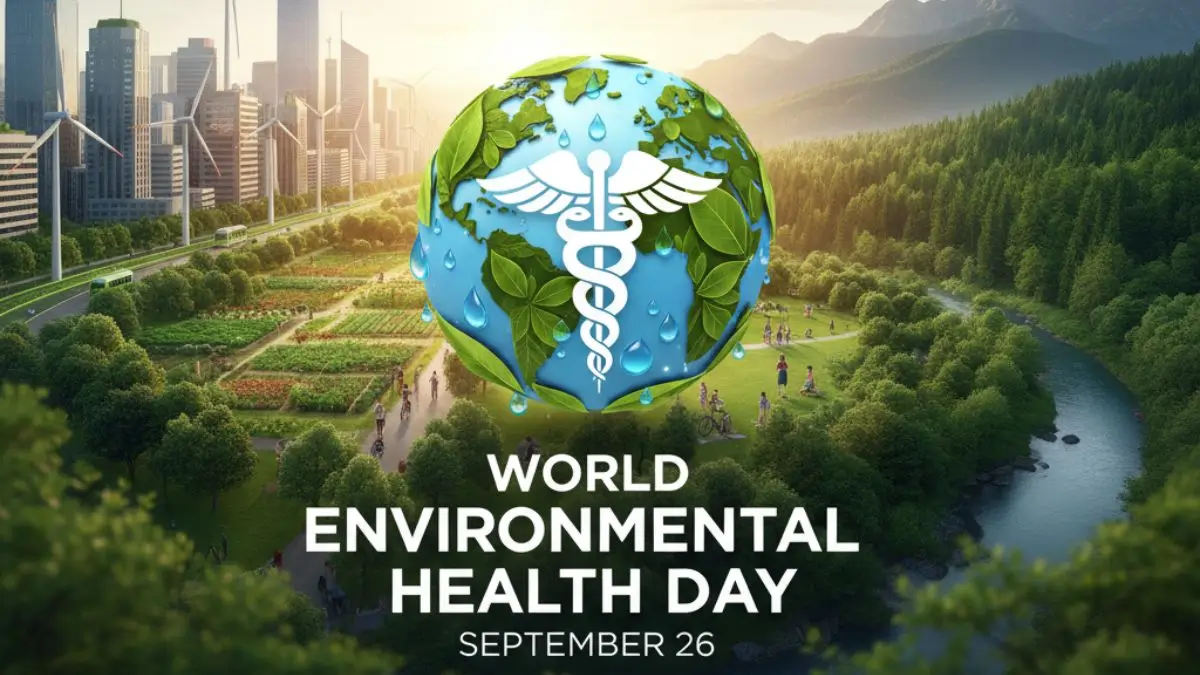
World Environmental Health Day, observed annually on September 26, serves as a powerful reminder of the deep interconnection between human health and the environment. This global observance encourages collective action to tackle environmental hazards and promote sustainable living for the benefit of current and future generations. The 2025 theme, “Clean Air, Healthy People,” reflects the urgent need to address rising air pollution, its impact on respiratory health, and its connection to climate change. As governments, communities, and organizations unite under this theme, the day highlights the importance of clean environments in preventing disease and enhancing quality of life.
Why in the News?
World Environmental Health Day 2025 is significant due to its timely focus on the health impact of air quality. The theme underscores,
- The global burden of respiratory illnesses caused by polluted air
- The importance of sustainable urban planning and clean energy policies
- The role of environmental reforms in achieving the Sustainable Development Goals (SDGs)
With participation from over 100 countries, the day includes educational campaigns, policy discussions, and grassroots activities aimed at reducing pollution, raising awareness, and improving environmental health systems.
History and Origin
- World Environmental Health Day was launched in 2011 by the International Federation of Environmental Health (IFEH) at a Council meeting held in Indonesia.
- Founded in 1986, the IFEH is a global nonprofit organization that promotes the exchange of knowledge and cooperation in matters related to environmental health.
The observance was initiated to,
- Highlight the link between environmental factors and health outcomes
- Draw attention to issues such as pollution, climate change, sanitation, and urbanization
- Mobilize civil society and governments toward sustainable environmental reforms
- Over the years, World Environmental Health Day has grown into a global platform for environmental advocacy, celebrated with themes addressing pressing concerns such as safe water access, waste management, and climate resilience.
2025 Theme: Clean Air, Healthy People
The 2025 theme, “Clean Air, Healthy People,” emphasizes that air quality is directly linked to human well-being. This focus is especially relevant as air pollution continues to be one of the leading causes of death globally.
Key objectives of this year’s observance include,
- Educating communities about how air pollution contributes to health issues like asthma, COPD, and cardiovascular diseases
- Promoting scientific research and policy interventions to reduce emissions
- Strengthening connections between environmental policy and public health strategy
- Encouraging community action and individual responsibility in environmental protection
- Aligning efforts with SDG targets, especially those related to climate action, good health, and sustainable cities
Importance and Significance
World Environmental Health Day is critical for multiple reasons,
- It recognizes that environmental quality directly affects public health
- It stresses the need for action on pollution control, waste disposal, sanitation, and climate resilience
- It promotes green practices, such as tree planting, clean energy adoption, and eco-friendly urban planning
- It encourages global cooperation, community engagement, and cross-sectoral partnerships to ensure environmental sustainability
The observance serves as a global call to action, reminding governments, organizations, and individuals of their shared responsibility in creating a healthier planet.
Observance and Activities
Each year, World Environmental Health Day is marked by activities that educate, inspire, and mobilize people,
- Clean-up campaigns in cities, towns, and villages
- Tree plantation drives to promote biodiversity and carbon absorption
- Health check-ups focusing on conditions related to air and environmental quality
- School programs that teach children about the value of sustainability
- Media campaigns and public discussions to highlight environmental policies and health risks
- Workshops and expert panels that provide practical solutions to pollution and climate risks
Such diverse activities help build community resilience, enhance public health awareness, and foster a culture of environmental stewardship.


 World Health Day 2026 - Theme, Date, Sig...
 List of Important Days in April 2026, Na...
 International Day of Sport for Developme...











