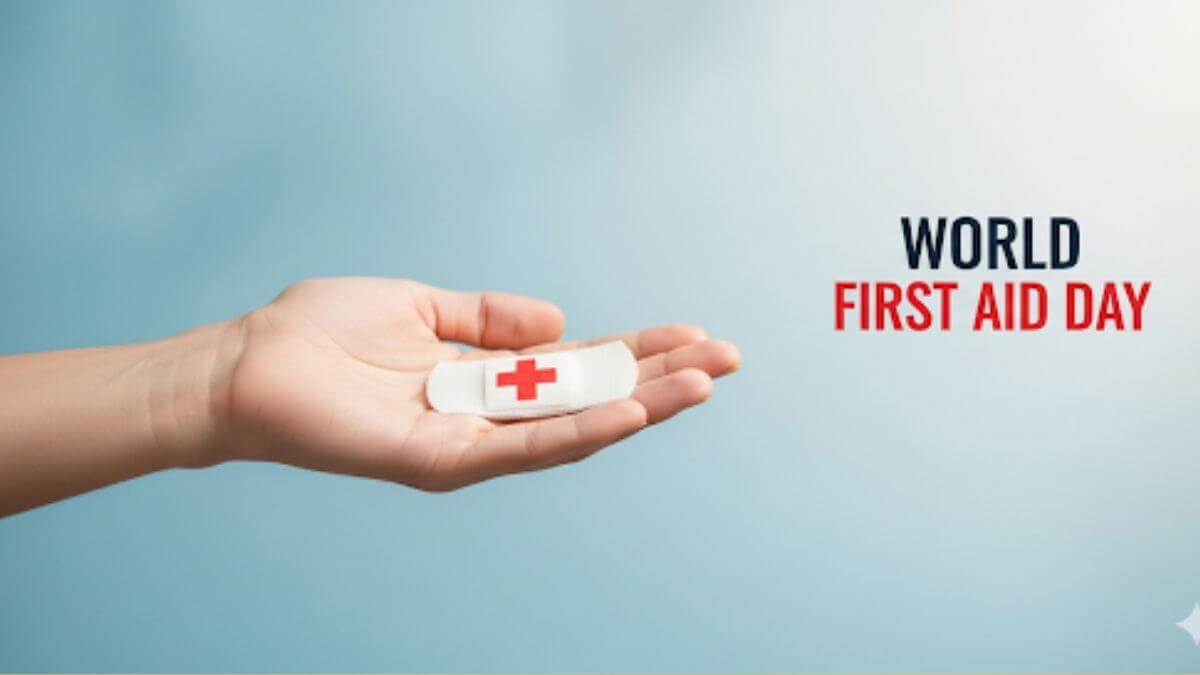
World First Aid Day is an annual international observance dedicated to raising awareness about the importance of first aid in saving lives and preventing injuries. It was established by the International Federation of Red Cross and Red Crescent Societies (IFRC) and is observed every year on the second Saturday of September.
In 2025, it falls on September 13, with the theme “First Aid and Climate Change.” This year’s focus highlights the urgent need for communities to prepare for climate-related emergencies such as floods, heatwaves, and wildfires, where first aid knowledge can be the difference between life and death.
Why Is First Aid Important?
First aid provides immediate care before professional medical help arrives, often determining the outcome of an emergency. Quick intervention,
- Saves lives in cardiac arrest, choking, and severe bleeding cases.
- Prevents complications in burns, fractures, and allergic reactions.
- Promotes faster recovery and reduces the severity of injuries.
By equipping citizens with basic first aid skills, societies can build a safer, more resilient environment where people are prepared to respond effectively in critical situations.
History of World First Aid Day
- The origins of this observance can be traced to the 19th century, when Henry Dunant, founder of the Red Cross, was moved by the suffering of wounded soldiers at the Battle of Solferino (1859). This humanitarian vision inspired the creation of the Red Cross movement.
- The term “first aid” was coined in the late 1800s by Friedrich von Esmarch, a German military surgeon.
- World First Aid Day was first observed in 2000, initiated by IFRC to promote global awareness.
- Since then, it has grown into a worldwide campaign with training, awareness drives, and demonstrations by Red Cross and Red Crescent societies.
Basic First Aid Skills Everyone Should Know
CPR (Cardiopulmonary Resuscitation): Vital during cardiac arrest.
- Choking Relief: Back blows and abdominal thrusts.
- Bleeding Control: Direct pressure to stop blood loss.
- Burn Care: Cooling under running water for at least 20 minutes.
- Recovery Position: To keep unconscious but breathing persons safe.
- Fracture Support: Immobilisation to prevent further injury.
These essential skills can turn bystanders into lifesavers in emergencies.
Common Situations Where First Aid Saves Lives
- Cardiac arrest → CPR can triple survival chances.
- Severe bleeding → Rapid pressure prevents fatal blood loss.
- Burns/scalds → Early cooling reduces tissue damage.
- Asthma or seizures → Timely aid stabilises the patient.
- Accidents → Quick immobilisation prevents worsening of fractures.
First Aid in Schools and Workplaces
Integrating first aid training into schools and workplaces helps,
- Build a culture of safety and preparedness.
- Reduce the impact of accidents.
- Enhance confidence and resilience among individuals.
- Ensure a swift, organised response during crises.
Diagnostics and Preventive Health
Regular health check-ups and screenings support first aid preparedness by identifying conditions like heart disease, diabetes, or allergies, which may shape emergency response. Preventive health combined with first aid readiness strengthens community safety.
How to Participate in World First Aid Day 2025
- Attend a local first aid training session.
- Share awareness content about the theme and techniques on social media.
- Organise community demonstrations.
- Encourage schools and offices to hold drills.
- Download first aid mobile apps for guidance.
- Volunteer with the Red Cross, Red Crescent, or local NGOs.
By participating, individuals contribute to a global movement of preparedness and resilience, where communities are empowered to save lives.


 International Day of Sport for Developme...
 List of Important Days in April 2026, Na...
 National Maritime Day 2026: Remembering ...