
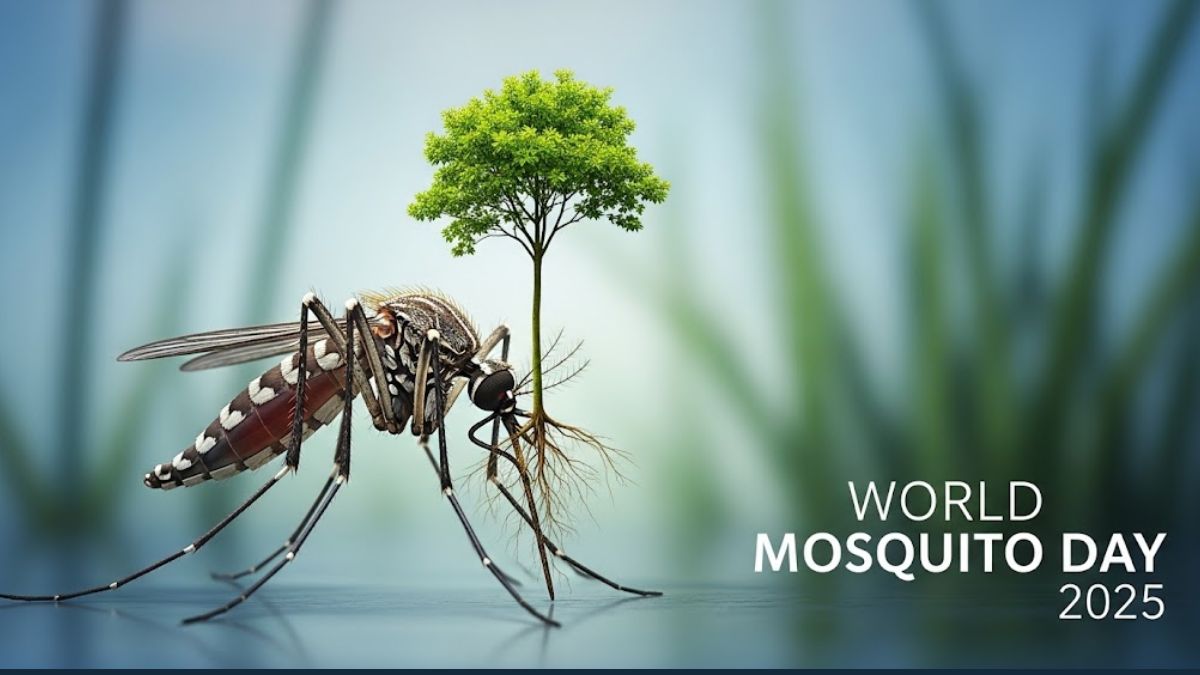
Observed every year on August 20, World Mosquito Day serves as a global reminder of the dangers posed by mosquito-borne diseases such as malaria, dengue, chikungunya, Japanese Encephalitis, and Zika virus. The day commemorates Sir Ronald Ross’s 1897 discovery that malaria is transmitted by the bite of a female Anopheles mosquito, a breakthrough that revolutionized disease prevention and control.
Despite scientific advances, mosquito-borne diseases remain a major public health challenge, particularly during India’s monsoon and post-monsoon seasons, when stagnant water creates ideal breeding grounds.
History and Significance
- Date: August 20 each year
- Discovery: Sir Ronald Ross proved in 1897 that malaria spreads through mosquito bites.
- Relevance Today: With diseases like dengue and malaria still causing widespread illness and deaths, the day emphasizes awareness, prevention, and community participation.
World Mosquito Day is not only a tribute to scientific achievement but also a call to action for communities to adopt measures that reduce mosquito breeding and transmission risks.
Why Mosquito-Borne Diseases Remain a Challenge
- High transmission during monsoons: Sudden spikes overwhelm health systems.
- Healthcare burden: Outbreaks strain rural hospitals and delay treatment for other conditions.
- Lack of real-time surveillance: Outbreaks often detected late.
- Economic and social costs: Illness impacts schools, workplaces, and local economies.
- Prevention challenges: Requires consistent community action and funding.
- Limited long-term solutions: Vaccines exist for few diseases; prevention remains key.
Major Mosquito-Borne Diseases in India
1. Dengue
- Vector: Aedes aegypti
- Symptoms: Sudden fever, headache, pain behind eyes, rash, mild bleeding.
- Severe cases: Dengue hemorrhagic fever, dengue shock syndrome.
- Prevalence: Urban/semi-urban areas, monsoon outbreaks.
2. Malaria
- Vector: Anopheles mosquito
- Parasites: Plasmodium falciparum & Plasmodium vivax
- Symptoms: High fever, chills, sweating, fatigue.
- Risk: Falciparum malaria can be life-threatening.
- Common in rural, tribal, and forested areas.
3. Chikungunya
- Vector: Aedes mosquitoes
- Symptoms: High fever, rash, intense joint pain (lasting weeks/months).
- Prevalence: Urban & rural, worsens during monsoon.
4. Japanese Encephalitis (JE)
- Vector: Culex mosquitoes breeding in rice fields.
- Regions: Eastern and Northeastern India (UP, Assam, Bihar, WB).
- Symptoms: Brain inflammation, seizures, confusion, coma.
- Prevention: Vaccination in high-risk areas.
5. Zika Virus
- Vector: Aedes mosquitoes
- Symptoms: Mild fever, rash, joint pain, conjunctivitis.
- Risks: Can cause microcephaly in newborns if pregnant women are infected.
Common Symptoms to Watch For
- High fever (dengue, malaria, chikungunya)
- Chills & sweating (malaria)
- Severe headache & body pain (dengue, chikungunya)
- Joint pain & swelling (chikungunya hallmark)
- Skin rash (dengue, chikungunya, Zika)
- Bleeding signs (low platelets in dengue)
- Neurological issues (Japanese Encephalitis: seizures, confusion, coma)
- Early recognition and prompt treatment are vital to prevent complications.
Preventing Mosquito Breeding
Household & Community Actions
- Eliminate stagnant water from pots, tyres, coolers, containers.
- Cover water storage tanks and drums.
- Clean drains and gutters to prevent hidden breeding spots.
- Dispose of waste properly—avoid open containers collecting rainwater.
- Use larvicides where water cannot be drained.
- Maintain clean surroundings—trim plants, fix leaks, avoid waterlogging.
These simple practices drastically reduce mosquito populations in residential areas.
What Can Be Done on World Mosquito Day?
- Spread awareness in schools, communities, and social media.
- Check neighbourhoods for mosquito breeding sites.
- Organize clean-up drives with local groups.
- Promote safe water storage with tightly covered containers.
- Support public health campaigns like fogging, spraying, and vaccination.
- Protect families using repellents, nets, and protective clothing.


 World Health Day 2026: Date, Theme, Sign...
 International Day of Sport for Developme...
 List of Important Days in April 2026, Na...











