
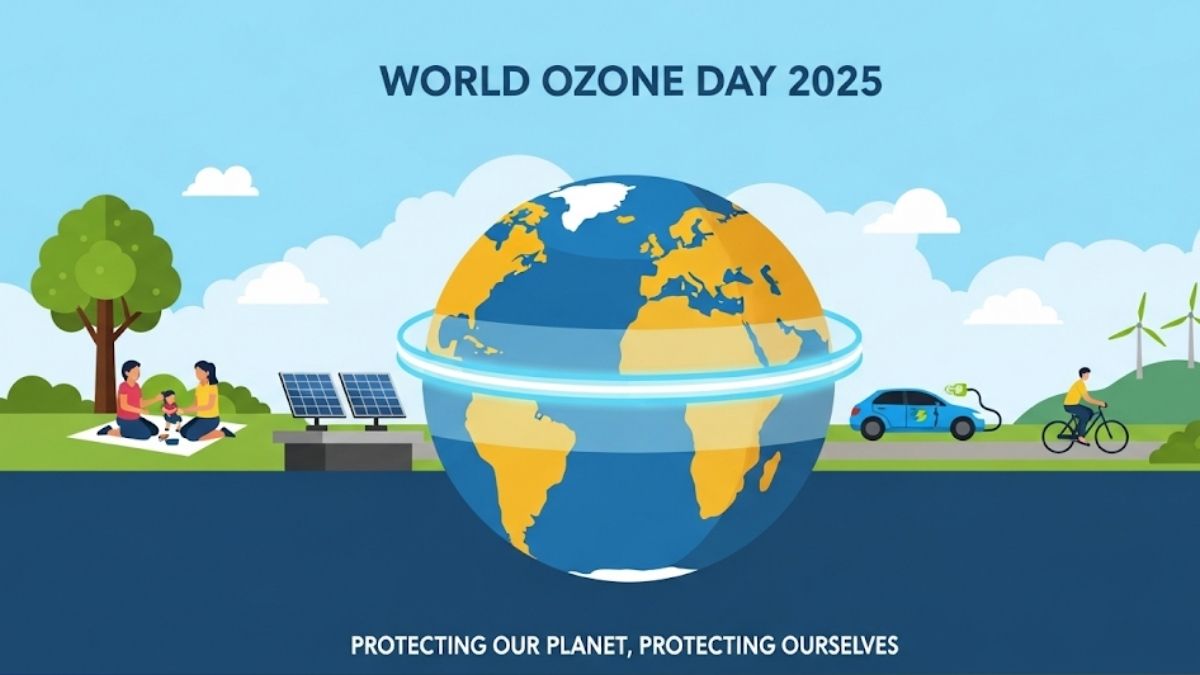
World Ozone Day, officially known as the International Day for the Preservation of the Ozone Layer, is celebrated each year on September 16. The day recognizes the global effort to protect the ozone layer, a thin but vital shield that guards Earth from harmful ultraviolet (UV) radiation.
The occasion serves as a reminder of the power of science-based policy and international cooperation, while urging nations to continue safeguarding environmental health through sustained action.
History and Background
The United Nations General Assembly designated September 16 as World Ozone Day in 1994, to commemorate the signing of the Montreal Protocol on Substances that Deplete the Ozone Layer in 1987. This landmark agreement was based on warnings from scientists about chemicals like chlorofluorocarbons (CFCs), which were damaging the ozone layer.
On September 16, 2009, both the Montreal Protocol and the Vienna Convention achieved universal ratification, making them the first environmental treaties in UN history to reach that milestone.
Theme of 2025: “From Science to Global Action”
The theme for World Ozone Day 2025 is “From Science to Global Action.” It celebrates the 40th anniversary of the Vienna Convention, which laid the foundation for the Montreal Protocol and global ozone protection efforts.
UN Secretary-General Antonio Guterres emphasized that this is a moment to honor scientific foresight and global unity, reminding the world that “progress is possible when we listen to science.”
Why Ozone Layer Matters
The ozone layer, located in the stratosphere, plays a crucial role in,
- Blocking harmful UV-B radiation
- Protecting ecosystems, human health, and crops
- Reducing the risk of skin cancer and eye cataracts
Ozone depletion increases exposure to UV radiation, which can damage DNA, disrupt marine life, and harm global biodiversity.
Significance of the Montreal Protocol
The Montreal Protocol is one of the most successful environmental agreements to date. It,
- Bans or limits nearly 100 ozone-depleting substances (ODS)
- Includes the Kigali Amendment to phase down hydrofluorocarbons (HFCs), which are potent greenhouse gases
- Has helped the ozone layer begin healing, with projections showing a return to 1980 levels by mid-century
- The Protocol’s enforcement mechanisms, regular updates, and reliance on scientific monitoring continue to make it a model of effective global governance.
Current Status of the Ozone Layer
According to the World Meteorological Organization (WMO), the ozone hole over Antarctica in 2024 was smaller than in recent years. If current policies remain in place, the ozone layer is expected to fully recover to pre-1980 levels by around 2045–2060.


 Easter Sunday 2026: Meaning, History &am...
 International Day for Mine Awareness 202...
 Good Friday 2026: Date, History, Meaning...











