
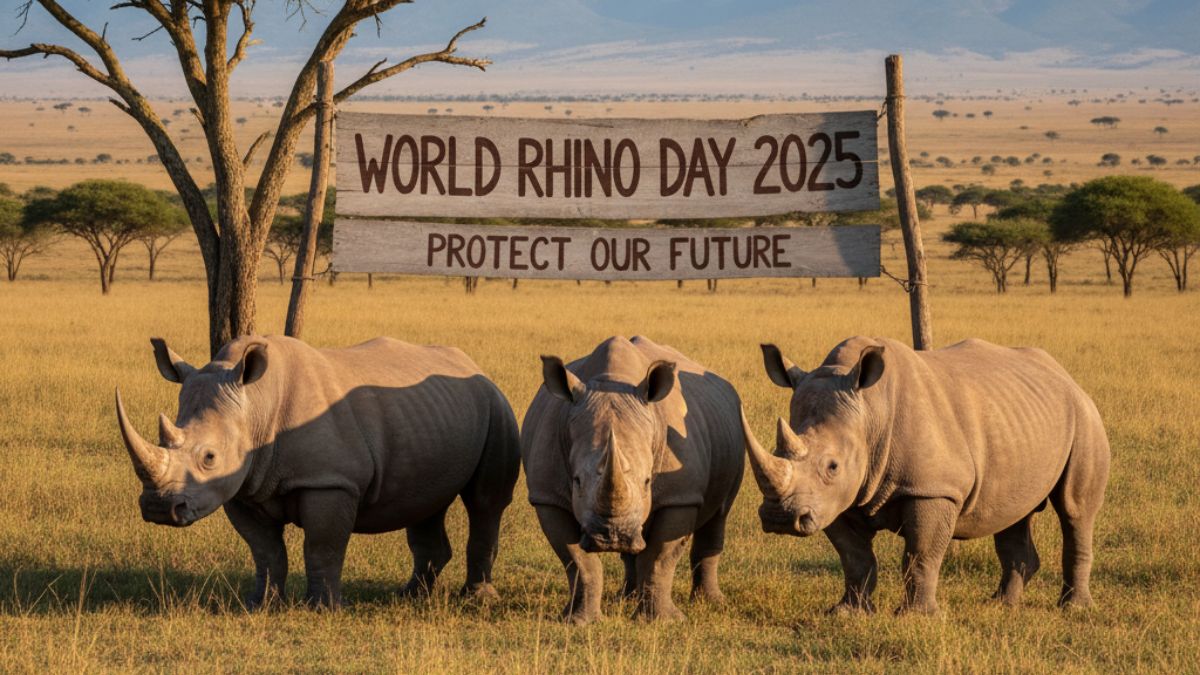
World Rhino Day 2025 will be observed globally on 22 September to highlight the urgent need to protect one of the planet’s most ancient and endangered species—the rhinoceros. Despite being symbols of strength, rhinos today face severe threats from poaching, habitat loss, and human-wildlife conflict. The day unites governments, NGOs, and communities worldwide in their efforts to conserve all five species of rhinos and prevent them from sliding further towards extinction.
History of World Rhino Day
- Established in 2011 by wildlife conservationists and international organizations.
Aimed at creating awareness about the five species of rhinos,
- Greater one-horned (India, Nepal)
- Black rhino (Africa)
- White rhino (Africa)
- Javan rhino (Indonesia)
- Sumatran rhino (Indonesia)
Over the years, the observance has become a global platform to address issues like illegal wildlife trade, poaching, and habitat degradation.
World Rhino Day 2025 Theme
Theme: Yet to be officially announced.
Past themes have included,
- 2022: Five Rhino Species Together
- 2023: Rhinos and Communities
- 2024: Keep the Five Alive
The 2025 theme is expected to focus on habitat preservation, partnerships, and collective responsibility for protecting rhinos.
Rhino Conservation Status (2025)
| Rhino Species | IUCN Status (2025) | Region Found | Estimated Population |
| Greater One-Horned | Vulnerable (stable) | India, Nepal | ~4,000+ |
| Black Rhino | Critically Endangered | Africa | ~6,500 |
| White Rhino | Near Threatened | Africa | ~16,800 |
| Javan Rhino | Critically Endangered | Indonesia (Java) | ~76 |
| Sumatran Rhino | Critically Endangered | Indonesia (Sumatra, Borneo) | <80 |
Despite progress in India and Nepal with the greater one-horned rhino, other species remain critically endangered.
Project Rhino in India
India has been at the forefront of rhino conservation through initiatives like,
Indian Rhino Vision 2020 (IRV 2020)
- Launched in 2005 in Assam.
- Goal: Increase rhino population to 3,000 across 7 protected areas.
- Achievements: Revived rhino population in Manas National Park, increased protection in Assam, translocated rhinos to new areas.
National Rhino Strategy (2019)
- A unified national policy for rhino protection.
- Strengthened anti-poaching laws and promoted community involvement.
Current Efforts (2025)
- Rehabilitation and translocation to parks like Manas and Dudhwa.
- Community engagement programs to reduce man-animal conflict.
- Use of drones and smart patrolling systems for anti-poaching surveillance.
Kaziranga National Park: The Heart of Rhino Conservation
Located in Assam, India, Kaziranga hosts the world’s largest population of greater one-horned rhinos.
Success due to,
- Strict anti-poaching measures and continuous patrolling.
- Community involvement in eco-tourism and conservation.
- Habitat restoration to provide safe breeding spaces.
- Other rhino habitats in India: Pobitora Wildlife Sanctuary (highest rhino density), Orang National Park, Manas National Park, and Dudhwa National Park.
Significance of World Rhino Day 2025
- Raises awareness about rhino poaching and illegal wildlife trade.
- Promotes international cooperation for endangered species protection.
- Highlights India’s success story in Kaziranga while reminding the world of critical challenges faced by African and Indonesian rhinos.
- Encourages community involvement and eco-tourism models that link conservation with livelihoods.
Quick Facts
- World Rhino Day 2025
- Date: 22 September 2025
- Established: 2011
- Purpose: Raise awareness for rhino conservation
- Species Covered: Greater one-horned, Black, White, Javan, Sumatran
- India’s Key Initiative: Project Rhino (IRV 2020, National Rhino Strategy)
- Major Habitat: Kaziranga National Park, Assam
- Population (Greater One-Horned): ~4,000+ in India & Nepal
- Threats: Poaching, illegal wildlife trade, habitat loss, human-animal conflict


 World Health Day 2026 - Theme, Date, Sig...
 List of Important Days in April 2026, Na...
 International Day of Sport for Developme...











