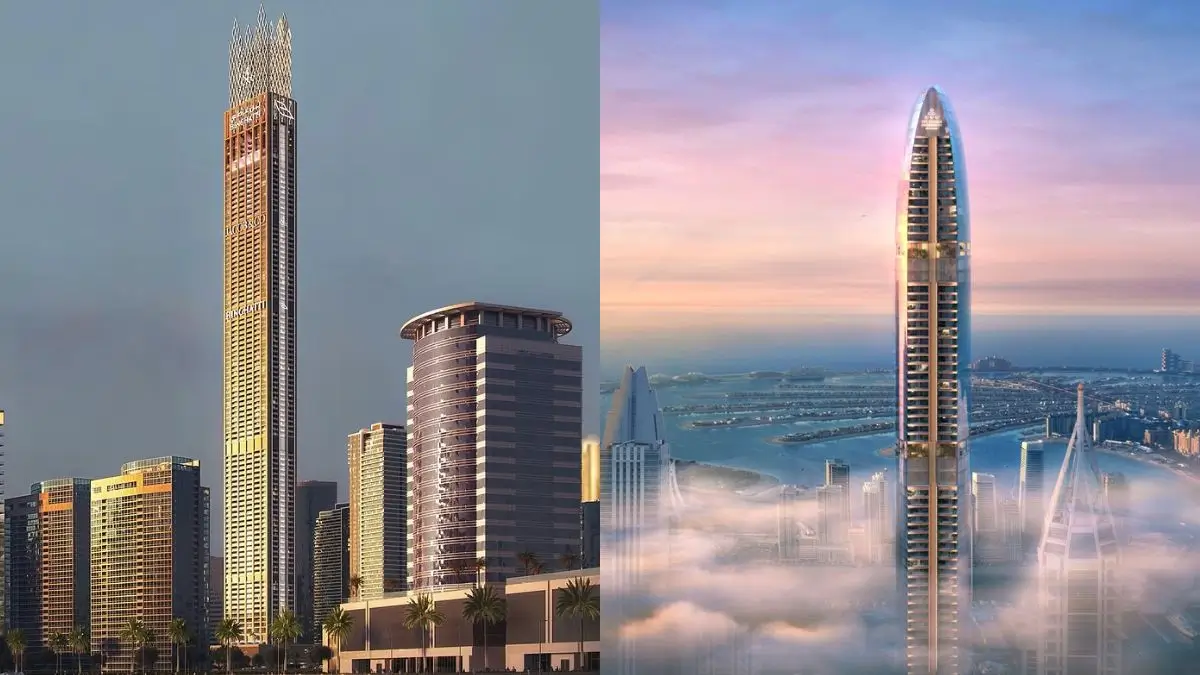
World Skyscraper Day is an annual celebration that takes place on September 3 in recognition of the engineering, architecture, and ambition that goes into the construction of the world’s tallest buildings. The date is also linked to the birth date of Louis H. Sullivan, who is regarded as one of the earliest pioneers of skyscraper designs. From the iconic early skyscrapers of Chicago to the supertall skyscrapers built now, the skyscraper has changed how cities make use of space. In 2026, a new wave of skyscrapers over 300 metres tall will emerge, especially in Dubai, Shanghai, and Brazil.
What Is a Supertall Skyscraper?
According to the CTBUH, buildings that have 300 meters (984 feet) or higher are categorized as supertall skyscrapers. Supertall skyscrapers need special techniques regarding the following: foundation construction, stability, wind resistance, elevators, fire protection and vertical transportation.
Today’s skyscrapers have changed not only in design but also in function. Unlike the first skyscrapers that were mainly office towers, the new supertalls are mixed-use skyscrapers which consist of residences, hotel, office, restaurant, observation deck and entertainment centers.
5 Supertall Towers to Look out For Until 2030
There are several big projects which are now planned or being developed and are expected to make an impact on the global skylines in the upcoming years.
1. Burj Binghatti Jacob & Co Residences, Dubai
The Burj Binghatti Jacob & Co Residences are going to be built reaching a height of 557 meters (1,827 feet) and having 105 floors and the expected date of completion is 2027. This project is a reflection of the shift in Dubai towards building extremely tall buildings which have branded residences and hospitality facilities.
This project is one of the biggest of such residential skyscraper projects which are currently under construction.
2. Senna Tower, Balneário Camboriú
The Brazilian Senna Tower is estimated to reach a height of 550 meters (1,804 feet) with 154 floors with the expected date of completion set to 2030. If it will be constructed with such height it will be one of the tallest residential buildings in the world.
This project is especially interesting since Balneário Camboriú is a growing market for skyscrapers.
3. Tiger Sky Tower, Dubai
With an expected height of 532 metres (1,725 feet), the Tiger Sky Tower is due for completion by 2029. One of many new skyscrapers being developed in Dubai, it exemplifies a trend towards experiential verticality where apartments and residences are built together with additional amenities.
As one of the tallest buildings under consideration, its height ensures that the building will be categorized as a supertall and cements Dubai’s reputation as a high-rise builder.
4. Six Senses Residences Dubai Marina
Standing 517 metres (1,695 feet) tall, Six Senses Residences Dubai Marina is yet another supertall skyscraper planned in Dubai with a 2028 completion date.
The skyscraper will be used for luxurious residential purposes along with wellness-related purposes. In doing so, it is an example of how economics of supertall skyscraper construction are related to premium residential and hospitality sectors.
5. North Bund Tower, Shanghai
North Bund Tower is set to stand 480 metres (1,575 feet) tall and have 97 floors by 2030. The skyscraper is a part of the overall North Bund waterfront development project and will be used for various purposes including offices, hotels and serviced apartments.
Why Are Skyscrapers Important?
Importance of skyscrapers is not limited to their record-breaking architectural status. They offer an opportunity for cities with large populations to conduct activities vertically.
Supertalls built in the modern era help create,
- Urban efficiency: Higher density of residential, commercial, and hospitality uses within a smaller area.
- Economic value: Iconic buildings can act as magnets for investments and tourism.
- City brand image: Iconic structures can serve as the architectural representation of a city.
- Engineering advancements: Increased heights call for advancement in structural systems, elevators, foundation systems, wind engineering, and safety.
- Mixed-use: A building of multiple uses including residential, office, hotel, retail, and entertainment can be created in a single tower.








 International Day for Disaster Risk Redu...
 National Human Rights Commission to Mark...
 World Arthritis Day 2026: Date, Theme, H...