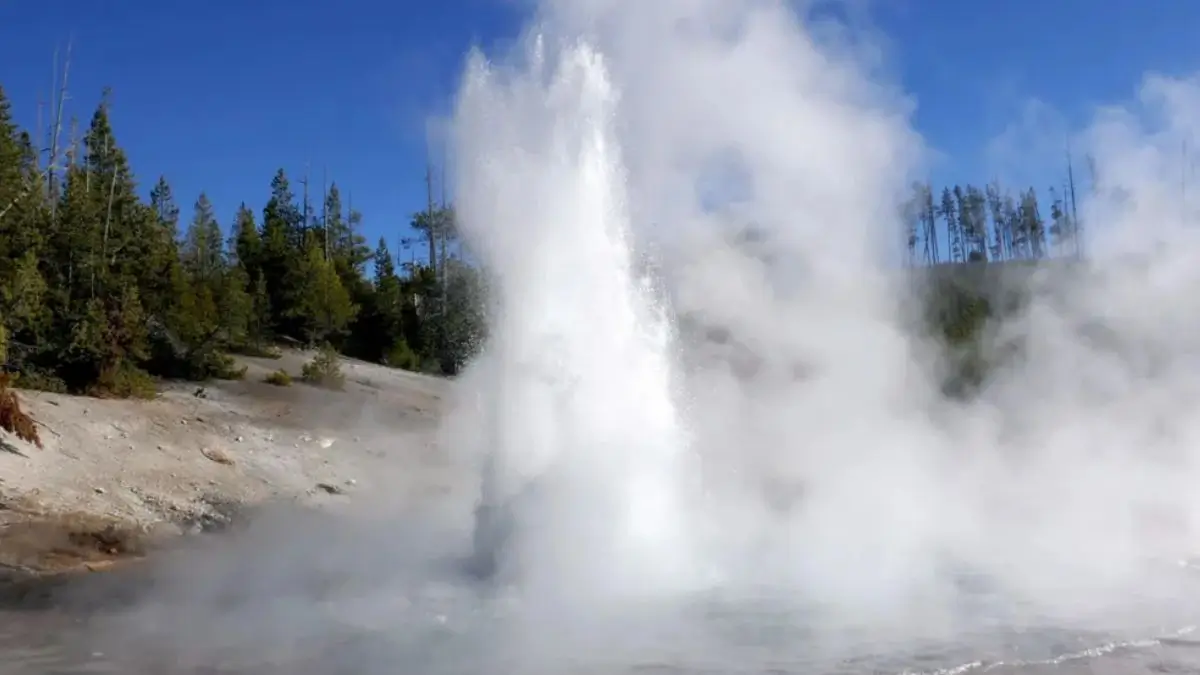
The Echinus Geyser, known as the world’s largest acidic geyser. Which has erupted again after a six-year dormant period at Yellowstone National Park in the United States. Located in the Norris Geyser Basin, the geyser had remained inactive since 2020. Officials from the United States Geological Survey (USGS) confirmed that eruptions resumed on February 7, 2026, attracting attention from researchers and visitors alike. However, scientists say it remains uncertain whether the geyser will stay active through the summer.
What Makes Echinus Geyser Unique?
Echinus Geyser stands out because of its acidic water chemistry, which is rare among geysers.
Unique Characteristics
- Recognized as the largest acidic geyser in the world
- Located in the Norris Geyser Basin, Yellowstone’s hottest geothermal area
- Surrounded by reddish rocks resembling sea urchins (echinoderms) giving it the name Echinus
- Produces acidic geothermal water formed by mixing acidic gases with neutral groundwater
Most acidic geysers erode over time because acid dissolves rock structures.
How Geysers Work
A geyser is a geothermal spring that erupts periodically due to underground heat.
The process occurs as follows,
- Water fills underground chambers connected to the Earth’s surface.
- Magma deep underground heats the water.
- Pressure builds as water begins to boil.
- Steam forces hot water upward through the geyser vent, creating an eruption.
- After the eruption, the chamber refills and the cycle repeats.
This natural geothermal system is why Yellowstone has the largest concentration of geysers in the world.
Eruption History of Echinus Geyser
- Historically, Echinus Geyser erupted regularly.
- In the 1970s, eruptions occurred every 40-80 minutes.
- Eruptions sometimes lasted up to 90 minutes.
- Water could reach heights of 75 feet (23 meters).
In recent decades, activity became unpredictable,
- 2018: 1 eruption recorded
- 2019: 1 eruption recorded
- 2020: 2 eruptions recorded
- 2026: Activity resumed in February
Recent eruptions have lasted up to three minutes, with water reaching 30 feet high.
Will the Eruptions Continue?
- Scientists say geysers often become active for short periods before returning to dormancy.
- According to the USGS, Echinus Geyser might erupt for a few weeks or months before becoming inactive again.
- Observations toward the end of February already suggested activity might be slowing.
- This unpredictable behaviour is typical for geothermal systems in Yellowstone.
Question
Q. The Echinus Geyser is located in which national park?
A) Yosemite National Park
B) Yellowstone National Park
C) Grand Canyon National Park
D) Zion National Park


 Balendra Shah Sworn In As Nepal’s Younge...
 US Dollar to Feature Donald Trump’s Sign...
 Strait of Hormuz Crisis: 22-Nation Coali...